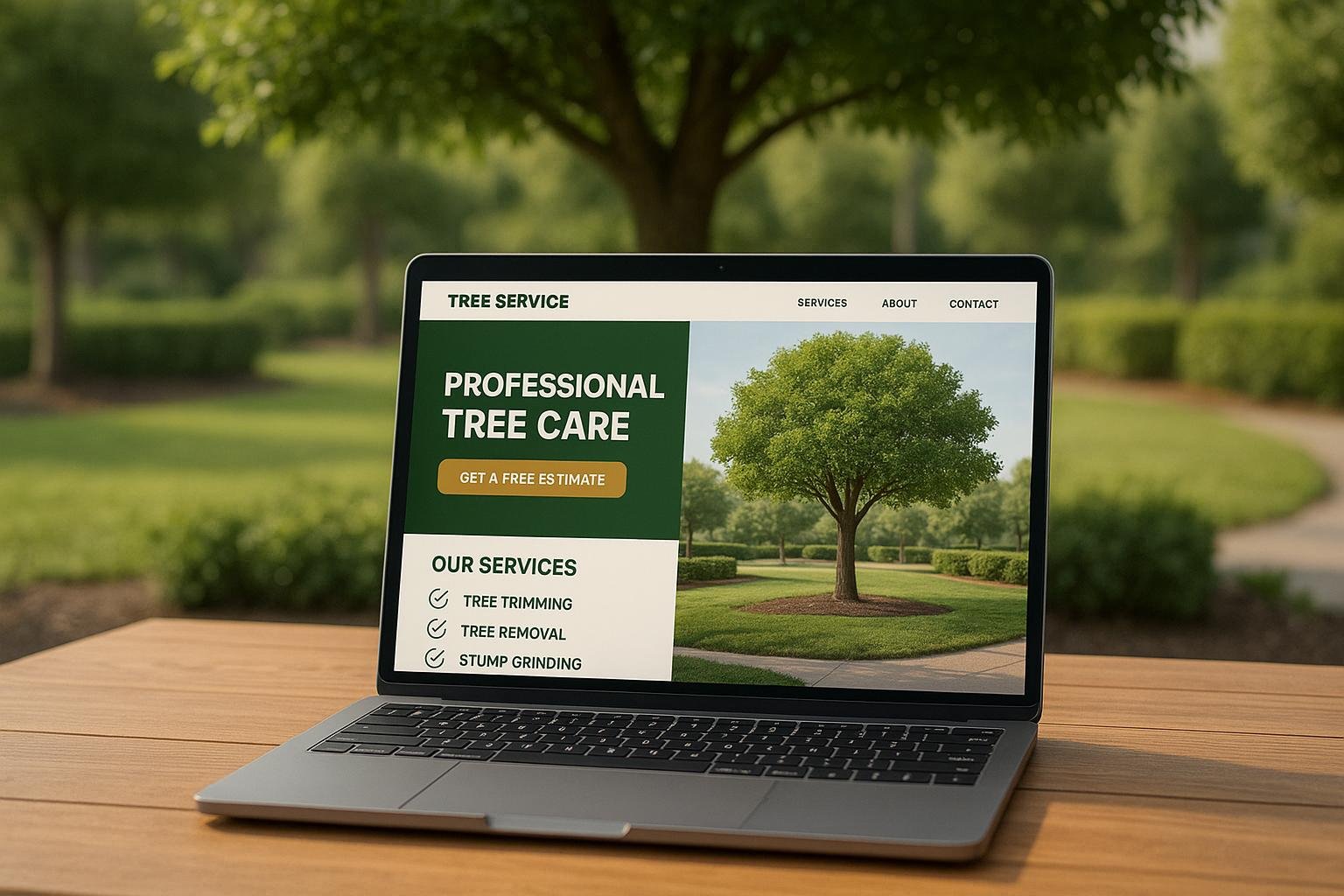
Your tree service website is your most important tool for attracting customers and generating leads. To stand out in a $20+ billion industry, your site needs to deliver a great user experience, rank well in local searches, and turn visitors into clients. Here’s a quick breakdown of the 12 key features every tree care website needs:
- Mobile-Friendly Design: Over 60% of web traffic is mobile. Ensure your site is fast, easy to navigate, and responsive on all devices.
- Clear Service Pages: Create dedicated pages for each service (e.g., tree removal, stump grinding) with local keywords to rank higher in searches.
- Easy-to-Find Contact Info: Display your phone number prominently, include a "click-to-call" button, and offer online booking.
- Customer Reviews: Showcase testimonials and encourage reviews to build trust and improve local SEO.
- Photo Gallery: Use high-quality before-and-after images to highlight your work.
- Online Booking Tools: Simplify scheduling with easy forms and options for real-time availability.
- Local SEO: Optimize for location-specific searches with Google Business Profile, local keywords, and consistent NAP (name, address, phone).
- Fast Loading Speed: Keep load times under 2-3 seconds by compressing images and using reliable hosting.
- SSL Security Certificate: Protect user data and boost credibility with HTTPS encryption.
- About Us Page: Share your company’s story, certifications, and team details to build trust.
- Tree Care Blog: Regularly post seasonal tips and advice to improve search rankings and connect with your audience.
- Lead Tracking & Analytics: Use tools like Google Analytics and call tracking to monitor performance and optimize your strategy.
These features work together to improve visibility, build trust, and convert visitors into paying customers. A well-designed website isn’t optional – it’s the foundation of your business growth.
How to Build Your Tree Service Website for Maximum Conversion & Lead Flow
1. Mobile-Friendly Design
Your tree service website needs to work effortlessly on mobile devices. This isn’t just a bonus feature – it’s a must-have for your business. With 61.35% of global web traffic now coming from mobile devices, failing to optimize for mobile means potentially losing over half your audience. That’s a big deal when every visitor counts.
Mobile-friendly websites don’t just attract more visitors – they convert better too. In fact, they generate 40% more conversions, meaning every 100 visitors could translate into 40 additional leads.
Think about when people typically search for tree services. Maybe they’re standing in their yard after a storm, staring at a damaged tree, or planning outdoor improvements. What do they do? They grab their phone and search for "tree service near me." If your website is clunky or hard to navigate, they’ll likely move on to a competitor.
As one expert put it, mobile accessibility is crucial because tree service clients often search for help while outdoors or during emergencies.
Speed is another key factor. Mobile users expect pages to load in 2 seconds or less. For every extra second, conversions drop by 7%. For tree service companies, where quick responses are often needed in emergencies, slow load times can make or break a lead.
To improve mobile usability, focus on features like:
- Click-to-call buttons: Make it easy for users to contact you with one tap.
- Tap-friendly navigation: Ensure menus and links are easy to use on smaller screens.
- Simplified forms: Keep quote request forms short and easy to fill out, with large input fields and dropdown menus to minimize typing.
Don’t forget, Google’s mobile-first indexing prioritizes mobile-optimized sites in search rankings. If your site isn’t mobile-friendly, it could hurt your visibility when potential customers search for tree services in your area.
Here’s a real-world example: In August 2023, a tree service company revamped its site for mobile use. They adopted a responsive design, improved site speed, and optimized navigation. Within three months, they saw a 40% boost in mobile traffic and a 25% increase in conversions.
Testing your site’s mobile performance is simple. Use Google’s Mobile-Friendly Test to see how your site performs. Additionally, try using your site on actual smartphones and tablets to spot any usability issues.
Finally, don’t overlook the role of optimized images. Heavy images can slow down your site, frustrating visitors and driving them away. Use compressed images, enable browser caching, and clean up your site’s code to keep load times fast across all devices. A fast, efficient mobile experience can make all the difference in turning visitors into customers.
2. Clear Service Pages
If you’re in the tree care business, having dedicated pages for each service you offer is a game-changer. When someone searches for "stump grinding near me", they expect to land on a page that talks specifically about stump grinding – not a generic service page buried under layers of unrelated information.
The tree care industry in the U.S. pulls in over $20 billion annually. To compete, your website needs to be user-friendly and focused. This means creating individual pages for services like tree removal, tree trimming, stump grinding, and emergency tree services. Each page should be designed to address common customer concerns and provide immediate answers.
Here’s why this strategy works: 76% of local searches result in a phone call within one hour. When your service pages match exactly what potential customers are looking for, they’re more likely to call you right away.
Take this example: In March 2023, a tree service company in Denver added dedicated pages for tree removal and stump grinding, using local keywords throughout. The results? A 50% increase in organic traffic and a 30% jump in service inquiries within three months. Some companies have even reported up to a 300% boost in organic traffic and a 60% conversion rate from leads to paying customers.
Each service page should clearly explain the problem you solve and how you do it. For instance:
- Tree removal: Emphasize safety and protecting property.
- Tree trimming: Focus on tree health and enhancing appearance.
- Stump grinding: Highlight yard restoration and pest prevention.
"A well-optimized Google Business Profile helps tree service companies rank higher in local searches", says Sean MacDonald, SEO Expert at Tree Leads On Demand.
To ensure your pages rank well locally, sprinkle in location-specific keywords like "tree removal in [your city]" or "emergency tree service [your area]." This makes it easier for local customers to find you when they need help.
"A well-optimized website ensures your business appears in local search results when customers in your area are looking for help", adds Valpo Agency.
Keep your language simple and customer-focused. Most people don’t care about technical terms like "crown reduction techniques." They just want to know their tree will be safer, healthier, or more attractive when you’re done. If possible, include pricing details, even if it’s just a starting range – it helps build trust.
Every service page should include a clear call-to-action, like "Get Free Estimate", to guide potential customers toward contacting you.
Here’s another key stat: Businesses with complete Google Business Profiles receive 70% more location visits than those with incomplete profiles. Your detailed service pages, combined with an optimized Google listing, make it easy for customers to choose your company.
Finally, consider this: The average cost per lead for tree service marketing ranges from $45 to $100, depending on your strategy. Well-structured service pages can help lower this cost by converting more of your website visitors into paying customers. When your website speaks directly to customer needs, it becomes a powerful tool for growing your business.
3. Easy-to-Find Contact Information
Having your contact information front and center is just as crucial as mobile optimization and focused service pages when it comes to engaging potential customers. Whether someone needs emergency tree removal after a storm or wants to schedule routine maintenance, your contact details should be easy to find and immediately accessible.
To make it simple for visitors to connect with you, display your phone number prominently – ideally in the header of every page. Make sure the number is both readable and clickable. For instance, Joshua Tree’s website includes their contact information and social media links in the header across all pages, ensuring visitors can reach out without hassle. Similarly, Aspen Arboriculture Solutions places their phone number in the upper-right corner of their homepage for quick access.
"The easier it is for clients to contact you, the more likely they are to do so." – Jobber
Since many users browse on mobile devices, a click-to-call button is a must. This feature allows users to connect with you instantly, without the need to memorize or copy your number – a small detail that makes a big difference in user experience.
Your "Contact Us" page should be just as thorough, including essential details like your phone number, email, physical address, service area, and even a map. These elements not only reassure potential customers but also help improve your local SEO.
Adding online booking and live chat can take things to the next level. Businesses that offer live chat see a 20% increase in conversion rates due to the immediate support it provides. Additionally, 60% of consumers prefer live chat for customer service inquiries. According to Dolead, tree service businesses that use real-time lead delivery systems with features like online booking and live chat experienced a 30% increase in booked jobs compared to those relying only on traditional methods.
"Integrating online booking and live chat options not only enhances customer satisfaction but also significantly boosts lead conversion rates." – Guillaume Heintz, Lead Generation Strategist, Dolead
Strategic call-to-action buttons, such as "Call Now for Free Estimate", can also encourage visitors to take immediate action.
Finally, ensure your contact details are consistent across all platforms – your website, Google Business Profile, social media, and local directories. Inconsistent information can confuse customers and even hurt your search engine rankings.
Ken’s Tree Service is a great example of how this works in practice. Their clean, user-friendly homepage makes it effortless for potential clients to locate contact details, which is especially critical during emergencies like storm damage. Making your contact information easy to find isn’t just a convenience – it’s a key step in turning visitors into loyal customers.
4. Customer Reviews and Testimonials
When it comes to generating leads, customer reviews and testimonials play a crucial role in building the trust needed to turn visitors into paying clients. Genuine feedback from real customers creates an immediate sense of credibility.
Positive reviews, especially five-star ratings, do more than just build trust – they also help improve local search rankings. Platforms like Google Maps reward businesses with strong reviews by boosting their visibility, making it easier for potential clients to find services like tree removal or emergency tree care when they need them most.
"Adding reviews or testimonials to your arborist or tree service website builds trust with prospective clients." – Hillary Walters
The most impactful testimonials combine customer feedback with visual evidence. For example, before-and-after photos add a layer of authenticity by clearly showcasing the transformation your services provide. When homeowners see these visual stories, it becomes easier for them to trust the quality of your work. This kind of storytelling acts as powerful social proof, reinforcing your credibility.
Green Leaf Tree Services is a great example of how to leverage customer feedback. They have a dedicated page for 5-star reviews and use NiceJob to automatically update their website with fresh testimonials. They also make it easy for happy clients to leave reviews by providing direct links to their Google Business Profile and Facebook pages.
Where you place testimonials on your site can make a big difference. Whether they’re highlighted on your homepage, sprinkled across service pages, or collected in a dedicated reviews section, making them easy to find increases their impact. Grizzly Tree Services takes this a step further by featuring a photo and video gallery with professionally edited images that showcase their expertise in tree care.
Adding personal touches, like including the customer’s name and hometown with their testimonial, makes the feedback feel more relatable. This approach resonates with local homeowners who are likely facing similar tree care issues.
Don’t overlook the importance of responding to reviews – both glowing and critical. A thoughtful response shows potential clients that you value customer feedback and are committed to providing excellent service. For many, this level of engagement can be the deciding factor when choosing a service provider.
As Monica Hemingway, Founder of Tree Care Marketing Solutions, puts it:
"Images are your friend. No matter what you sell, photos or graphics get your message across far better than text that most people won’t read. Use professionally-taken photos of products, before & after, your team, finished projects, and whatever else will capture readers’ attention."
Finally, simplify the review process by adding direct links to your Google Business Profile. Tools like NiceJob can also help by automatically pulling in new reviews, keeping your website’s testimonial section fresh and engaging.
5. Photo Gallery of Work
A photo gallery acts as your online showcase, giving potential clients a clear view of your tree care services. High-quality images are essential – they visually demonstrate the impact and value of your work.
The most effective galleries include before-and-after photos. These side-by-side comparisons emphasize the noticeable transformations your services achieve.
"Visual content is more engaging and persuasive than text alone." – Arborgold
To ensure a smooth user experience, make sure your photos load quickly across all devices. Keep file sizes small – ideally under 500 KB, with 200 KB being even better.
"Make sure that individual images are no larger than 500 KB (I always try to stay below 200 KB) – even better, less." – Chantalle Alberstadt, Brand Designer and Entrepreneur, BoredBrands Studio
Adding captions and descriptions is just as important as the photos themselves. Instead of generic labels, use specific details to explain the work completed. This not only provides context but also enhances your local SEO efforts.
"Real results build trust. Share them!" – Tree Care Marketing Solutions
An optimized photo gallery does more than impress – it sets the stage for converting visitors into leads, seamlessly tying into the next steps of your marketing strategy.
6. Online Booking and Quote Tools
Once you’ve nailed a mobile-friendly design and clear service pages, adding effective online booking tools can take your site to the next level. These tools make it easy for customers to schedule services or request quotes, removing any hurdles in the sales process. With the right setup, your website can become a powerful lead-generating machine, creating a smooth and hassle-free experience for your customers.
To ensure clarity, your booking system should follow familiar US date formats (MM/DD/YYYY) and display pricing in US dollars (e.g., "$150 for basic tree trimming" or "$500-$1,200 for tree removal").
Keep your forms simple by asking only for the essentials: name, phone number, email, service address, preferred date, and a brief description of the job. Long, complicated forms with unnecessary fields can discourage potential customers from completing their booking.
Adding real-time availability features can make the process even more convenient. For instance, showing open time slots for the week (e.g., 01/20/2025 through 01/26/2025) encourages customers to lock in their appointments right away.
Offer service-specific options like tree removal, pruning, stump grinding, or emergency services. This not only improves the accuracy of your quotes but also gives customers a more tailored experience. Allowing them to upload photos of the problem areas can further refine the quote process. By combining detailed service options with easy-to-use booking forms, you build trust and help customers make quicker decisions.
Make sure your booking forms are mobile-friendly, with touch-responsive buttons and clear, easy-to-read fields. This ensures a smooth experience for users on any device.
To keep your crew’s schedule organized and avoid double-bookings, integrate the booking system with your calendar. For example, if someone books tree trimming for 03/10/2025 at 9:00 AM, that slot should automatically be marked as unavailable.
For urgent situations like storm damage or fallen trees, consider including an emergency booking option. A prominent "Emergency Service" button that connects customers to your on-call team can help capture high-value leads during critical moments.
Finally, automate confirmation emails to include booking details, your contact information, and a brief outline of what to expect on the service day. This professional touch not only reassures customers but also reduces no-shows. With these streamlined booking features, your site can boost conversions while maintaining a seamless user experience.
sbb-itb-130a704
7. Local SEO Setup
To make sure your business ranks well locally, it’s essential to clearly communicate your service area and offerings. Just like having a mobile-friendly design and well-structured service pages, a strong local SEO strategy ensures that your target audience can find you when they need help – whether it’s for everyday services or urgent situations.
Start by claiming and optimizing your Google Business Profile (formerly known as Google My Business). This free tool is essential for showing up in the Google Map Pack, which highlights the top three local businesses for relevant searches. Did you know that nearly 50% of local business engagement happens through Google Maps and the Map Pack? That’s why it’s critical to get this right. Make sure your profile includes all the key details: business name, address, phone number, website link, hours of operation, and a thorough description of your services.
Location-based keywords are another cornerstone of local SEO. Instead of generic terms like "tree removal", aim for more specific phrases such as "tree removal in Dallas", "emergency tree service Austin", or "certified arborist Houston." Use these location-specific keywords on your homepage and service pages, incorporating city, county, and neighborhood names where applicable.
If you serve multiple areas, create dedicated service pages for each location. For instance, you could have pages like "Tree Services in Plano" or "Stump Grinding in Richardson." These pages should include references to local landmarks and neighborhoods to help Google understand your connection to those communities.
Google evaluates local rankings based on three main factors: Relevance (how well your business matches the search query), Distance (your physical location and service coverage), and Prominence (your online presence, including reviews and website traffic). To improve these factors, ensure your business information is consistent across all platforms, gather high-quality customer reviews, and build local citations.
Embedding Google Maps on your contact and service area pages is another smart move. It not only helps visitors see where you operate but also signals Google about your local presence, which can boost your rankings.
Local citations – mentions of your business on directories like Yelp, Angie’s List, or the Better Business Bureau – are also important. Make sure your business name, address, and phone number (NAP) are consistent across all listings. Even small inconsistencies can hurt your rankings.
Lastly, reviews play a huge role in local SEO. Actively request and manage reviews on platforms like Google and Facebook. Google factors in the number, quality, and freshness of reviews when ranking businesses, so maintaining an active review profile is crucial.
These strategies not only improve your local search rankings but also build trust and credibility with potential customers. For tree service companies, local SEO is especially vital during emergencies like storm damage, when people are searching for immediate help nearby. By combining these tactics with a mobile-friendly site and clear service pages, you’ll ensure your business is easy to find when it matters most.
8. Fast Loading Speed
Your website needs to load within 2-3 seconds to grab the attention of users searching for emergency tree removal or stump grinding. Studies show that delays beyond this window often cause visitors to leave immediately. A fast-loading site not only keeps users engaged but also works hand-in-hand with other elements to boost lead generation.
Slow-loading websites frustrate visitors and create a poor user experience. This can lead to higher bounce rates and lower rankings in search results. In other words, a sluggish site doesn’t just annoy potential customers – it also makes it harder for them to find you in the first place.
Tree Care Marketing Solutions explains it best:
"How quickly your website loads on a mobile or desktop screen has a huge influence on where your site ranks in the search results. It also affects customers’ impression of your business (slow site = crappy company) and whether or not they even look at your site." – Tree Care Marketing Solutions
One of the biggest culprits of slow loading times is unoptimized images. Tree service websites often feature image-heavy content, like before-and-after shots, equipment photos, and work galleries. Uploading uncompressed, high-resolution images can bog down your site. Compressing these images and using modern formats like WebP can preserve quality while significantly reducing file size.
Caching is another effective tool for speeding up your site. By storing certain elements, caching allows repeat visitors to load your pages faster.
Your hosting provider also plays a huge role in site speed. While budget hosting might seem like a money-saver, it can cost you leads during high-traffic periods. Reliable hosting ensures your site stays fast, even during peak seasons when storm damage drives up demand for tree services.
Finally, pay attention to your above-the-fold content – the part of your site visible without scrolling. Make sure critical details like your contact number, service area, and primary call-to-action load first. This ensures visitors can quickly find the information they need.
A fast-loading website doesn’t just make browsing easier; it enhances user satisfaction, improves search rankings, and helps potential customers seamlessly explore your services. This is especially crucial for mobile users, who expect speed and convenience when searching for solutions on the go.
9. SSL Security Certificate
In addition to fast loading times and mobile-friendly design, having an SSL certificate plays a big role in earning visitor trust and boosting conversions. An SSL certificate encrypts the data exchanged between your website and its visitors, ensuring their information stays secure.
That little padlock icon and the "https://" in your URL? They’re more than just symbols – they’re assurances to visitors that their sensitive data, like form submissions or quote requests, is safe. On the flip side, modern browsers now label non-HTTPS sites as "Not Secure", which can quickly erode trust and drive potential visitors away.
To keep your credibility intact, make it a habit to check that your SSL certificate is up-to-date. It’s a simple yet essential step in creating a secure and trustworthy website that supports your lead-generation efforts.
10. About Us and Team Information
An engaging "About Us" page does more than just introduce your company – it builds trust and helps convert leads by showcasing your expertise and dedication to the local community. This is where you can set yourself apart from competitors in the tree care industry.
Company History and Mission: Why They Matter
Start by telling your story. Share when your company began, the reasons behind your passion for tree care, and what drives your team every day. For example, a tagline like "Keeping trees healthy and safe since 1978" speaks volumes about your long-standing commitment to the community. Highlight how safety, environmental care, and serving the community are central to your mission.
Professional Certifications: A Trust Signal
Certifications are a powerful way to establish credibility. Prominently feature your team’s professional credentials, such as the ISA Certified Arborist certification, which is widely recognized as the "gold standard" in the U.S.. Displaying these certifications signals to potential clients that your team has the knowledge and expertise needed for proper tree care.
"Professional certifications, such as those from the International Society of Arboriculture (ISA), signify a high standard of knowledge and expertise in tree care. Hiring a company with ISA-certified arborists on staff means that your trees will be cared for by professionals who understand the biology and proper maintenance techniques required to keep them thriving." – NWI Tree Service
Add certification logos alongside mentions of industry affiliations, awards, and achievements to visually reinforce your qualifications. This is especially important considering that 95% of consumers check online reviews for local businesses before committing.
Showcasing Team Expertise and Local Roots
Highlighting the expertise of your team members can further build trust. Include profiles for key team members, especially certified arborists, detailing their certifications, years of experience, and specialties – whether it’s hazardous tree removal, disease diagnosis, or urban forestry. Credentials like Tree Care Industry Association (TCIA) accreditation and Certified Tree Care Safety Professional certifications add even more weight, particularly for clients seeking top-tier professionalism.
Also, emphasize your local presence. Sharing these details reassures nearby customers that you’re invested in their community.
"As a local service company, your goal is to bring in business from customers within your local service area. That means your marketing (and especially your online marketing) must be locally-targeted, attractive to local residents, and easily found by potential customers looking for someone who provides tree care services in their vicinity." – Tree Care Marketing Solutions
Insurance and Safety: Building Confidence
Don’t forget to display your insurance and safety certifications. These details signal your commitment to professionalism and provide peace of mind for potential clients.
11. Tree Care Blog
A tree care blog is the engine that powers your website, boosting search rankings and connecting with customers through informative and engaging content. By regularly updating your blog, you not only signal to search engines that your business is active but also provide valuable insights that help potential customers trust your expertise.
Why Regular Updates Matter for Tree Service Websites
Search engines prioritize websites that consistently publish fresh, relevant content. In contrast, a static website can appear inactive, which may harm its ranking in search results. A blog allows you to showcase your expertise while addressing the specific questions people are searching for, such as tree care tips and seasonal advice. This strategy not only brings in traffic but also positions your business as a trusted resource for tree care information.
Seasonal Content: A Powerful Strategy
Seasonal tree care advice is one of the best ways to connect with your local audience. It helps establish your business as a knowledgeable and reliable source for tree care solutions. For example, when someone searches for "best time to prune apple trees" or "how to prepare trees for winter", your seasonal blog posts can capture that traffic and guide readers toward your services.
How Often Should You Publish?
When it comes to blogging, consistency is more important than frequency. Aiming to publish one blog post per month is a manageable schedule that keeps your content fresh without overloading your team. Focus on topics that align with the seasons and your local climate. For instance:
- Spring: Pruning schedules for fruit trees
- Summer: Managing drought stress
- Fall: Storm preparation and winterization
- Winter: Identifying potential hazards during dormancy
This approach ensures your content stays relevant and resonates with the needs of your audience throughout the year.
Building Trust Through Informative Content
The quality and relevance of your blog posts play a crucial role in establishing your authority in the industry. Dive into topics that showcase your expertise, such as tree biology, local pest issues, or regional growing conditions. Write about practical subjects like identifying tree diseases common in your area, proper mulching techniques, or the importance of professional tree health assessments. Informative and well-researched content not only educates readers but also encourages them to reach out for your professional services.
12. Lead Tracking and Analytics
Understanding visitor behavior, tracking conversions, and improving marketing efforts all hinge on effective lead tracking and analytics. Without these tools, it’s nearly impossible to identify which parts of your website are performing well and which need adjustments. That’s why having reliable analytics systems in place is essential.
Key Analytics Tools for Tree Service Websites
Google Analytics is the go-to tool for monitoring website performance. This free platform tracks critical metrics like total visitors, traffic sources, conversions (such as booking requests), and organic search traffic. When setting it up for your tree service business, ensure settings like US-style date formats (MM/DD/YYYY), your local time zone, and standard number formats are correctly configured. Properly installing tracking pixels, Google Tag Manager, and other analytics tools ensures you’re collecting accurate data.
Google Search Console works alongside Google Analytics, offering insights into how your site appears in search results. It highlights indexed pages, helps you fix issues like 404 errors, and tracks keyword ranking trends. For instance, you can see if terms like "tree removal near me" or "emergency tree service" are driving traffic to your site.
The Importance of Call Tracking
For tree service businesses, phone calls are a primary source of bookings, making call tracking an essential tool. Services like CallRail or dynamic number insertion allow you to monitor calls generated directly from your website. These tools assign unique numbers to different marketing channels and provide insights like call volume and duration. This data helps identify peak call times and geographic trends, giving you a clearer picture of customer behavior.
Monitoring Google Business Profile Performance
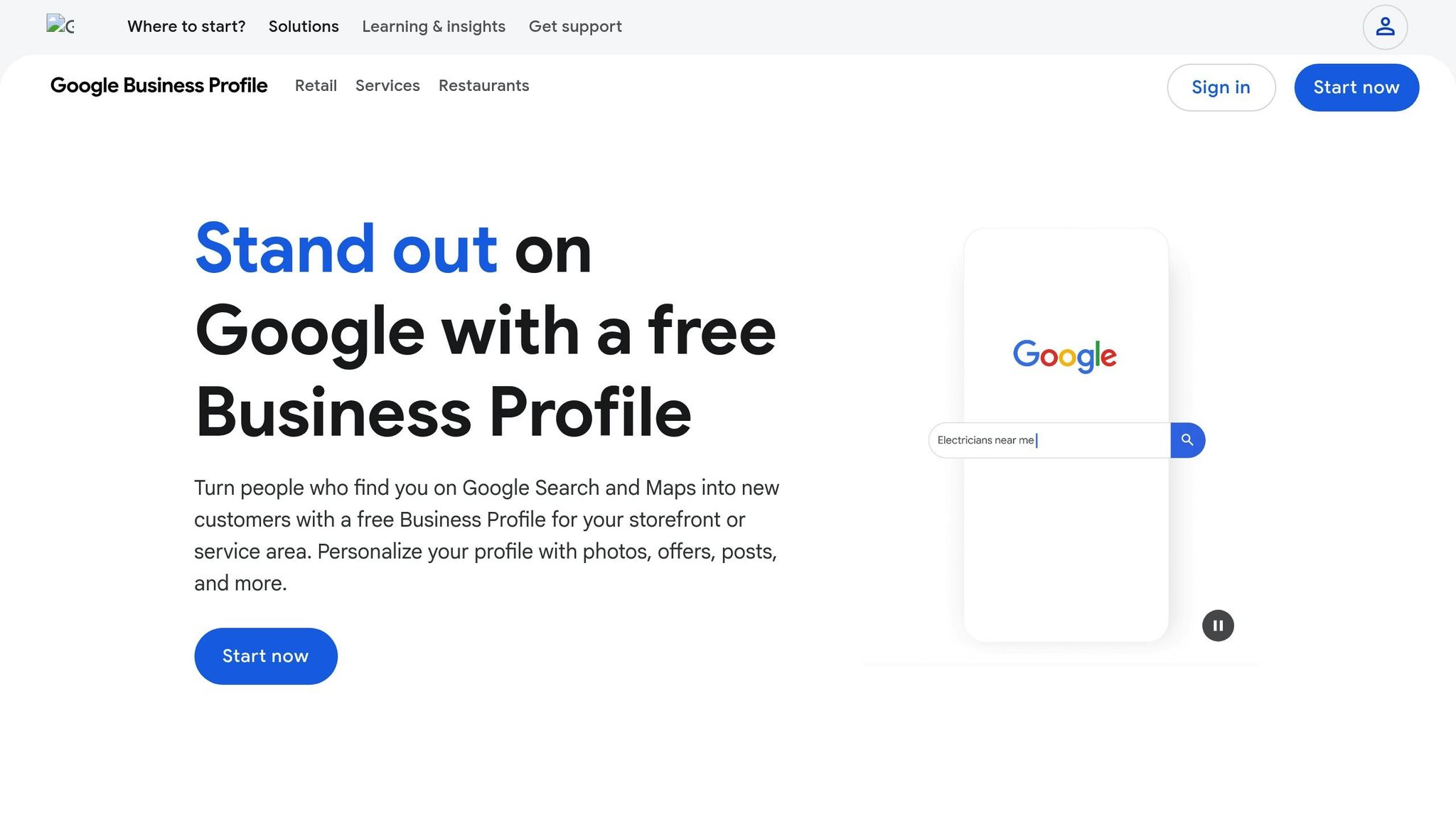
Your Google Business Profile is another valuable source of analytics, complementing your website data. Metrics like customer engagement (views, clicks, and direction requests), call volume, and review growth provide insight into how your local presence supports lead generation. Keeping a close eye on these figures helps you understand the role your profile plays in attracting new customers.
Regular Performance Reviews
Consistent monitoring of performance metrics is what sets successful tree service businesses apart. Monthly reviews should focus on key indicators such as website traffic, phone call volume, form submissions, conversion rates, and review counts. These reviews align with your SEO, mobile, and booking strategies to ensure all elements work together for effective lead generation. For example, Sitka SEO’s January 2025 checklist for tree care businesses emphasizes reviewing Google Search Console for keyword insights and Google Analytics for overall site performance. Additionally, it suggests quarterly reviews of rank tracking and Google Maps performance for a more comprehensive view.
Integrated Tracking Solutions
Modern tools can link your website analytics with operational software, creating a seamless tracking experience. Platforms like GorillaDesk not only track phone calls and form submissions but also integrate with scheduling and customer management systems. This creates a complete view of how website visitors turn into paying customers, streamlining your operations.
Turning Data into Action
Analytics aren’t just numbers – they’re a roadmap for improving your website’s performance. Regularly reviewing your data can reveal which pages need updates, which marketing channels bring in the best leads, and when to tweak your messaging or services. For example, you can optimize high-bounce pages, fine-tune ad campaigns, and improve follow-up strategies to boost conversions. By using this data, you can make targeted adjustments to maximize results and streamline your lead generation process.
Unified Lead Tracking with Tree Company Leads
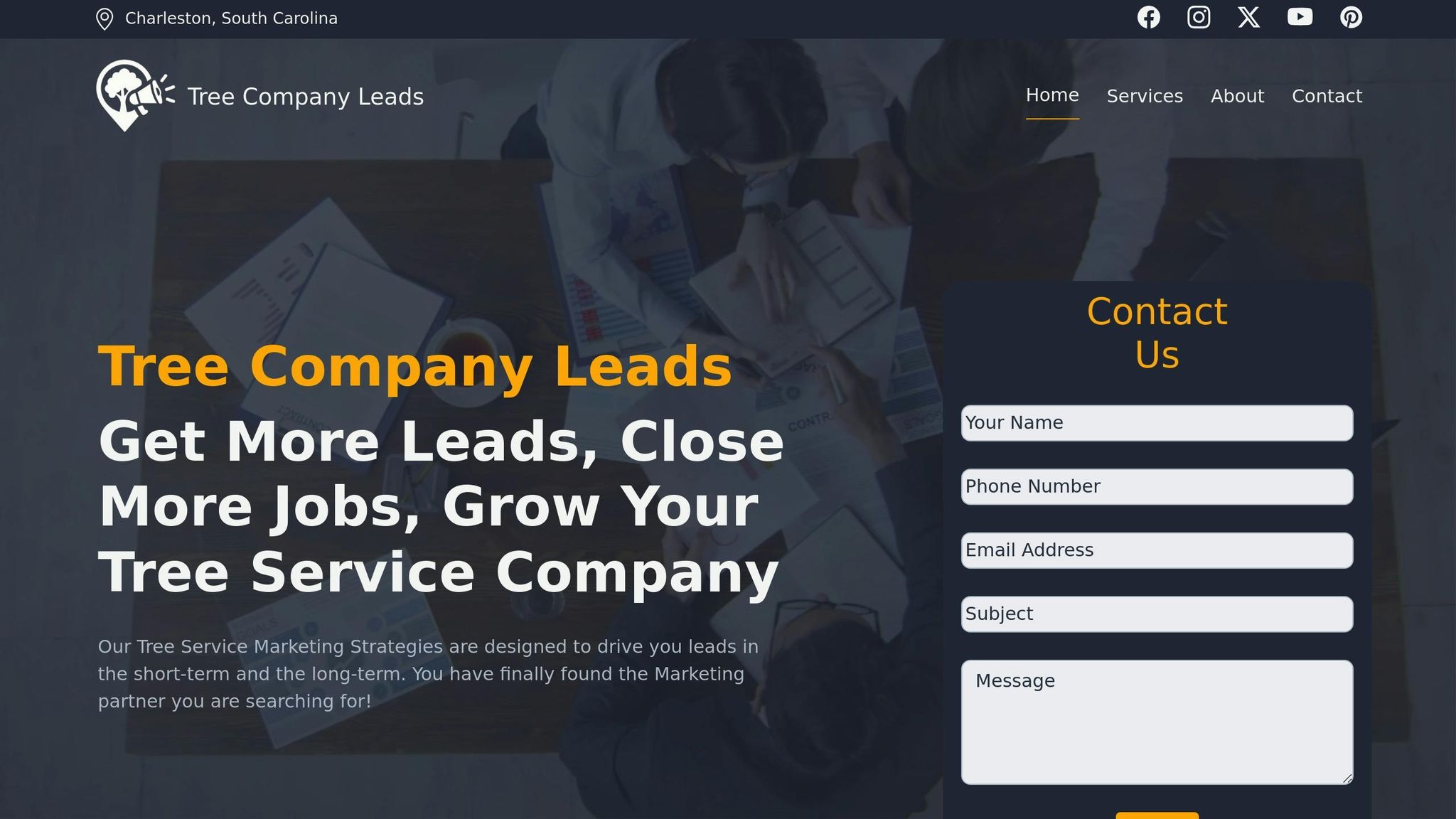
To bring all these insights together, consider an all-in-one platform like Tree Company Leads. With features like real-time lead tracking and integration with your digital marketing tools, it consolidates your performance data into a single dashboard. This makes it easier to analyze trends, track operational metrics, and make informed decisions that drive long-term growth.
Conclusion
Your tree service website serves as the cornerstone of your business’s growth. By incorporating these 12 key elements, you’ll create a strong online presence that attracts customers and generates leads consistently.
The numbers speak for themselves: 80% of tree trimming businesses report gaining new customers through an optimized website, while 57% of consumers expect a professional online presence when evaluating local services. With the U.S. tree trimming industry generating $4 billion annually, having a well-designed website isn’t just helpful – it’s a necessity for staying competitive.
Each feature on the checklist, from mobile-friendly design to engaging visuals, plays a specific role in driving action. Customer reviews, for example, are essential, as 95% of people read online reviews before deciding on a local service. These testimonials build trust and influence potential clients.
Elements like fast-loading pages, SSL security, effective local SEO, and easy-to-use booking tools ensure a smooth user experience while also boosting your search engine rankings. Providing visitors with the information they need quickly and efficiently increases satisfaction and builds credibility.
Operational tools such as lead tracking and analytics go beyond the basics, offering valuable insights that help you refine your approach and maximize your return on investment.
When all these features are optimized, your website transforms from a simple online presence into a powerful, round-the-clock lead-generation machine. Together, they enhance the user experience, improve visibility in search results, and guide visitors toward becoming loyal customers. In a competitive industry like tree services, a well-constructed website can be the game-changer your business needs for lasting growth.
FAQs
Why does a tree service website need to be mobile-friendly, and how does it affect customer engagement?
A mobile-friendly website is a must-have for tree service businesses. Why? Because it ensures that visitors can quickly and easily navigate your site on their smartphones or tablets. With so many people relying on mobile devices to search for services, having a responsive design keeps your site accessible and user-friendly.
Plus, a smooth mobile experience can give your search engine rankings a boost, making it easier for local customers to discover your business. By providing a seamless experience across all devices, you not only keep visitors engaged but also increase the likelihood of turning them into leads – and eventually, loyal customers.
How does local SEO help tree service businesses attract nearby customers?
Optimizing for local SEO is key to making sure your tree service business stands out in search results and on Google Maps when nearby customers search for tree care services. This strategy boosts your visibility to the people who are actively looking for providers in your area.
To get started, focus on location-specific keywords, set up a Google Business Profile, and encourage your customers to leave reviews. These steps build trust and help you reach the right audience at the perfect moment, bringing in more leads and turning them into clients for your business.
Why should I include customer reviews and testimonials on my tree service website, and how do they impact potential clients?
Including customer reviews and testimonials on your tree service website is a smart way to build trust and boost confidence with potential clients. These reviews offer a glimpse into real experiences from past customers, showcasing the quality of your work in an authentic way.
Positive feedback can also play a big role in easing common concerns, like whether your team is reliable, professional, and delivers great results. When visitors see others raving about your services, it can tip the scale in your favor, making them more likely to choose you over the competition.