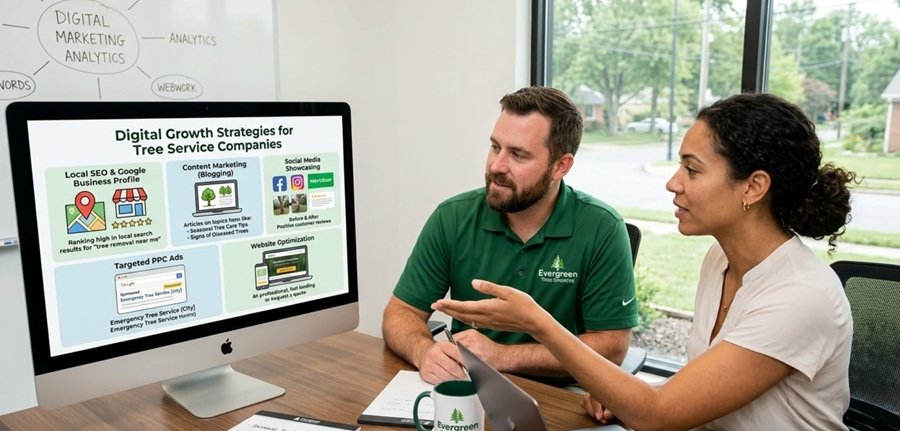
Tree service is a hyper-local, high-intent business. When a homeowner has a storm-damaged oak hanging over their roof or a dead tree threatening their fence line, they’re not browsing — they’re searching. That urgency is an enormous opportunity for tree companies that show up in the right place at the right time with the right message.
Here are the most effective digital marketing strategies for tree service companies in today’s competitive landscape.
1. Google Ads: The Fastest Path to New Customers
No other channel generates qualified tree service leads faster than Google Ads. When someone types “emergency tree removal near me” or “tree trimming [city name],” they’re ready to hire — today. Google Ads puts your company in front of that searcher before they ever scroll down to the organic results.
What works for tree service Google Ads:
- Separate campaigns by service. Tree removal, stump grinding, trimming/pruning, and emergency services all have different margins, seasonality, and conversion rates. Grouping them together makes it impossible to allocate budget intelligently.
- Use call-only and call extension campaigns. Most tree customers want to talk to someone, not fill out a form. Prioritize phone call conversions and track every call to understand which keywords are actually generating real jobs — not just clicks.
- Build a strong negative keyword list from day one. Tree service campaigns bleed budget on irrelevant searches like “tree identification,” “tree care tips,” “how to plant a tree,” and “palm tree removal” (if you’re in the Midwest). A clean negative keyword list is the difference between a campaign that loses money and one that delivers a consistent cost per lead.
- Target by zip code and radius strategically. Don’t just target your whole metro area equally. Focus budget on the zip codes and neighborhoods that convert best and have the job values you want. Large-lot suburban areas and neighborhoods with older, mature trees are often your highest-value targets.
2. Local SEO: Build Long-Term Visibility Without Paying Per Click
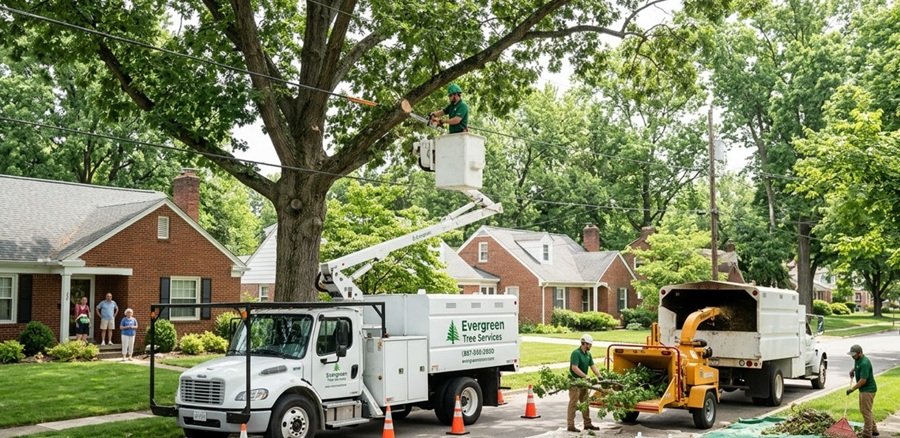
Google Ads drives immediate leads, but local SEO builds an asset that pays dividends for years. For tree service companies, ranking in the Google Local Pack (the map results) can generate a steady, consistent stream of calls at zero cost per click.
Key local SEO priorities:
- Optimize your Google Business Profile. This is non-negotiable. Ensure your service categories are correct, add photos of your crew and completed jobs, respond to every review, and post updates regularly. A complete, active GBP ranks higher and converts better.
- Build city and service landing pages. If you serve 15 cities, you should have a dedicated page for tree removal, tree trimming, and stump grinding in each of those cities — each page with unique, locally relevant content. Generic pages that say “we serve the greater metro area” won’t rank. Specific pages targeting “tree removal in [city name]” will.
- Earn local citations. Consistent NAP (name, address, phone number) listings across directories like Yelp, Angi, HomeAdvisor, Better Business Bureau, and industry directories reinforce your local relevance to Google.
- Generate reviews systematically. Reviews are one of the top ranking factors for local search. After every completed job, follow up with a direct link to your Google review page. Even a simple text or email asking for an honest review — sent within 24 hours of service — can dramatically increase your review velocity.
3. A Website That Converts, Not Just Informs
Your website is your 24/7 sales rep. For tree service companies, a high-converting site needs to do a few things exceptionally well:
- Make it effortless to call or request a quote. Your phone number should be click-to-call on mobile and visible in the header on every page. A prominent “Get a Free Estimate” button should follow users as they scroll.
- Show your work. Before-and-after photos of real jobs — large removals, technical climbs, stump grinding — build trust and credibility faster than any amount of marketing copy.
- Highlight what makes you different. Are you ISA Certified? Fully insured? Do you offer same-day emergency service? Do you own your own equipment? These trust signals matter to homeowners evaluating multiple companies.
- Keep load speed fast. Most tree service customers are searching on a mobile phone, often standing in their yard looking at a problem. A slow-loading site loses them immediately. Compress images, minimize plugins, and choose quality hosting.
4. Local Service Ads (Google Guaranteed)
If you haven’t set up Google Local Service Ads, it should be on your short-term to-do list. LSAs appear above traditional Google Ads and organic results and carry the “Google Guaranteed” badge — a trust signal that meaningfully improves click-through rates.
Unlike traditional PPC where you pay per click, LSAs charge per lead. You dispute fraudulent or irrelevant leads to get credits back. The Google Guaranteed badge requires a background check and license/insurance verification, which filters out some competitors and gives you an edge with customers who are price-comparing.
For tree service companies in competitive markets, running both LSAs and traditional Google Ads together maximizes coverage at the top of the search results page.
5. Seasonal and Storm Campaign Strategy
Tree service demand is highly seasonal and weather-driven. Smart operators build their campaigns around this reality:
- Ramp up budget in spring and fall. Spring is when homeowners emerge from winter and notice damage, dead limbs, and overgrowth. Fall brings pre-winter cleanup demand. These are your highest-volume seasons.
- Have a storm response playbook. When a significant storm hits your service area, search volume for emergency tree removal can spike 5–10x overnight. Have a campaign ready to activate immediately — with emergency-specific ad copy, a budget increase plan, and a landing page that leads with your rapid response capability.
- Promote stump grinding in slower periods. Stump grinding is often a lower-urgency service that customers delay. Running targeted promotions or discounted bundled pricing in your slower months can fill the schedule and keep crews busy.
6. Reputation Management and Review Strategy
For a service business built on trust and access to someone’s property, your online reputation is one of your most powerful marketing assets — or your biggest liability.
- Respond to every review, positive and negative. A professional, empathetic response to a negative review often impresses potential customers more than the review itself damages you. It shows you care and you’re accountable.
- Never pay for fake reviews. Beyond the ethical issues, Google actively detects and removes suspicious review patterns, and getting penalized can wipe out years of legitimate review equity.
- Leverage reviews in your ads. Positive reviews and high ratings can be highlighted in Google Ads via seller ratings extensions, and on your website as social proof near your quote request forms.
7. Retargeting: Stay in Front of People Who Didn’t Call Yet
The majority of people who visit a tree service website don’t convert on the first visit. They might be comparing prices, waiting to discuss it with a spouse, or just not ready yet. Retargeting ads — which show banner or social ads to people who have already visited your site — keep your company top of mind until they’re ready to book.
Even a modest retargeting budget of $5–10/day can meaningfully improve your overall conversion rate from website traffic you’re already paying for through Google Ads and SEO.
8. Social Media for Brand Awareness and Community Trust
Tree service isn’t typically a social-first business, but platforms like Facebook and Nextdoor can be surprisingly effective for building local awareness.
- Before-and-after posts perform extremely well — dramatic tree removals, large stump grindings, and hazardous tree work are genuinely interesting content that gets shared locally.
- Nextdoor is underutilized. Many homeowners ask their neighbors for service recommendations directly on Nextdoor. Having an active business presence and encouraging happy customers to recommend you there can generate referrals at near-zero cost.
- Facebook ads work well for homeowners with larger lots. If you can target by homeownership, home value, and geography, Facebook can be a cost-effective way to reach the homeowner demographic that has the jobs you want.
Putting It Together: The Right Mix for Your Budget
If you’re just starting out, prioritize Google Ads and Google Business Profile optimization first. They’ll generate leads the fastest and help you understand which services and geographies perform best. As your budget grows, invest in your website and city-specific SEO pages to reduce your long-term reliance on paid traffic.
The tree service companies that consistently win in their markets are doing all of these things — not perfectly, but systematically. They’re tracking calls, refining their ad campaigns monthly, generating reviews after every job, and building a web presence that compounds in value over time.
That’s how you turn a good tree company into the most visible and trusted one in your market.