If your tree service website isn’t bringing in leads, it’s time to fix it. Low traffic often means fewer inquiries and lost revenue. The good news? You don’t need advanced skills or a big budget to solve this problem. This guide covers eight practical strategies to boost your site’s visibility and attract local customers:
- Local SEO: Claim and optimize your Google Business Profile. Use city-specific keywords like "tree removal in [Your City]" to rank higher in local searches.
- Website Design: Ensure your site is mobile-friendly, fast, and easy to navigate. Display contact info prominently and include clear calls-to-action.
- Online Ads: Use Google Ads to target high-intent keywords like "emergency tree service near me" and focus on location-based targeting.
- Backlinks: Partner with local businesses, write guest posts, and get listed in niche directories to improve your search rankings.
- Content Creation: Publish helpful blogs, showcase before-and-after projects, and write geo-targeted pages to engage visitors and build trust.
- Social Media: Share project photos, promote seasonal offers, and engage with local audiences on platforms like Facebook and Instagram.
- Track Performance: Use tools like Google Analytics to measure traffic, conversions, and ROI. Refine campaigns based on data.
- Professional Help: Consider partnering with services like Tree Company Leads for web design, ads, and exclusive leads.
Start small – focus on one or two strategies and build from there. Whether you DIY or hire experts, consistent effort will help you get more traffic and clients.
The 10 Best Tree Service Marketing Ideas
Solution 1: Optimize Local SEO
Local SEO is all about making sure your tree service business shows up when people in your area search for help. Think about it – when someone types "tree removal near me" or "emergency tree service in Springfield" into Google, you want your name to pop up first. This strategy connects you with local customers who are actively searching for services like yours, focusing on people who are within a reasonable distance and ready to hire.
For tree care businesses, local SEO is especially effective because your services are tied to specific locations. Done right, it can land your business in Google’s "map pack" – those three highlighted businesses with map pins at the top of search results. This spot can significantly boost your website traffic and phone calls. Here’s how to make it happen.
Claim and Optimize Your Google Business Profile
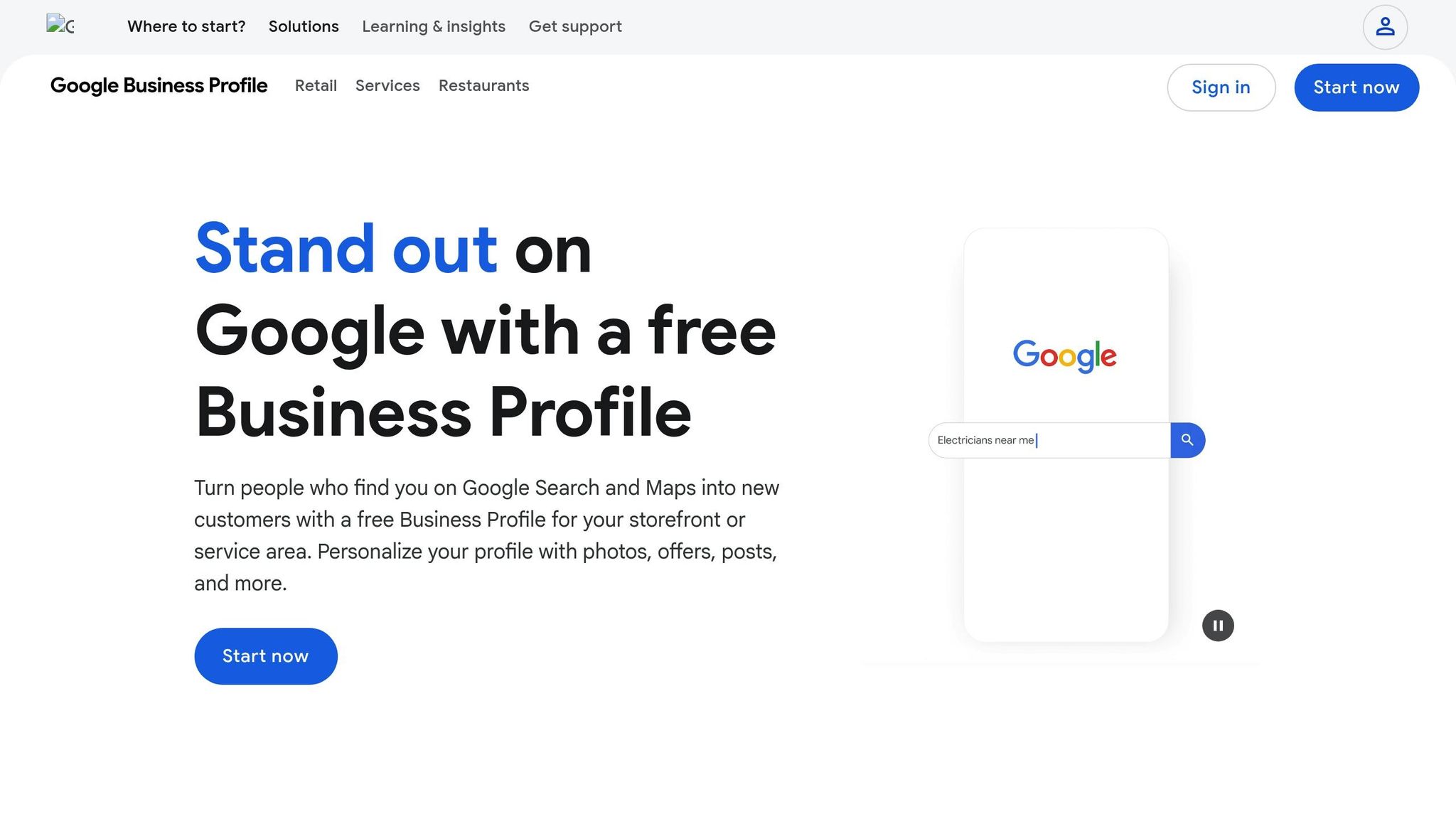
Your Google Business Profile (previously Google My Business) is essential for local visibility. It’s free and directly influences the map results people see when searching for tree services. If you haven’t claimed your profile yet, visit google.com/business and follow the verification process. Google typically sends a postcard with a code to verify your business, which can take about 5–7 days to arrive.
Make sure to fill out every detail on your profile. Include your business name, address, phone number, website, and hours of operation. Specify all the cities and towns you serve. Upload high-quality photos of your team, equipment, and completed projects to give potential customers a sense of your work.
Select the right business categories. Your primary category should be "Tree Service" or "Arborist", and you can add secondary categories like "Stump Grinding Service" or "Tree Removal Service" if they apply. Write a clear, engaging business description that highlights your services and service areas. For example: “Family-owned tree service offering emergency tree removal, trimming, and stump grinding across Fairfax County since 2010.”
Keep your profile active by posting updates about seasonal services, promotions, or recent projects. Google prioritizes active profiles, and these updates appear in search results, giving potential customers more reasons to choose you. Once your profile is polished, it’s time to focus on keywords.
Target Location-Specific Keywords
Location-specific keywords are key to attracting the right customers. Someone searching for "tree removal" without a location might not be ready to hire, but a search like "tree removal in Austin" or "emergency tree service near Round Rock" often signals immediate intent.
Combine your core services – tree removal, tree trimming, stump grinding, emergency tree service, land clearing, and arborist consultations – with your service areas. Use phrases like "tree removal in Denver", "tree trimming in Boulder", or "stump grinding in Lakewood."
Incorporate these keywords naturally throughout your website, including in page titles, headers, and body text. Instead of a generic homepage title like "Professional Tree Services", try "Professional Tree Removal & Trimming in Portland, OR." Create dedicated pages for each service area, such as "Tree Services in Arlington, VA", and include local details like landmarks, neighborhoods, or common tree-related challenges.
Don’t overlook long-tail keywords – specific phrases like "affordable tree removal for storm damage" or "certified arborist for oak tree disease." These may get fewer searches, but they often attract people closer to making a decision. Once you’ve nailed your keyword strategy, use customer reviews to further boost your local SEO.
Use Customer Reviews
Reviews are a cornerstone of local SEO. When potential customers see three tree service companies on Google, they’re more likely to choose the one with 45 glowing reviews. Reviews not only build trust but also influence Google’s algorithm, which considers the number, quality, and recency of reviews when ranking businesses – especially in the map pack.
Consistent, positive reviews signal to Google that your business is active, reliable, and well-regarded. They also often include keywords naturally, as customers describe the services they received, which can further improve your local SEO.
Make it a habit to ask for reviews after every job. Timing is everything – ask while the experience is still fresh. Send a text or email with a direct link to your Google Business Profile review page to make the process as easy as possible. Some tree service companies even include QR codes on invoices that take customers straight to the review page.
Respond to every review, whether it’s positive or negative. Thank satisfied customers for their feedback, and address any issues raised in critical reviews. This shows you care about your clients and are committed to quality service. Plus, responding to reviews signals to Google that you’re an engaged business owner, which can positively impact your rankings.
Don’t worry about the occasional negative review. What matters most is your overall rating and how you handle feedback. A professional, thoughtful response to criticism can often build more trust than a perfect score with no engagement.
Solution 2: Improve Website Design and User Experience
Your website is often the first impression potential customers get of your tree service business. If it feels outdated, takes forever to load, or is hard to navigate, visitors might leave before they even learn what you offer. A well-designed website does more than just look good – it keeps people engaged, builds trust, and turns casual visitors into paying customers.
The key is simple: make it easy for visitors to find what they need and take action. Whether they’re searching for emergency tree removal, stump grinding, or a free estimate, your site should guide them seamlessly from the landing page to contacting you. Poor design, slow loading speeds, or a site that doesn’t work well on mobile devices can quickly drive people away. Start with a mobile-friendly foundation, then focus on refining other design elements.
Mobile Optimization Is Non-Negotiable
Most people search for services on their smartphones, and many of your potential customers will visit your website from their mobile devices. If your site doesn’t load quickly or function well on every screen size, you’re losing a big chunk of your audience. As Hillary Walters puts it:
"Remember – you might miss out on potential customers if your website doesn’t load quickly or work well on every kind of device."
A responsive design ensures your site adjusts seamlessly across desktops, laptops, smartphones, and tablets. Not only does this improve user experience, but it can also boost your search rankings. Mobile optimization is critical – ignoring it is one of the most common SEO mistakes tree care businesses make, often resulting in lower page rankings.
Fast-loading pages are another must. If your site takes too long to load, visitors are likely to leave before exploring. Compress images, streamline your code, and test your site’s speed to ensure quick loading times.
Make Navigation Simple and Clear
Your website’s navigation should feel effortless. Visitors need to find your services, service areas, and contact details without hunting around. Use clear and straightforward menu labels like "Services", "Service Areas", "About Us", and "Contact."
Place a prominent call-to-action (CTA) on every page. Whether it’s "Get a Free Estimate", "Call Now for Emergency Service", or "Schedule a Consultation", make it crystal clear what you want visitors to do next. Buttons with clear CTAs on key pages guide visitors toward taking action, boosting conversions.
Visibility of Contact Information
Your contact details should be easy to find on every page – ideally in the header or footer. Display your phone number in a large, clickable format so mobile users can call you with one tap. Also, make sure to list your service areas clearly, so visitors know if you cover their location.
Build Trust Through Visuals and Content
High-quality photos of your team and completed projects can immediately establish credibility. Real photos are far more effective than generic stock images. Showcasing notable projects or your team in action helps visitors feel confident about your services.
A great user experience (UX) isn’t just good for visitors – it sends positive signals to search engines. When people spend time on your site, browse multiple pages, and engage with your content, search engines take it as a sign that your website is valuable, potentially improving your rankings.
Keep It Clean and Professional
Test your website on multiple devices and browsers to catch any issues. Sometimes, a fresh perspective can reveal problems you’ve overlooked.
Maintain a clean design by avoiding clutter, excessive pop-ups, and auto-playing videos. Use plenty of white space to make your content easier to read, and stick to a consistent color scheme that reflects your brand. Your site should feel polished and professional – not like it was thrown together in a hurry.
Finally, highlight your unique selling points – whether it’s 24/7 service, certified arborists, or full insurance coverage. These details build trust and help you stand out from competitors.
Solution 3: Use Targeted Online Advertising
When organic strategies take time to gain traction, targeted online ads can provide immediate visibility – especially important for tree service professionals dealing with seasonal demand. Paid ads allow you to connect with local customers actively searching for services. Unlike traditional options like newspaper ads or billboards, online advertising gives you control over who sees your ads, when they see them, and how much you spend. You can start small, experiment to see what works, and scale up as you gather results. The trick is to be strategic – choose the right keywords, focus on the right locations, and keep a close eye on your campaigns to get the most out of your investment.
Let’s break down how to select and optimize keywords to attract the right local audience.
Focus on High-Intent Keywords
Not all keywords are equally valuable. For instance, someone searching “what is tree pruning” is likely gathering information, while someone typing “emergency tree removal near me” is ready to hire. These high-intent keywords indicate an immediate need and a customer actively looking for help.
For tree service businesses, high-intent keywords often include terms like “tree removal service,” “emergency tree service,” “stump grinding near me,” or “tree trimming cost.” These searches show clear commercial intent and are more likely to lead to bookings.
When setting up Google Ads campaigns, prioritize these action-oriented keywords. While these terms might cost more per click than general informational phrases, they’re much more likely to convert into paying customers. Similar to location-based SEO, targeting high-intent keywords ensures your ads appear when potential customers are ready to act.
Don’t forget to include location-specific modifiers in your keywords. Phrases like “tree removal in [your city]” or “arborist near [neighborhood name]” can help you capture local searches. These geo-specific keywords often face less competition and attract customers actively seeking services in your area.
Set Up Location-Based Targeting
Location-based targeting ensures your ads are shown to people within your service area, saving you from wasting money on clicks from outside your reach. For tree service businesses, this is especially important since your work is geographically limited.
You can target specific cities, ZIP codes, or even a custom radius around your location. Platforms like Facebook and Instagram also offer location-based targeting, allowing you to refine your audience further. For example, you can focus on homeowners, people within certain age groups, or those interested in home improvement. This layered targeting helps you zero in on the most likely customers.
Adjust your bids based on location performance. If you notice that certain neighborhoods or towns generate more business or higher-value projects, increase your bids in those areas to capture more opportunities. On the flip side, if certain locations consistently underperform, reduce spending there and reallocate that budget to more profitable areas.
Once you’ve fine-tuned your targeting, it’s essential to track performance and make data-driven adjustments.
Monitor Campaign Performance
Tracking and optimizing your campaigns is key to ensuring your advertising dollars are well spent. It’s not just about clicks – it’s about results. You need to understand which ads are converting into phone calls or estimate requests and which ones are eating up your budget without delivering leads.
The most important metric for Google Ads campaigns is ROI – not just cost per click. A low cost per click is meaningless if those clicks don’t turn into paying customers. Focus on tracking the entire customer journey, from the moment they click on your ad to when they book your services.
Set up conversion tracking to measure actions like form submissions, phone calls, or clicks on your phone number. This data will reveal which keywords and ads are driving leads, not just traffic. Many businesses make the mistake of focusing solely on clicks when they should be measuring cost per lead and revenue per customer.
A good benchmark for an effective campaign is achieving a cost ratio of 5:1 – generating $5 in revenue for every $1 spent. For example, if you’re spending $500 per month on ads, aim to generate at least $2,500 in revenue. Keep track of this monthly to ensure your campaigns remain profitable.
Optimization is an ongoing process. Regularly tweak your ad copy, keywords, ad extensions, landing pages, and even your customer service processes. Review campaign performance weekly, especially in the early stages. Look for trends: which days and times bring in the most calls? Which ad copy gets the best engagement? Which keywords are too expensive without delivering results?
If clicks lead to quick exits, take a closer look at your landing page. Make sure it aligns with the promises in your ad and makes it easy for visitors to contact you. The goal is to create a seamless experience from the ad to the booking process.
Solution 4: Build High-Quality Backlinks
Backlinks from reputable websites can elevate your tree service business by improving search rankings and driving referral traffic. Search engines see links from trusted sources as endorsements of your site’s value and reliability.
But here’s the catch: quality matters more than quantity. A single link from a respected local business association or a well-known industry publication can carry more weight than dozens of links from low-quality directories. Search engines are smart enough to detect manipulative tactics, so the goal should always be earning authentic links from credible sources.
For tree care professionals, building meaningful connections and creating content that naturally attracts links is a long-term game. While it takes more effort than quick fixes, the payoff includes better rankings, increased visibility, and steady referral traffic from trusted sites. Let’s dig into some practical ways to secure those high-quality links.
Partner with Local Businesses
Teaming up with local businesses that complement your services is a smart way to earn backlinks. Think about businesses that share your customer base but don’t compete with you directly – like landscaping companies, garden centers, real estate agents, property managers, or home improvement contractors.
One simple approach is to exchange links by featuring each other on a "trusted partners" or "recommended services" page on your websites. Many local businesses appreciate these partnerships because they benefit both parties by offering added value to customers while strengthening local visibility.
Beyond backlinks, these collaborations can lead to client referrals and joint promotions. You can also explore opportunities with local chambers of commerce, business improvement districts, or professional associations. Many of these organizations offer member directories that link back to your site. While some require a membership fee, the networking opportunities and increased local credibility often make it worth the investment.
Write Guest Posts for Industry Websites
Guest blogging is another effective way to showcase your expertise while earning valuable backlinks. By contributing well-researched, informative posts to reputable websites, you can establish yourself as an authority and attract trusted traffic.
Look for opportunities with industry publications, local news outlets, home improvement blogs, or regional business websites that align with your target audience. For instance, topics like "How to Spot Tree Diseases Early", "Seasonal Tree Care Tips for Homeowners", or "Storm Damage Prevention for Your Trees" provide practical advice that resonates with readers.
Most guest blogging platforms allow you to include an author bio with a link to your site, and some even permit links within the content itself. Both options can strengthen your online presence. Just make sure to research the host site’s audience and craft a pitch that offers clear, actionable value.
Get Listed in Niche Directories
While general business directories often provide limited value, niche directories focused on tree care and home services can be a goldmine for backlinks and targeted leads. These specialized listings help you connect with people actively searching for tree services, while also signaling search engines that your business is legitimate.
Start by identifying directories tailored to arborists and tree care professionals. Many industry associations maintain lists of certified experts, which often carry significant weight. Additionally, local directories tied to your city or region can boost your local SEO. For example, municipalities often have directories of licensed contractors, and local news websites may feature business listings to help consumers find trusted services.
When creating directory profiles, consistency is key. Make sure your business name, address, and phone number match across all platforms. Write a compelling description of your services, highlight your service area, and include photos of your work to make your listing stand out. A well-crafted profile can do more than just improve your SEO – it can also turn directory visitors into paying customers.
On the flip side, steer clear of low-quality directories or link farms that can harm your SEO. Focus on platforms where real potential customers are likely to find you, ensuring the value goes beyond just earning a backlink.
sbb-itb-130a704
Solution 5: Create and Share Content
Sharing helpful content is one of the best ways to attract potential customers and boost your website’s visibility in search results. By publishing useful information, you not only draw traffic but also build trust with your audience.
Search engines reward websites that consistently publish fresh and relevant content. Every blog post or project showcase you share gives search engines another reason to rank your site for keywords related to tree care. But the real win happens when your content solves a specific problem – turning casual visitors into paying customers.
As a tree service expert, you already have the knowledge to create impactful content. You understand the questions homeowners ask, the mistakes they make, and the worries they face. Your task is to present this expertise in a way that’s easy to understand and accessible. Here’s how you can create content that converts browsers into clients.
Write Informative Blog Posts
Blog posts are a great way to show your expertise while targeting the keywords your potential customers are searching for. Focus on topics that matter to homeowners.
For example, write about common concerns like when to trim trees, how to spot signs of disease, or what to do after a storm. Each of these questions can become a blog post that attracts people actively seeking solutions.
Keep your posts clear and include relevant photos to make them more engaging. Use subheadings to break up the text for easier reading. Wrap up each post with a straightforward call to action, such as encouraging readers to contact you for professional help.
Develop Geo-Targeted Content
While general tree care advice is helpful, targeting content to specific locations can significantly boost your local search rankings. By creating pages or blog posts tailored to particular neighborhoods, cities, or regions, you let search engines – and potential customers – know exactly where you operate.
For instance, instead of having one broad "Tree Removal Services" page, create location-specific pages like "Tree Removal in [City Name]", "Storm Damage Cleanup in [County]", or "Emergency Tree Services in [Neighborhood]." On these pages, include details relevant to the area, such as local tree species, weather challenges, or tree care regulations.
You can also create geo-targeted blog posts. Write about topics like "Best Trees to Plant in [City]’s Climate", "How [Local Weather Event] Impacts Tree Health", or "Understanding [City Name]’s Tree Removal Permits." These posts naturally include local keywords while providing valuable information to your audience.
Just make sure each piece of content is unique. Avoid duplicating content with only minor changes for different locations, as this can hurt your search rankings.
Showcase Before-and-After Projects
Before-and-after photos are a powerful way to build credibility. They visually demonstrate your expertise and show potential customers the kind of transformations your services can achieve.
Research shows that 89% of people are influenced by videos when deciding to purchase a product or service. While video is effective, simple photo comparisons can also make a big impact. They’re engaging, easy to understand, and quickly highlight the value of your work.
Post these photos on your Google Business Profile to improve your local search presence. Make sure the "before" shot clearly shows the problem – like an overgrown tree blocking a view or a hazardous hanging branch – and the "after" shot showcases the clean, professional result.
Social media platforms like Instagram are perfect for sharing these transformations. Post photos of a major tree removal, a beautifully pruned tree, or a lot cleared after storm damage. Add short descriptions explaining what you did and why. For especially striking projects, consider boosting posts to reach a larger audience.
On your website, create a portfolio or gallery page where visitors can browse your work. Organize photos by service type – such as pruning, tree removal, or emergency cleanup – so users can easily find examples relevant to their needs. Add captions explaining the problem, your solution, and the outcome to show your expertise and build trust.
"Underutilizing photos and testimonials: Real results build trust. Share them!" – GorillaDesk Staff
Combining visual proof with clear explanations makes before-and-after content a powerful marketing tool. It only takes a few extra minutes to document your work, but the impact on your credibility and customer confidence is huge. By using these content strategies, you can not only improve your online presence but also attract quality leads to your tree service business.
Solution 6: Use Social Media
Social media is a powerful tool for boosting local visibility and driving traffic to your website, especially for tree service companies. Every share, comment, and interaction can bring potential customers right to your digital doorstep. These platforms allow you to connect with local homeowners, showcase your expertise, and turn followers into paying clients.
The trick is to focus on platforms where your audience spends their time. Homeowners searching for tree services are often active on Facebook, Instagram, and neighborhood-specific platforms like Nextdoor. Each platform serves a unique purpose, but they all share a common benefit: they keep your business top-of-mind when someone needs tree care.
When used regularly, social media does more than just showcase your work – it positions your business as a trusted local expert. Engaging with your audience builds trust, and the visual nature of tree care makes it a perfect fit for social platforms. From dramatic transformations to intricate craftsmanship, your work naturally grabs attention online.
Share Visual Content
Tree care is highly visual, and social media thrives on eye-catching photos and videos. Your completed projects can tell a story that words alone can’t. Share images of challenging tree removals, beautifully pruned landscapes, or emergency storm cleanups to highlight your skills.
- Facebook: Ideal for connecting with local homeowners and running targeted ads. Post project photos, team highlights, and tree care tips. The platform’s community focus makes it perfect for building relationships in your area.
- Instagram: A great place to showcase your most visually striking work. Share before-and-after shots of overgrown trees turned into well-maintained landscapes. Use local hashtags like #TreeCare, #[YourCity]Trees, or #TreeRemoval to expand your reach.
- YouTube: Create short, educational videos to prove your expertise. Share tips on storm prep, identify signs of diseased trees, or demonstrate proper pruning techniques. These videos not only help viewers but also boost your brand and drive traffic to your site.
Did you know 89% of people say watching a video influenced their decision to buy a product or service? Even simple smartphone videos of your crew removing a hazardous tree or cleaning up after a storm can be incredibly effective. The scale, movement, and skill involved in tree work translate beautifully to video.
Don’t just focus on finished projects. Share behind-the-scenes content, introduce your team members, or show off the specialized equipment you use. These glimpses into your daily operations help build a personal connection with your audience.
Encourage Interaction
Social media isn’t just about posting visuals – it’s about creating a dialogue. How you engage with comments, messages, and reviews can make or break someone’s decision to contact you.
- Respond quickly to comments and messages. If someone asks about your services or pricing, provide clear and thorough answers.
- Reply to reviews on platforms like Facebook and Google Business Profile. Thank happy customers for their feedback, and address any concerns from negative reviews in a professional manner. Thoughtful responses show potential clients that you value feedback and care about your reputation.
- Ask questions in your posts to spark engagement. For example, after sharing a project photo, ask followers if they’ve faced similar tree issues. Or post a picture of an unusual tree species and ask if anyone can name it. These small interactions boost your visibility and keep your business memorable.
Another tip: join local community groups on Facebook. Homeowners often discuss neighborhood issues and ask for service recommendations in these groups. By actively participating and sharing helpful advice, you’ll establish your name as a trusted resource. Just be sure to follow the group’s rules on self-promotion.
Promote Seasonal Offers
Social media offers a direct way to reach customers when they’re most likely to need your services. Tree care has seasonal peaks, and timely promotions can drive significant traffic to your website.
- In late winter and early spring, promote pruning services and spring cleanup packages.
- As storm season approaches, advertise emergency tree removal and preventive trimming services.
- In the fall, highlight leaf removal and pre-winter tree health assessments.
You can also announce limited-time deals, like 10% off tree health inspections or discounted storm damage assessments. Paid ads on Facebook and Instagram can amplify these promotions, targeting homeowners in specific neighborhoods or demographics. Even a small budget of $5–10 per day can expand your reach significantly.
Nextdoor is especially effective for seasonal offers. This hyperlocal platform connects you directly with homeowners in your area. Posts about seasonal services or special deals are likely to reach people who need your help the most. Plus, recommendations on Nextdoor carry weight because they come from trusted neighbors.
Timing is everything. Post storm preparation tips ahead of severe weather or remind people of the importance of removing dead trees before high winds hit. This kind of timely, helpful content not only positions you as an expert but also encourages people to visit your website when they need assistance.
Solution 7: Monitor and Adjust Marketing Strategies
Unfocused marketing is like throwing money into the wind – you don’t know where it’s going or if it’s doing anything worthwhile. To avoid wasting your budget, you need to understand what’s working, what isn’t, and where your next customer is coming from. Without tracking your efforts, you’re essentially making decisions in the dark, spending resources on tactics that might not deliver.
Once you’ve implemented strategies like SEO, design improvements, and advertising campaigns, the next step is crucial: monitor and adjust your marketing efforts to ensure sustained growth. The difference between a tree care business that’s barely getting by and one that’s thriving often lies in how well those efforts are tracked and fine-tuned. It’s not enough to launch a Google Ads campaign or post sporadically on social media – you need to dig into the data, understand what it’s telling you, and make informed adjustments.
Think of it like diagnosing a sick tree: you inspect the symptoms, identify the issues, and apply targeted solutions. Regular monitoring allows you to catch problems early, seize opportunities, and keep your marketing budget working efficiently. One of the best tools for this is your website’s analytics, which can reveal what’s working and where changes are needed.
Track Website Analytics
Your website generates a treasure trove of data every day, and ignoring it means missing out on insights that could transform your business. For tree care companies, one of the most critical metrics is the conversion rate – the percentage of visitors who take an action, such as calling your business, filling out a contact form, or requesting an estimate.
Traffic alone doesn’t mean much if it doesn’t lead to action. For instance, you might see 1,000 visitors a month, but if none of them contact you, that traffic isn’t helping your business. The key is to understand how visitors interact with your site and whether they’re completing the actions you want them to take.
Google Analytics is an indispensable tool for tracking your website’s performance. It can show you where your traffic is coming from – whether it’s organic search, paid ads, social media, or direct visits. You’ll also see which pages are most popular, how long visitors stay, and where they leave. A critical metric to watch is your bounce rate, which measures the percentage of visitors who leave after viewing just one page. A bounce rate between 25% and 40% is generally excellent. If yours is higher, it could indicate issues like slow loading times, poor design, or irrelevant content.
Breaking down conversion rates by traffic source can also help you optimize your marketing budget. This data confirms which channels – like SEO or paid ads – are delivering the best results.
Geographic data is another useful insight. If your business serves multiple cities or counties, tracking which areas generate the most conversions can guide your local SEO and advertising strategies. For example, you might find that one town consistently brings in high-quality leads, while another barely converts. Use this information to allocate your resources more effectively.
Google Search Console is another valuable tool that complements Analytics. It provides insights into how your site performs in search results, including which keywords drive traffic, click-through rates (CTR) for various search terms, and any technical issues that could hurt your rankings. A good CTR typically falls between 2% and 5%, according to Campaign Monitor. If your CTR is lower, consider revising your page titles and meta descriptions to make them more engaging.
Don’t forget to monitor mobile-specific metrics like bounce rates and conversion rates. If your mobile performance lags behind desktop, it’s a clear sign that your site’s mobile experience needs improvement.
Once you’ve gathered insights from your analytics, use them to refine your campaigns and make data-driven decisions.
Test and Refine Campaigns
The most successful tree care businesses are constantly testing, measuring, and tweaking their marketing campaigns. This ongoing process of refinement is what separates average results from outstanding ones.
Start with your paid advertising efforts. If you’re running Google Ads, experiment with different ad headlines and descriptions to see which versions generate more clicks and conversions. Test variations of your landing pages – adjust the headline, change the color of your call-to-action button, or try a different form layout. Even small changes can lead to noticeable improvements.
Your keyword strategy also needs regular attention. Some keywords may cost more per click but attract higher-quality leads, while others might drive traffic that never converts. Regularly review your keyword performance, pausing the ones that waste your budget and focusing on those that bring in customers.
Email marketing is another area ripe for testing. With an average ROI of $42 for every $1 spent and a 6.5% conversion rate, email remains one of the most effective digital marketing channels. Experiment with different subject lines, sending times, and content formats to see what resonates most with your audience. The average email open rate is 21.33%, so there’s plenty of room to optimize.
Call tracking is another powerful tool for refining your marketing efforts. Many tree service customers prefer to call rather than fill out an online form, so if you’re only tracking digital conversions, you could be missing valuable leads. Assign unique phone numbers to different marketing channels – one for your website, one for Google Ads, and another for direct mail – so you can identify exactly where each call is coming from.
When testing, focus on one variable at a time. For example, if you’re experimenting with ad copy, don’t simultaneously change your landing page design and keyword strategy. This way, you’ll know exactly which change led to the improvement. Test methodically, keep what works, and discard what doesn’t.
Stay Updated on Industry Trends
Digital marketing is always evolving, and what worked last year might not be as effective today. Staying informed about new trends and tools can give your tree care business a competitive edge.
For example, Google updates its search algorithm hundreds of times each year. While most changes are minor, major updates can significantly impact your website’s rankings. Following reputable SEO news sources can help you understand these updates and adjust your strategies accordingly. Social media platforms like Instagram, Facebook, and YouTube also roll out new features regularly – short-form video content, for instance, offers fresh ways to engage potential customers.
Consumer behavior is also shifting. A staggering 95% of consumers now read online reviews before choosing a local business. In the past, simply having an online presence might have been enough, but today, detailed and positive reviews play a crucial role in converting prospects into customers.
Emerging technologies like AI-powered chatbots and advanced analytics platforms can also help you work more efficiently and effectively.
Engage with online communities where tree care professionals share marketing tips and strategies. Whether through Facebook groups, industry forums, or professional associations, these platforms can offer valuable insights. Subscribing to newsletters and blogs focused on local service businesses is another great way to stay informed.
Attending industry conferences and workshops can also be incredibly beneficial. These events provide concentrated learning opportunities and the chance to network with peers facing similar challenges. Sometimes, a single conversation at an event can spark ideas that transform your marketing approach.
Solution 8: Partner with Tree Company Leads
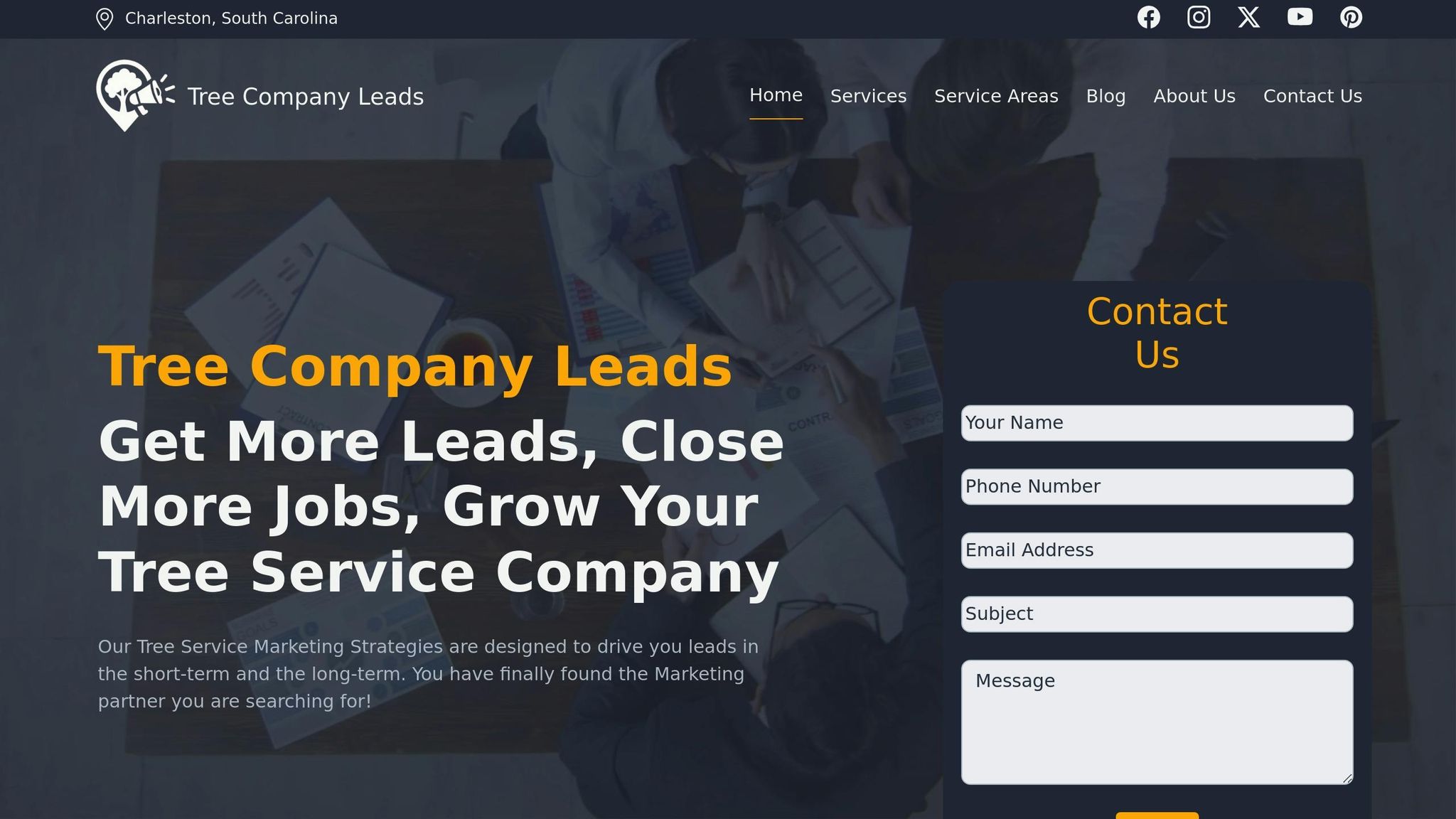
Managing SEO, ads, content, and website updates can quickly become overwhelming. Digital marketing requires ongoing attention, expertise, and consistent effort to deliver results. For many tree care professionals, trying to juggle these responsibilities often means important tasks get overlooked.
That’s where partnering with a specialized service can simplify your marketing efforts. Instead of managing multiple contractors for web design, advertising, and lead generation, you can turn to a one-stop solution. Tree Company Leads focuses exclusively on helping tree care businesses grow by driving more website traffic and delivering qualified leads. Their services include custom web design, targeted Google Ads management, and exclusive lead generation – all tailored specifically for the tree care industry.
This integrated approach ensures your website, advertising, and lead generation work seamlessly together. It allows you to concentrate on what you do best: providing top-notch tree care services. If your digital marketing feels like it’s falling short, this partnership could be the missing piece.
Get Custom Web Design
Your website is the cornerstone of your online presence. A slow or outdated site can drive potential customers away in seconds.
Tree Company Leads creates custom websites designed specifically for tree service businesses. These aren’t cookie-cutter templates – they’re built with your customers in mind. Features like clear service descriptions, easy-to-use contact forms, mobile-friendly click-to-call buttons, and professional images showcasing your work are all included to boost conversions.
Whether a customer is looking for emergency storm cleanup or routine tree trimming, your website will make it easy for them to find the information they need. Beyond just looking great, these sites are optimized for speed, mobile usability, and search engines – ensuring they perform well across the board.
Tree Company Leads handles the technical side of things so your site reflects your brand and speaks directly to your audience. The result? A professional online presence that builds trust and turns visitors into paying customers.
Access Targeted Google Ads Campaigns

Running Google Ads effectively takes time and expertise. From researching keywords to fine-tuning ad copy, even small missteps can waste your budget. Many tree service owners simply don’t have the bandwidth to manage these details.
Tree Company Leads takes the guesswork out of Google Ads. They create and manage campaigns tailored specifically for tree care businesses. Using high-intent keywords and location-based targeting, they ensure your ads reach the right audience in your service area.
Their ongoing management includes refining ad copy, adjusting keyword bids for better ROI, and monitoring landing pages to improve conversions. This hands-on approach ensures your advertising dollars are spent wisely, giving you more time to focus on growing your business.
Receive Exclusive Leads
A common frustration with lead generation services is shared leads – where multiple businesses compete for the same customer. This often leads to bidding wars or missed opportunities if you’re not the first to respond.
Tree Company Leads eliminates this issue by providing exclusive leads. When a potential customer contacts you through their system, that lead is yours alone. This direct connection improves conversion rates and allows for more effective communication with prospects.
Additionally, leads come with real-time tracking, so you’re notified immediately when someone requests a quote or reaches out. Quick response times are essential in the tree care industry, especially for emergency services. By focusing on high-quality leads and filtering out less serious inquiries, Tree Company Leads ensures your marketing efforts translate into real business opportunities.
Conclusion
Struggling with low website traffic doesn’t have to be a permanent hurdle for your tree care business. With the right approach, you can attract more visitors and turn them into loyal clients. Let’s quickly revisit the key strategies that can set you up for success.
Start with local SEO by claiming your Google Business Profile and focusing on location-specific keywords. Make sure your website leaves a great first impression with fast loading speeds and mobile-friendly navigation. Use targeted online ads to connect with people actively searching for tree services in your area. Build credibility with high-quality local backlinks, and create engaging content like blog posts answering common tree care questions or before-and-after project galleries to showcase your expertise. Social media is another powerful tool – use it to highlight your work and connect with your community.
As you implement these strategies, keep an eye on your progress using website analytics. Adjust your tactics based on what’s working because the tree care industry – and marketing itself – is always evolving.
If juggling all of this feels overwhelming, you don’t have to go it alone. Partnering with experts like Tree Company Leads can make a world of difference. They offer custom web design, managed Google Ads, and exclusive leads to help you grow your business without the hassle.
The most important step? Take action. Start with one or two of these strategies and put them into practice today. Whether you handle it yourself or bring in professional help, consistent effort will lead to increased traffic and, ultimately, more customers.
FAQs
How can I track if my local SEO strategies are working for my tree service business?
To measure how well your local SEO efforts are paying off, tools like Google Analytics and Google Search Console are essential. These platforms help you keep an eye on key metrics such as organic traffic, keyword rankings, and bounce rate – all of which can reveal what’s performing well and where there’s room for improvement.
It’s also important to evaluate how visible your business is in local search results and map listings. Keep track of customer reviews, click-through rates, and the number of inquiries coming from online searches. These indicators provide valuable insights into how effectively your local SEO strategies are driving engagement and bringing in leads.
What are some common mistakes to avoid when running online ads for tree care services?
When running online ads for tree care services, there are a few common mistakes you’ll want to steer clear of to avoid wasting your budget or limiting your success.
First, don’t cast too wide a net when targeting your audience. Tree care services are typically local, so it’s crucial to focus on specific geographic areas where your services are actually needed. Narrowing your audience ensures your ads reach the right people.
Second, make sure your ads are clear and to the point. Misleading or overly vague messaging can confuse potential customers, making them less likely to trust your business. Be direct about what you offer and how you can help.
Third, always track your ad performance. Metrics like click-through rates and cost per lead give you valuable insights into what’s working and what needs tweaking. Without this information, you’re essentially flying blind.
By avoiding these common pitfalls and keeping your focus on a local audience, you’ll be better positioned to create ad campaigns that truly deliver results for your tree care business.
What are the best ways to attract more visitors to my tree care website and turn them into customers?
To bring in more visitors and turn them into customers, start by focusing on local SEO. This means tailoring your website to show up in local search results. Use keywords that highlight both your tree care services and the specific areas you serve.
Next, make sure your website is user-friendly. A simple, professional design with easy navigation can make a big difference. Add clear calls-to-action, like buttons for requesting a quote or contacting you, to guide visitors toward taking the next step.
If you want to boost visibility even further, think about running targeted online ads, such as pay-per-click (PPC) campaigns. These ads can connect you with people who are already looking for tree care services nearby, helping you attract more qualified leads.