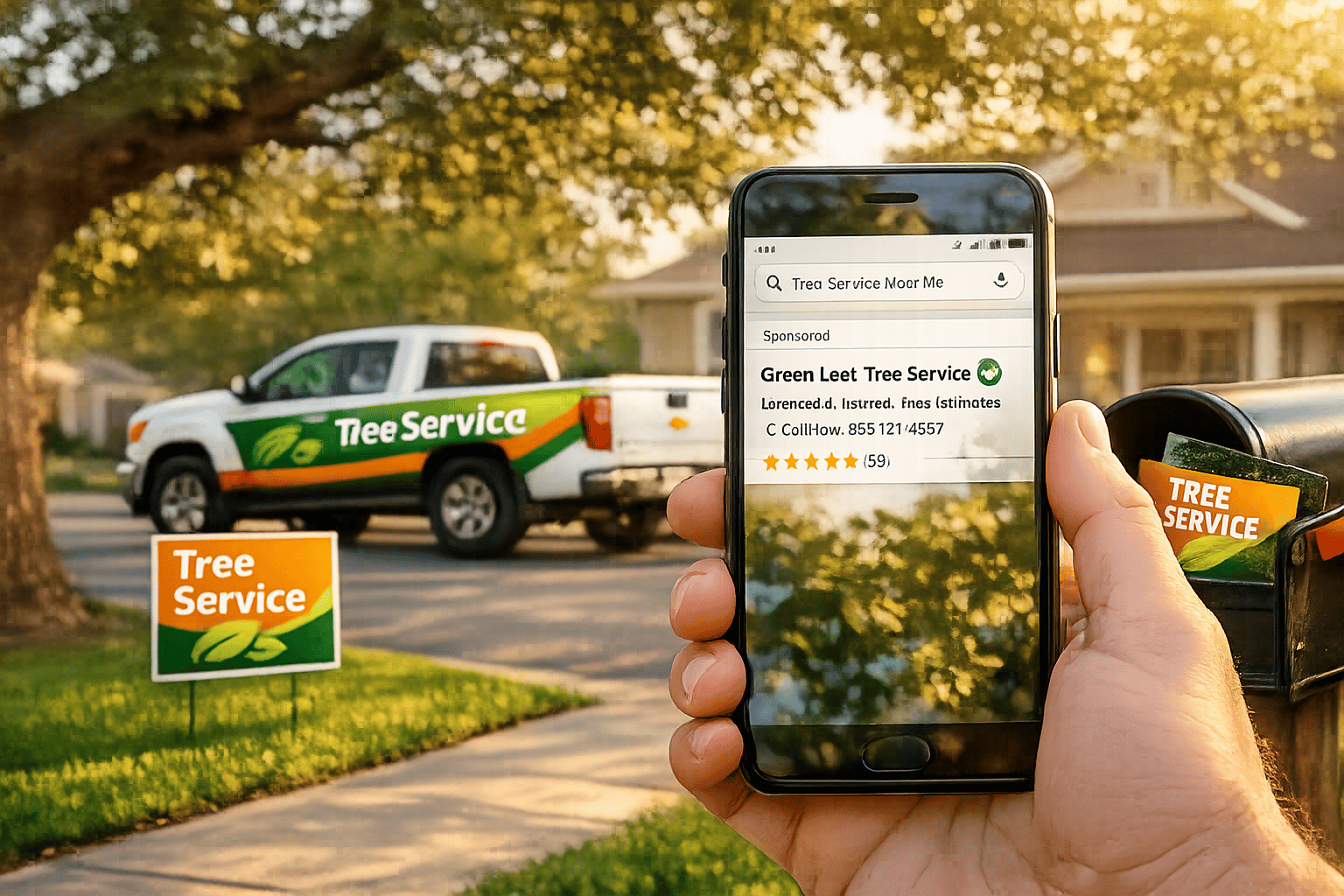
Running a tree service business means dealing with seasonal demand, tight competition, and the need to build trust with customers. To grow and stabilize revenue, you need a mix of online and offline advertising methods. Here’s a quick summary of the most effective strategies:
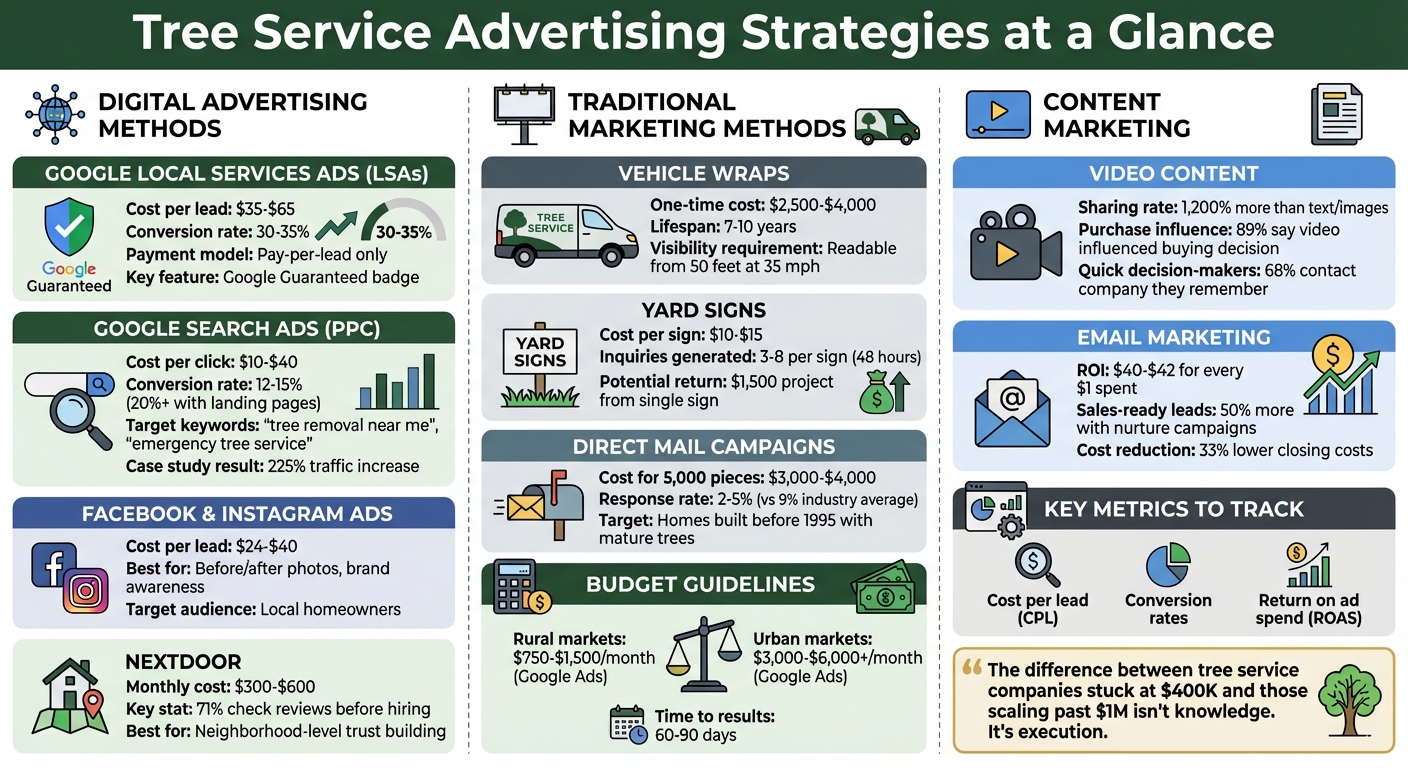
- Google Local Services Ads (LSAs): Pay only for leads, not clicks. These ads convert at 30–35%, making them a high-performing option.
- Google Search Ads (PPC): Target high-intent keywords like "tree removal near me" to attract ready-to-buy customers. Use negative keywords to filter out irrelevant traffic.
- Social Media Ads (Facebook & Instagram): Showcase before-and-after photos and target local homeowners. Leads cost $24–$40 each.
- Nextdoor: Build trust in specific neighborhoods by engaging with local homeowners. Paid placements cost $300–$600/month.
- Vehicle Wraps: Turn your trucks into mobile billboards. A one-time investment of $2,500–$4,000 can last up to 10 years.
- Yard Signs: Place signs at job sites for $10–$15 each. A single sign can generate 3–8 inquiries in 48 hours.
- Direct Mail Campaigns: Target neighborhoods with mature trees. Costs range from $3,000–$4,000 for 5,000 pieces, with a 2–5% response rate.
- Educational Content: Share tree care tips, storm preparation advice, and pest identification guides. Use videos, blog posts, and downloadable resources to build trust and attract leads.
These strategies work best when combined and tailored to your local market. Focus on consistent execution, track your results, and adjust your approach based on performance.
Tree Service Advertising Strategies: Costs, Leads, and ROI Comparison
1. Digital Advertising
Google Local Services Ads
Google Local Services Ads (LSAs) appear at the very top of search results, even above traditional pay-per-click ads. These ads feature a "Google Guaranteed" badge, which instantly builds trust with homeowners searching for tree services. Unlike standard ads where you pay for every click, LSAs use a pay-per-lead model – you only pay when someone contacts your business directly. Leads typically cost between $35 and $65 each, and they convert at an impressive rate of 30–35%, far surpassing the 12–15% conversion rate of traditional PPC ads. This setup ensures that every lead represents genuine customer interest.
Google Search Ads (PPC)
Google Search Ads allow you to connect with customers precisely when they’re searching for services. Focus on high-intent keywords like "tree removal near me" or "emergency tree service" rather than broader, informational searches. Costs per click typically range from $10 to $40, depending on how competitive the market is. For example, in 2019, Brown’s Tree Service in Fort Worth launched a targeted campaign that led to a 225% increase in traffic and generated over 10 online quotes and calls daily. This growth enabled the owner to double his crew within a year. Driving traffic to high-converting website features can further boost conversion rates to 20% or more. To maximize your budget, use negative keywords like "jobs", "DIY", and "free" to filter out irrelevant traffic. Combining this strategy with social media ads can amplify your results.
Facebook and Instagram Ads
Social media platforms like Facebook and Instagram offer a visual way to showcase your expertise. These platforms are ideal for sharing before-and-after photos of tree removals, pruning, or other property transformations. You can target ads to local homeowners based on demographics, interests, and location. Leads from these platforms usually cost between $24 and $40 each, making them a budget-friendly addition to Google Ads. While Google captures customers actively searching for tree services, Facebook and Instagram help build awareness and trust with homeowners who might not yet realize they need your services. The visual proof of your work helps establish credibility, often before they even reach out.
sbb-itb-130a704
2. Social Media Marketing
Nextdoor for Hyper-Local Recommendations
Nextdoor connects you directly with homeowners in specific neighborhoods, where trust plays a huge role. When neighbors recommend your tree service, it carries serious weight – 71% of homeowners check reviews before reaching out to a service provider. What makes Nextdoor stand out is its ability to let you target specific neighborhoods, making it ideal for building your reputation one block at a time. Paid placements on the platform usually range between $300 and $600 per month. However, many tree service companies see results by simply joining local discussions, like sharing advice on storm preparation or tree health. This neighborhood-level trust can also help you transition into sharing engaging visuals on platforms like Instagram and TikTok.
Video Content on Instagram Reels and TikTok
Short videos are a game-changer for boosting your brand’s visibility. Time-lapse videos of tricky tree removals or dramatic tree-cutting clips tend to grab attention – after all, video content gets shared 1,200% more than text and images combined. These platforms are particularly effective for reaching homeowners before they even need your services, as 68% of quick decision-makers contact the company they remember seeing advertised. A 60- to 90-second time-lapse showcasing your team safely handling a challenging removal can demonstrate your professionalism and expertise while building trust.
Educational Posts on Facebook
While Instagram and TikTok focus on visuals, Facebook is perfect for sharing educational content that establishes your credibility. It’s especially effective for reaching homeowners aged 35 to 65 – your core audience. Instead of pushing sales, focus on practical tips like spotting hazardous trees, preparing for storms, or seasonal care advice. Joining community groups and answering questions can also make a big impact; with 97% of consumers searching online before hiring local services, this kind of engagement often turns into direct inquiries. Posting three times a week, ideally around 9:00 AM, keeps your business visible without overwhelming your audience.
Meta Ads for Tree Services (2025 Tutorial) – How to Get More Tree Work Fast
3. Traditional Marketing
While digital methods can generate quick online leads, traditional marketing provides steady, offline opportunities to increase your visibility in the local community.
Branded Service Vehicles as Moving Billboards
Your service vehicles can double as mobile advertisements. By adding vehicle wraps or high-quality vinyl graphics, your fleet becomes a constant, eye-catching presence in your service area. These wraps typically last 7 to 10 years, making them a long-term investment. The cost? Usually between $2,500 and $4,000 per truck. To make the most of this, ensure the graphics are clear and readable from 50 feet away at speeds of 35 mph. Include essential details like your company name, logo, phone number, and website.
"Vehicle graphics are a very cost-effective means to advertise. They last for 7-10 years and you only pay once for them."
- Chad Diller, CEO of Landscape Leadership
Yard Signs at Job Sites
A small investment in yard signs can lead to big returns. For just $10 to $15 per sign, you can place one at an active job site, which may result in a $1,500 project from a nearby neighbor. Use an 18" x 24" sign and leave it up for at least 48 hours after completing the job. On average, a single sign displayed for 48 hours generates 3 to 8 inquiries. For tree treatments, smaller signs at driveway entrances are another effective option and are budget-friendly when purchased in bulk.
Direct Mail Campaigns to Target Neighborhoods
Direct mail still holds its ground, often outperforming digital ads with an average response rate of 9%, compared to around 1% for online campaigns. Focus these efforts on neighborhoods with older homes (built before 1995) and mature trees, especially in affluent areas. A 5,000-piece mailing costs between $3,000 and $4,000 and typically yields response rates of 2% to 5%.
Timing is everything – align your mailings with seasonal needs like spring pruning, summer storm preparation, fall fire mitigation, or winter pre-booking. Make your postcards or flyers stand out by including bold action shots of your team, before-and-after project photos, and industry certifications like ISA-certified arborist badges. These elements build trust and credibility at first glance.
4. Content and Educational Strategies
Educational Content That Converts Browsers Into Buyers
Educational content is a powerful way to establish your business as a trusted local expert. Homeowners often turn to Google with questions like, "How much does it cost to trim a tree?" or "How can I tell if my tree is dying?" By answering these questions directly on your website and social media, you’re building trust and positioning yourself as the go-to resource before they even make a call. From there, you can expand into practical guides and video demonstrations that provide even more value.
These resources work hand-in-hand with your online ad campaigns to turn casual visitors into paying customers. Think guides on pest identification, seasonal pruning tips, or storm preparation advice – content that homeowners can immediately use. Downloadable resources like "Tree Care Checklists for Homeowners" or "7 Critical Questions to Ask When Hiring a Tree Company" not only educate but also help you collect email addresses for future marketing.
Visual content adds another layer to your strategy. Before-and-after photos and short how-to videos highlight your team’s expertise and professionalism. Video content, in particular, is extremely effective: 89% of people say watching a video influenced their decision to purchase a service or product. Quick videos on identifying tree diseases or knowing when to remove a dead tree perform especially well on platforms like YouTube and Facebook. Make sure these videos show your crew using proper safety gear and following professional protocols to further build trust. Together, these strategies engage your audience and drive leads, seamlessly supporting your broader marketing goals.
"Inbound Marketing comes from the philosophy, ‘They ask, we answer.’"
- Chad Diller, CEO, Landscape Leadership
Consistently delivering educational content pays off. Businesses that nurture prospects through educational email campaigns generate 50% more sales-ready leads and cut closing costs by 33%. Email marketing itself offers an impressive ROI, averaging $40 to $42 for every $1 spent. Timing is everything – send late-winter pruning tips in February, storm preparation advice ahead of severe weather season, and fire mitigation suggestions in September and October. This keeps your business top-of-mind when homeowners need your services the most.
Conclusion
Building a thriving tree service company requires a well-rounded advertising strategy that connects with homeowners wherever they’re searching. Top-performing companies don’t rely on just one lead source – they excel by executing multiple proven tactics consistently. By combining fast-acting methods like Local Service Ads and PPC with long-term approaches like SEO and referrals, you can maintain a steady stream of leads, even if one channel slows down.
Start with the basics. Digital channels are key for capturing both immediate and future demand. Complement these efforts with traditional marketing tools like branded vehicles and yard signs to strengthen your local presence. Add educational content to the mix to build trust and establish yourself as the go-to expert in your community – long before potential customers even make a call.
This blend of digital and traditional marketing creates a solid foundation for growth. Success requires commitment and regular evaluation. Keep in mind that most marketing efforts take 60 to 90 days to deliver noticeable results. Use tools like call tracking and CRM systems to monitor key metrics – such as cost per lead (CPL), conversion rates, and return on ad spend (ROAS) – on a weekly basis. These insights will help you fine-tune your campaigns quickly.
"The difference between tree service companies stuck at $400K and those scaling past $1M isn’t knowledge. It’s execution." – Kevin Shea, Sales Manager, Home Service Direct
Your budget should reflect your market and goals. For example, rural markets might start with $750–$1,500 per month for Google Ads, while urban areas with higher competition may need $3,000–$6,000 or more to stay competitive. Test new strategies carefully – focus on mastering 3–5 core channels first, then add new tactics every quarter to maintain steady growth. By spreading your investment across multiple channels, you’ll build a sustainable path to long-term success.
FAQs
How much should I budget per month for tree service ads?
When planning your budget for tree service ads, expect to spend anywhere from a few hundred dollars to several thousand each month. A good starting point for many successful campaigns is around $500–$1,000 per month, which can help generate quality leads. The exact amount you allocate should align with your business size, target audience, and specific advertising goals to achieve the best possible outcomes.
Which ad channel gets the best leads fastest?
Google Ads is one of the quickest ways for tree service businesses to attract quality leads. It focuses on users who are actively searching for local tree services, which means you’re reaching people ready to take action. While platforms like Facebook can also generate leads, they often require more time to build trust and awareness. For fast results, Google Ads stands out as the better option.
How do I track which ads are actually making me money?
To figure out which ads are bringing in revenue for your tree service business, start by setting up conversion tracking on platforms like Google Ads. Identify key actions – such as phone calls or service bookings – as your conversions and keep an eye on them.
You can also use tools like call tracking software or website analytics to connect leads back to specific ads. Make it a habit to review your performance data regularly. This will help you pinpoint which campaigns are driving results so you can adjust your budget for the best ROI.