Category: Uncategorized
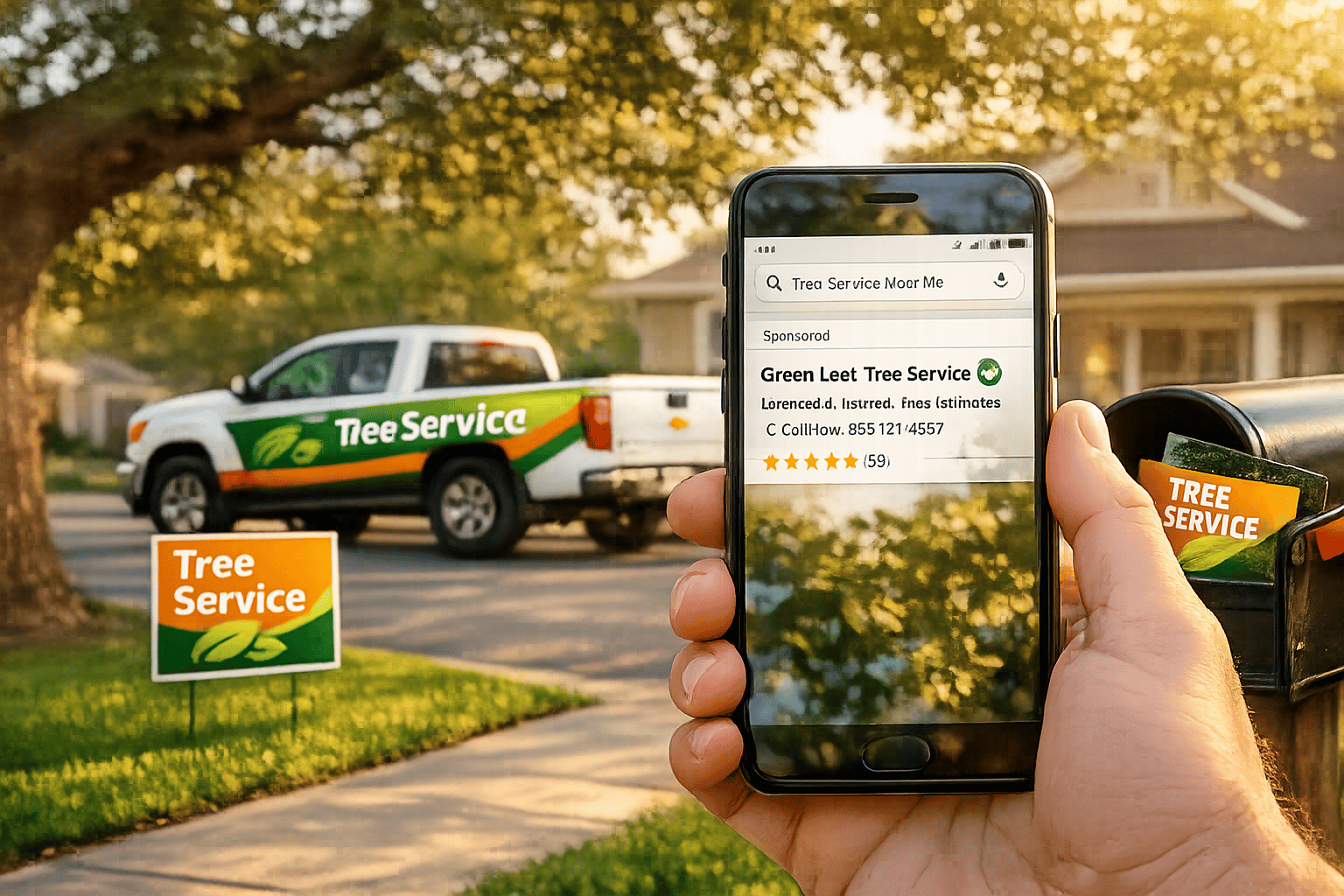
Running a tree service business means dealing with seasonal demand, tight competition, and the need to build trust with customers. To grow and stabilize revenue, you need a mix of online and offline advertising methods. Here’s a quick summary of the most effective strategies:
- Google Local Services Ads (LSAs): Pay only for leads, not clicks. These ads convert at 30–35%, making them a high-performing option.
- Google Search Ads (PPC): Target high-intent keywords like "tree removal near me" to attract ready-to-buy customers. Use negative keywords to filter out irrelevant traffic.
- Social Media Ads (Facebook & Instagram): Showcase before-and-after photos and target local homeowners. Leads cost $24–$40 each.
- Nextdoor: Build trust in specific neighborhoods by engaging with local homeowners. Paid placements cost $300–$600/month.
- Vehicle Wraps: Turn your trucks into mobile billboards. A one-time investment of $2,500–$4,000 can last up to 10 years.
- Yard Signs: Place signs at job sites for $10–$15 each. A single sign can generate 3–8 inquiries in 48 hours.
- Direct Mail Campaigns: Target neighborhoods with mature trees. Costs range from $3,000–$4,000 for 5,000 pieces, with a 2–5% response rate.
- Educational Content: Share tree care tips, storm preparation advice, and pest identification guides. Use videos, blog posts, and downloadable resources to build trust and attract leads.
These strategies work best when combined and tailored to your local market. Focus on consistent execution, track your results, and adjust your approach based on performance.
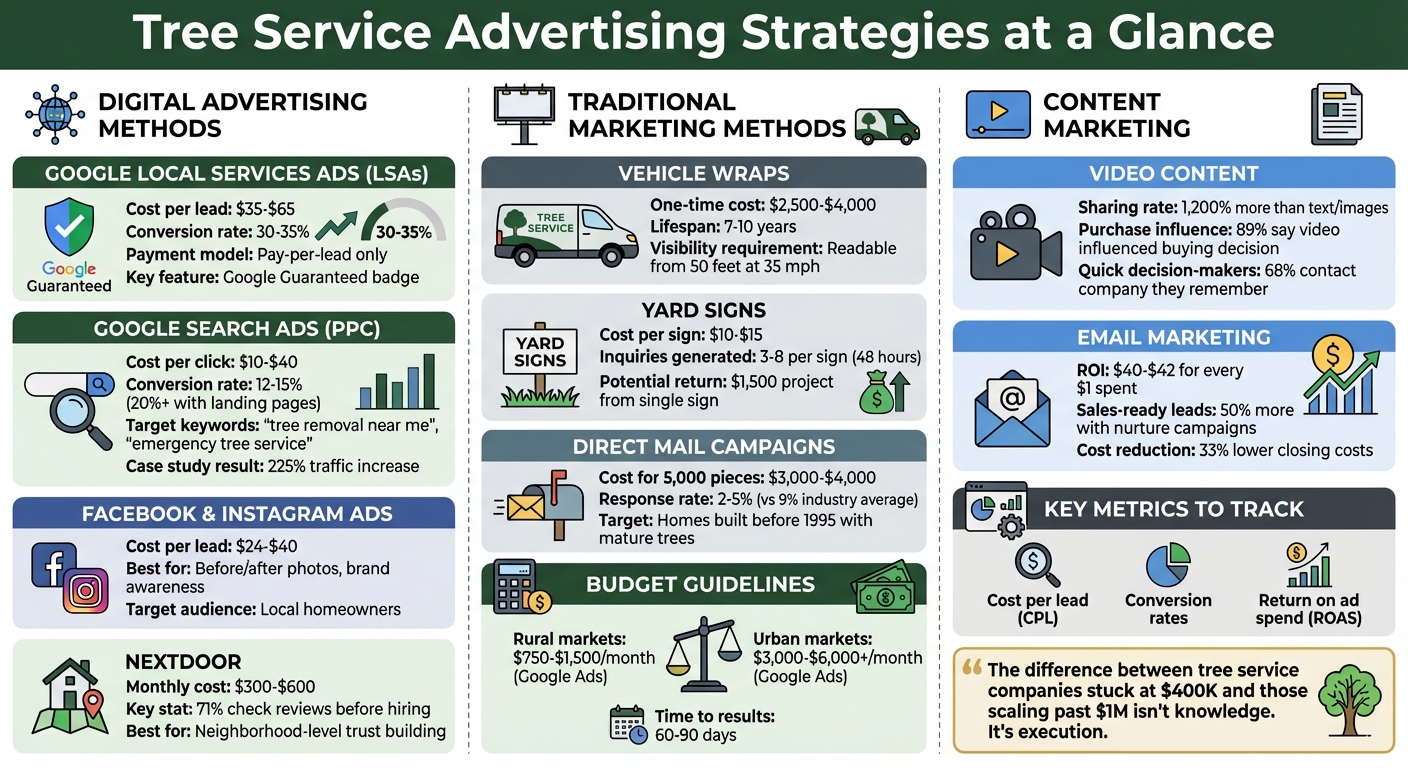
Tree Service Advertising Strategies: Costs, Leads, and ROI Comparison
1. Digital Advertising
Google Local Services Ads
Google Local Services Ads (LSAs) appear at the very top of search results, even above traditional pay-per-click ads. These ads feature a "Google Guaranteed" badge, which instantly builds trust with homeowners searching for tree services. Unlike standard ads where you pay for every click, LSAs use a pay-per-lead model – you only pay when someone contacts your business directly. Leads typically cost between $35 and $65 each, and they convert at an impressive rate of 30–35%, far surpassing the 12–15% conversion rate of traditional PPC ads. This setup ensures that every lead represents genuine customer interest.
Google Search Ads (PPC)
Google Search Ads allow you to connect with customers precisely when they’re searching for services. Focus on high-intent keywords like "tree removal near me" or "emergency tree service" rather than broader, informational searches. Costs per click typically range from $10 to $40, depending on how competitive the market is. For example, in 2019, Brown’s Tree Service in Fort Worth launched a targeted campaign that led to a 225% increase in traffic and generated over 10 online quotes and calls daily. This growth enabled the owner to double his crew within a year. Driving traffic to high-converting website features can further boost conversion rates to 20% or more. To maximize your budget, use negative keywords like "jobs", "DIY", and "free" to filter out irrelevant traffic. Combining this strategy with social media ads can amplify your results.
Facebook and Instagram Ads
Social media platforms like Facebook and Instagram offer a visual way to showcase your expertise. These platforms are ideal for sharing before-and-after photos of tree removals, pruning, or other property transformations. You can target ads to local homeowners based on demographics, interests, and location. Leads from these platforms usually cost between $24 and $40 each, making them a budget-friendly addition to Google Ads. While Google captures customers actively searching for tree services, Facebook and Instagram help build awareness and trust with homeowners who might not yet realize they need your services. The visual proof of your work helps establish credibility, often before they even reach out.
sbb-itb-130a704
2. Social Media Marketing
Nextdoor for Hyper-Local Recommendations
Nextdoor connects you directly with homeowners in specific neighborhoods, where trust plays a huge role. When neighbors recommend your tree service, it carries serious weight – 71% of homeowners check reviews before reaching out to a service provider. What makes Nextdoor stand out is its ability to let you target specific neighborhoods, making it ideal for building your reputation one block at a time. Paid placements on the platform usually range between $300 and $600 per month. However, many tree service companies see results by simply joining local discussions, like sharing advice on storm preparation or tree health. This neighborhood-level trust can also help you transition into sharing engaging visuals on platforms like Instagram and TikTok.
Video Content on Instagram Reels and TikTok
Short videos are a game-changer for boosting your brand’s visibility. Time-lapse videos of tricky tree removals or dramatic tree-cutting clips tend to grab attention – after all, video content gets shared 1,200% more than text and images combined. These platforms are particularly effective for reaching homeowners before they even need your services, as 68% of quick decision-makers contact the company they remember seeing advertised. A 60- to 90-second time-lapse showcasing your team safely handling a challenging removal can demonstrate your professionalism and expertise while building trust.
Educational Posts on Facebook
While Instagram and TikTok focus on visuals, Facebook is perfect for sharing educational content that establishes your credibility. It’s especially effective for reaching homeowners aged 35 to 65 – your core audience. Instead of pushing sales, focus on practical tips like spotting hazardous trees, preparing for storms, or seasonal care advice. Joining community groups and answering questions can also make a big impact; with 97% of consumers searching online before hiring local services, this kind of engagement often turns into direct inquiries. Posting three times a week, ideally around 9:00 AM, keeps your business visible without overwhelming your audience.
Meta Ads for Tree Services (2025 Tutorial) – How to Get More Tree Work Fast
3. Traditional Marketing
While digital methods can generate quick online leads, traditional marketing provides steady, offline opportunities to increase your visibility in the local community.
Branded Service Vehicles as Moving Billboards
Your service vehicles can double as mobile advertisements. By adding vehicle wraps or high-quality vinyl graphics, your fleet becomes a constant, eye-catching presence in your service area. These wraps typically last 7 to 10 years, making them a long-term investment. The cost? Usually between $2,500 and $4,000 per truck. To make the most of this, ensure the graphics are clear and readable from 50 feet away at speeds of 35 mph. Include essential details like your company name, logo, phone number, and website.
"Vehicle graphics are a very cost-effective means to advertise. They last for 7-10 years and you only pay once for them."
- Chad Diller, CEO of Landscape Leadership
Yard Signs at Job Sites
A small investment in yard signs can lead to big returns. For just $10 to $15 per sign, you can place one at an active job site, which may result in a $1,500 project from a nearby neighbor. Use an 18" x 24" sign and leave it up for at least 48 hours after completing the job. On average, a single sign displayed for 48 hours generates 3 to 8 inquiries. For tree treatments, smaller signs at driveway entrances are another effective option and are budget-friendly when purchased in bulk.
Direct Mail Campaigns to Target Neighborhoods
Direct mail still holds its ground, often outperforming digital ads with an average response rate of 9%, compared to around 1% for online campaigns. Focus these efforts on neighborhoods with older homes (built before 1995) and mature trees, especially in affluent areas. A 5,000-piece mailing costs between $3,000 and $4,000 and typically yields response rates of 2% to 5%.
Timing is everything – align your mailings with seasonal needs like spring pruning, summer storm preparation, fall fire mitigation, or winter pre-booking. Make your postcards or flyers stand out by including bold action shots of your team, before-and-after project photos, and industry certifications like ISA-certified arborist badges. These elements build trust and credibility at first glance.
4. Content and Educational Strategies
Educational Content That Converts Browsers Into Buyers
Educational content is a powerful way to establish your business as a trusted local expert. Homeowners often turn to Google with questions like, "How much does it cost to trim a tree?" or "How can I tell if my tree is dying?" By answering these questions directly on your website and social media, you’re building trust and positioning yourself as the go-to resource before they even make a call. From there, you can expand into practical guides and video demonstrations that provide even more value.
These resources work hand-in-hand with your online ad campaigns to turn casual visitors into paying customers. Think guides on pest identification, seasonal pruning tips, or storm preparation advice – content that homeowners can immediately use. Downloadable resources like "Tree Care Checklists for Homeowners" or "7 Critical Questions to Ask When Hiring a Tree Company" not only educate but also help you collect email addresses for future marketing.
Visual content adds another layer to your strategy. Before-and-after photos and short how-to videos highlight your team’s expertise and professionalism. Video content, in particular, is extremely effective: 89% of people say watching a video influenced their decision to purchase a service or product. Quick videos on identifying tree diseases or knowing when to remove a dead tree perform especially well on platforms like YouTube and Facebook. Make sure these videos show your crew using proper safety gear and following professional protocols to further build trust. Together, these strategies engage your audience and drive leads, seamlessly supporting your broader marketing goals.
"Inbound Marketing comes from the philosophy, ‘They ask, we answer.’"
- Chad Diller, CEO, Landscape Leadership
Consistently delivering educational content pays off. Businesses that nurture prospects through educational email campaigns generate 50% more sales-ready leads and cut closing costs by 33%. Email marketing itself offers an impressive ROI, averaging $40 to $42 for every $1 spent. Timing is everything – send late-winter pruning tips in February, storm preparation advice ahead of severe weather season, and fire mitigation suggestions in September and October. This keeps your business top-of-mind when homeowners need your services the most.
Conclusion
Building a thriving tree service company requires a well-rounded advertising strategy that connects with homeowners wherever they’re searching. Top-performing companies don’t rely on just one lead source – they excel by executing multiple proven tactics consistently. By combining fast-acting methods like Local Service Ads and PPC with long-term approaches like SEO and referrals, you can maintain a steady stream of leads, even if one channel slows down.
Start with the basics. Digital channels are key for capturing both immediate and future demand. Complement these efforts with traditional marketing tools like branded vehicles and yard signs to strengthen your local presence. Add educational content to the mix to build trust and establish yourself as the go-to expert in your community – long before potential customers even make a call.
This blend of digital and traditional marketing creates a solid foundation for growth. Success requires commitment and regular evaluation. Keep in mind that most marketing efforts take 60 to 90 days to deliver noticeable results. Use tools like call tracking and CRM systems to monitor key metrics – such as cost per lead (CPL), conversion rates, and return on ad spend (ROAS) – on a weekly basis. These insights will help you fine-tune your campaigns quickly.
"The difference between tree service companies stuck at $400K and those scaling past $1M isn’t knowledge. It’s execution." – Kevin Shea, Sales Manager, Home Service Direct
Your budget should reflect your market and goals. For example, rural markets might start with $750–$1,500 per month for Google Ads, while urban areas with higher competition may need $3,000–$6,000 or more to stay competitive. Test new strategies carefully – focus on mastering 3–5 core channels first, then add new tactics every quarter to maintain steady growth. By spreading your investment across multiple channels, you’ll build a sustainable path to long-term success.
FAQs
How much should I budget per month for tree service ads?
When planning your budget for tree service ads, expect to spend anywhere from a few hundred dollars to several thousand each month. A good starting point for many successful campaigns is around $500–$1,000 per month, which can help generate quality leads. The exact amount you allocate should align with your business size, target audience, and specific advertising goals to achieve the best possible outcomes.
Which ad channel gets the best leads fastest?
Google Ads is one of the quickest ways for tree service businesses to attract quality leads. It focuses on users who are actively searching for local tree services, which means you’re reaching people ready to take action. While platforms like Facebook can also generate leads, they often require more time to build trust and awareness. For fast results, Google Ads stands out as the better option.
How do I track which ads are actually making me money?
To figure out which ads are bringing in revenue for your tree service business, start by setting up conversion tracking on platforms like Google Ads. Identify key actions – such as phone calls or service bookings – as your conversions and keep an eye on them.
You can also use tools like call tracking software or website analytics to connect leads back to specific ads. Make it a habit to review your performance data regularly. This will help you pinpoint which campaigns are driving results so you can adjust your budget for the best ROI.
Related Blog Posts
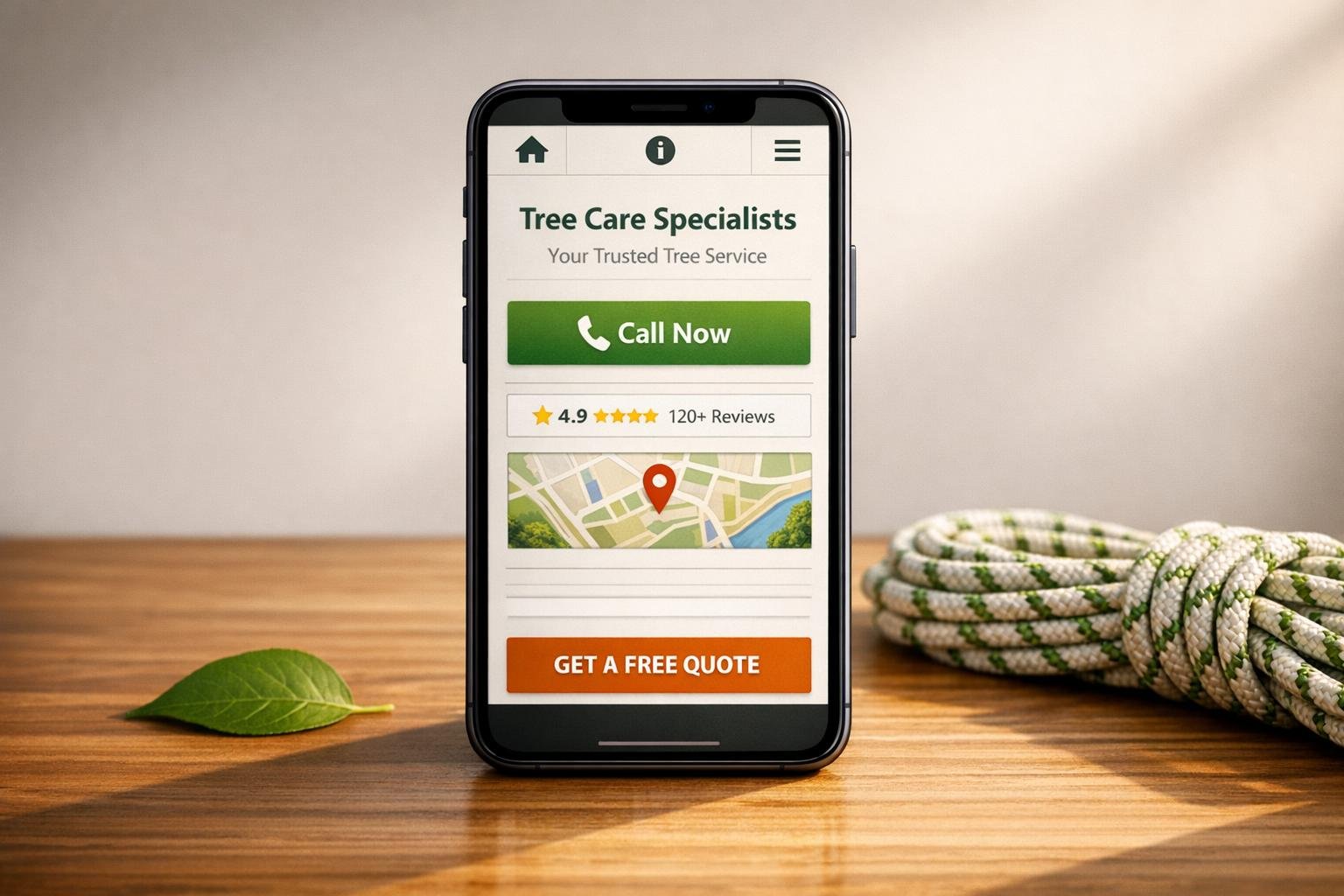
Your website is your business’s first impression, especially for homeowners searching for tree services. Here’s what matters most:
- 75% of customers judge your credibility based on your website design.
- 89% of homeowners research online before hiring a tree service.
- 79% of those searches happen on mobile devices.
A fast, mobile-friendly site with clear navigation, trust signals (like certifications and reviews), and strong SEO in Georgia can significantly increase leads. Features like click-to-call buttons, before-and-after galleries, and visible contact information make it easier for customers to reach you during emergencies or routine needs.
Key Takeaways:
- Fast Loading: Sites taking over 3 seconds lose 53% of visitors.
- Mobile Optimization: Mobile-friendly pages convert 40% better.
- SEO Structure: local keywords boost visibility in searches like "tree removal in Tennessee."
- Trust Signals: Reviews and galleries build confidence in your services.
A well-structured website isn’t just a digital presence – it’s a 24/7 tool for growing your business.
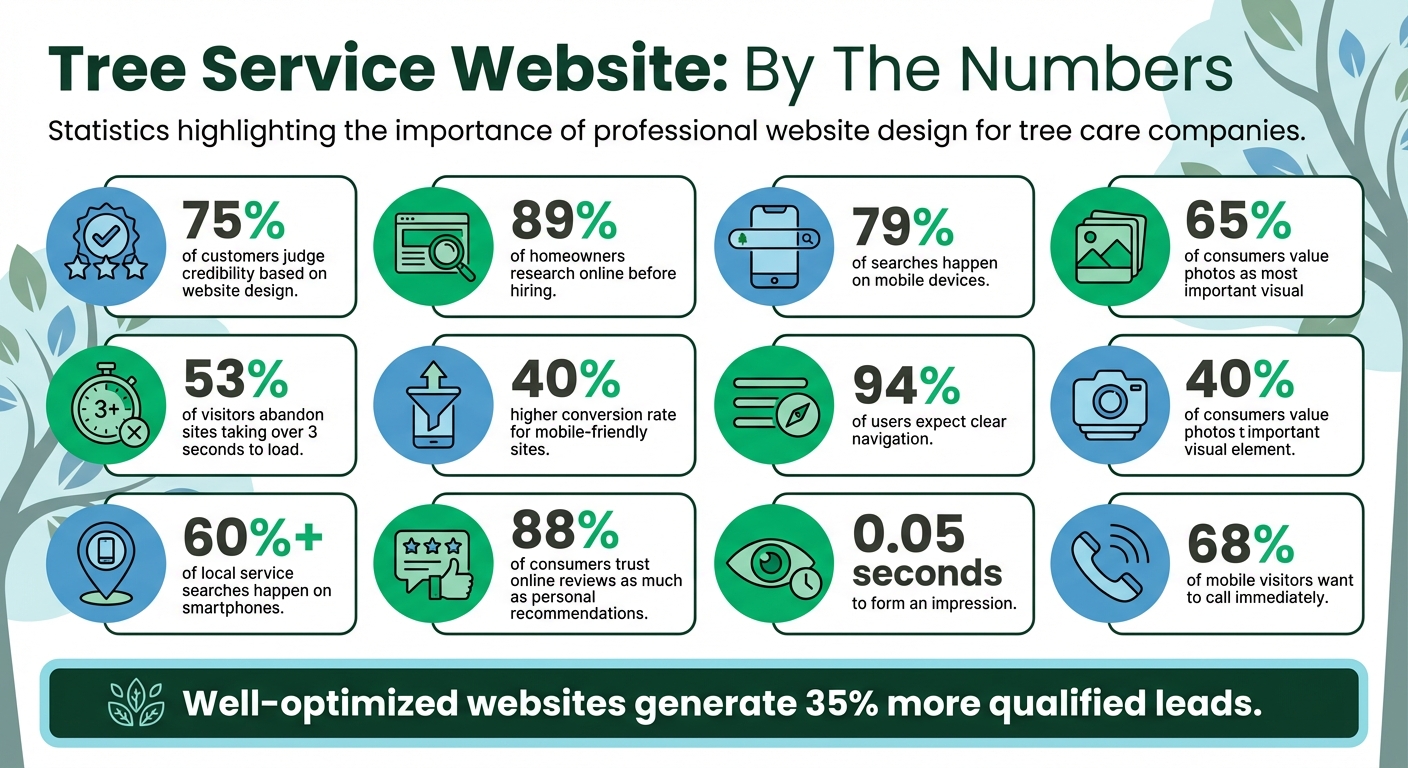
Tree Service Website Statistics: Mobile Usage, Load Times, and Conversion Rates
Tree Service Website Design Explained (How We Get You More Calls)
Effective design is just one of the ways to get more tree service leads online and grow your business.
sbb-itb-130a704
Core Components of a Tree Service Website
A successful tree service website needs to focus on three essential elements to keep visitors engaged and convert them into customers. Let’s break it down, starting with navigation and layout – the backbone of user experience.
Simple Navigation and Layout
Your website menu should be clean, simple, and easy to use, especially since 94% of users expect clear navigation. Instead of lumping all your services onto one generic page, create individual pages for services like tree removal, stump grinding, pruning, and emergency cleanup. This not only helps visitors understand your offerings but also makes it easier for search engines to categorize your site.
Make sure your contact information is impossible to miss – place it prominently at the top of every page. For emergency services, include a bold, eye-catching callout. Imagine a homeowner dealing with a fallen tree after a storm – they shouldn’t have to dig through your site to find your phone number.
Mobile-Friendly Design
With over 60% of local service searches happening on smartphones, your website must adapt seamlessly to any screen size. In fact, mobile-friendly sites in Mobile see a 40% higher conversion rate compared to those that aren’t optimized.
One feature you can’t skip? Click-to-call buttons. Picture this: a homeowner searches for "tree removal near me" on their phone while staring at a damaged tree in their yard. They need to contact you immediately – make sure your phone number is clickable so they can call with just one tap.
SEO-Optimized Structure
Your website’s structure plays a huge role in whether potential customers can find you online. Create dedicated pages for each service, paired with your location – for example, "Tree Removal in Knoxville" or "Stump Grinding in Dallas." Use geographic keywords in your page titles and headings to boost local visibility.
Consistency is key. Ensure your business details (name, address, phone number) match across your website, Google Business Profile, and directory listings. To take it a step further, add local business schema markup to your site’s code. This helps search engines understand your service area, increasing your chances of appearing in local search results. Small tweaks like these can make a big difference in how easily customers find you.
Building Trust and Encouraging Action
To turn website visitors into paying customers, your site needs to establish credibility fast. A clean, user-friendly design and mobile responsiveness are just the start. Adding trust signals – like reviews and consistent branding – can make your tree service website feel professional and reliable. Every detail, from visuals to functionality, should work together to build confidence and inspire action. Reviews and photo galleries, when placed strategically, can further strengthen trust and nudge visitors toward contacting you.
Customer Reviews and Testimonials
Online reviews are powerful. In fact, 88% of consumers trust online reviews as much as personal recommendations. But not all reviews are created equal. A short customer video, for example, often carries more weight than a dozen written reviews.
"A 30-second iPhone video of a happy customer beats 100 written reviews" – Kevin Shea, Sales Manager, Home Service Direct
If video isn’t an option, pair written reviews with project photos. Testimonials that feature images of completed work, your team in action, or even a smiling customer are three times more effective than plain text reviews. To maximize impact, place these reviews on specific service pages rather than burying them on a generic testimonials page. For instance, reviews about tree removal should appear directly on the tree removal service page, addressing doubts at the exact moment someone is weighing their options.
Make your Google star rating highly visible – right at the top of your homepage is ideal. For example, display something like "4.9 stars from 127 Google reviews" and, if possible, integrate live widgets from platforms like Google or Yelp to show authenticity. Include personal details in testimonials, such as the customer’s name (or initial), location, and the service provided. The most impactful reviews address common concerns, like whether the final price matched the estimate or if the cleanup met expectations.
Before-and-After Photo Galleries
Photos are a fantastic way to showcase your work. According to research, 40% of consumers value photos as the most important visual element on a website. For tree services, before-and-after galleries are especially effective. They provide clear, visual proof of your expertise – whether it’s a 100-ft pine safely removed near power lines or a yard restored after a storm.
To make these galleries impactful, take photos from the same position and angle to highlight the transformation. Group images by service type – like tree removal, stump grinding, or pruning – so visitors can easily find examples relevant to their needs. Add short captions to explain the challenges or skills involved. For more complex jobs, include "during" photos to showcase your safety measures and professional equipment in action.
Make sure your images load quickly. Compress them to under 200KB using tools like TinyPNG, and enable lazy loading to prevent slow page speeds. Also, ensure your galleries are simple to swipe through on mobile devices.
Consistent Branding
Your website, service trucks, and crew uniforms should all tell the same story. Visitors form an impression of your business in just 0.05 seconds, and inconsistent branding – like mismatched colors or logos – can erode trust instantly.
Stick to a 2–3 color palette that reflects your brand. For example, green can symbolize nature and growth, blue conveys trust and professionalism, and orange or yellow suggests high-visibility services. Limit your font choices to two: one bold, easy-to-read font for headlines and another for body text. Display your logo prominently on every page, and use photos that consistently feature your team in branded uniforms and vehicles.
"[Make sure your] brand is consistent across all platforms – vans, uniforms, website, social, TV, radio – everywhere you go. Consistency builds trust inherently in human beings" – Adam Sylvester, Charlottesville Lawn Care
This level of consistency reinforces your professionalism and reassures potential clients that your business is dependable and well-organized.
Improving Site Performance and Converting Visitors
Once you’ve built trust through compelling visuals and customer reviews, the next step is ensuring your site turns visitors into customers. A slow or confusing website can drive people away in seconds. For example, 53% of mobile users will abandon a site if it takes longer than 3 seconds to load, and each additional second of delay can cut conversion rates by about 7%. For tree service businesses – where 79% of searches happen on mobile devices, often during emergencies like storm damage – speed and simplicity are absolutely critical.
Faster Page Loading
While eye-catching visuals are important, they shouldn’t come at the cost of speed. Large, unoptimized images can bog down your site. To prevent this:
- Optimize media files: Compress images and videos to reduce their size without sacrificing quality.
- Enable lazy loading: This ensures images only load as users scroll, rather than all at once.
- Minify code: Reduce the size of CSS, JavaScript, and HTML files to improve site performance.
- Use a CDN: Platforms like Cloudflare distribute your content across multiple servers, ensuring fast load times globally.
- Upgrade hosting: Moving from shared hosting to a more robust option can significantly improve server response times.
Tools for Capturing Leads
Speed gets visitors to stay, but you also need to make it easy for them to contact you. Keep your contact forms simple – stick to 3–5 fields, such as name, phone number, address, and service type, to minimize drop-offs.
Here are some effective tools to capture leads:
- Click-to-call buttons: These let mobile users call you with a single tap. Considering that 68% of mobile visitors want to call a business immediately, this feature is a must-have.
- 24/7 chat tools: Chatbots like Tidio or HubSpot Chat engage visitors anytime, answering questions or gathering contact info.
- Online booking systems: Platforms like Jobber allow customers to schedule appointments or request estimates directly from your site.
- Photo upload options: Let potential clients upload pictures of their tree issues in your quote form. This helps you pre-qualify leads and offer more accurate estimates.
By combining these tools with clear, action-oriented prompts, visitors are naturally guided toward taking the next step.
Effective Call-to-Action Buttons
Your call-to-action (CTA) buttons need to grab attention and make the next steps obvious. For example:
- Place a bold CTA like “Get a Free Estimate” in your hero section, so it’s instantly visible without scrolling.
- Use high-contrast colors to make buttons stand out.
- Display your phone number prominently on every page. 67% of tree service websites hide their phone number, frustrating potential customers.
- On mobile, add sticky contact bars with options like “Call,” “Quote,” or “Text Us”.
- Each service page should end with a tailored CTA, such as “Request a Free Tree Removal Quote”, paired with a reassurance like “Get your free estimate within 24 hours”.
These small changes can have a big impact. In 2025, a tree service startup in Greater Boston added click-to-call buttons and quote forms to every page, increasing their conversion rate from 5% to 13% and generating over 280 qualified leads per month by their fifth month. Similarly, a Houston-based company focused on clear CTAs and service area details, achieving a 20.75% conversion rate.
Efficient design and clear calls to action don’t just improve user experience – they directly drive results.
Custom Web Design with Tree Company Leads
Tree Company Leads takes your online presence to the next level with tailored web solutions designed specifically for tree care professionals. By combining performance-driven strategies with user-friendly designs, they help arborists build a stronger digital footprint.
Web Design Services Offered
Tree Company Leads creates custom websites exclusively for arborists and tree care businesses. These websites are built with responsive designs that ensure seamless functionality across desktops, tablets, and smartphones. They also integrate robust SEO practices, including expert keyword targeting, optimized meta tags, and quality backlinks, to boost your site’s visibility and rank higher on Google.
Each site is designed with conversion in mind, featuring strategically placed call-to-action buttons, intuitive navigation bars to lower bounce rates, and integrated booking systems that make scheduling services hassle-free. Additional features like trust-building elements, advanced analytics, regular backups, and strong security measures come standard.
"Tree Company Leads transformed my online presence! The custom web design tailored to my tree service has attracted more customers than ever before. I particularly appreciate how they integrated a booking system, making it easier for clients to reach me." – Lisa Rodriguez, Client
These thoughtful design features create a solid foundation for driving customer engagement and delivering measurable results.
Why Choose Tree Company Leads
Unlike generic web designers who prioritize looks over functionality, Tree Company Leads combines strategy, copywriting, and technical SEO expertise to turn your website into a powerful sales tool. This all-in-one approach ensures your site not only looks great but also performs effectively – eliminating the need for you to worry about managing content or technical updates.
Optimized websites attract more qualified leads, and studies show that 75% of consumers judge a business’s credibility based on its website design. With 24/7 support and ongoing performance monitoring, Tree Company Leads ensures your site stays functional, even during high-demand periods like post-storm cleanup seasons.
"The web design services from Tree Company Leads exceeded my expectations. They highlighted my tree service offerings beautifully and improved my SEO, resulting in a significant boost in traffic." – James Carter, Owner
Conclusion
Looking at the key elements, trust signals, and strategies for better performance, it’s clear that every piece works together to create a digital experience that drives results. Your website isn’t just a static online brochure – it’s a 24/7 tool for generating revenue. When implemented well, these strategies can make all the difference, helping homeowners feel confident enough in your tree service to reach out. In fact, well-optimized websites have been shown to generate 35% more qualified leads and significantly boost revenue.
The tree service website essentials – like mobile-friendly designs, load times under 3 seconds, and clear calls-to-action – are critical for reducing bounce rates and turning visitors into paying customers. Features such as before-and-after galleries, real customer testimonials, and visible certifications add credibility, turning your site into a lead-generation powerhouse. Together, these elements create a site that doesn’t just look good but also works hard to convert.
Tree Company Leads specializes in creating web designs tailored to the tree care industry, addressing the specific challenges discussed in this guide. Their approach doesn’t stop at visual appeal; they incorporate advanced SEO techniques and ongoing performance tracking to ensure your site ranks well in local searches and effectively converts traffic (often a better long-term investment than relying on paid ads). With 24/7 support and detailed analytics, you can see exactly how your website contributes to your business growth.
In today’s competitive market, your website is the cornerstone of growth. Whether you’re responding to emergency storm jobs or building lasting relationships with homeowners, a well-designed, high-performing website ensures you’re the first company they think of when they need tree care services.
FAQs
What pages should a tree service website have?
A tree service website needs to cover the essentials with pages like Services, Contact, About Us, Testimonials, and a Photo Gallery. These pages ensure visitors can quickly find what they need. Including an FAQ section can address common customer concerns upfront, while a blog allows you to share insights and demonstrate your expertise. Together, these elements help build trust and turn visitors into leads.
How can I make my tree website load faster on mobile?
If you want your tree website to load faster on mobile devices, focus on optimizing its performance. Start by reducing file sizes – this includes compressing images and simplifying your code. Smaller image files take less time to load, so make sure to resize and compress them without sacrificing quality.
Enable caching to store parts of your site locally on users’ devices, so it loads quicker on repeat visits. You might also want to use a Content Delivery Network (CDN). A CDN distributes your website’s content across multiple servers worldwide, ensuring faster loading times no matter where your visitors are.
Finally, make sure your website is mobile-friendly and responsive. With over 70% of local searches happening on mobile devices, having a fast and responsive site not only improves the user experience but also boosts your SEO rankings.
What should I track to know if my site is getting leads?
Tracking key performance indicators (KPIs) is essential to understanding how well your website is converting visitors into leads. Focus on metrics like contact form submissions, phone calls, and online booking conversions. These figures provide direct insights into how potential customers are interacting with your business.
Additionally, dive into your website analytics to assess visitor behavior and engagement levels. Pay attention to metrics like time spent on pages, bounce rates, and navigation paths. Together, these data points help you gauge how effectively your site captures attention and drives meaningful actions.
Related Blog Posts
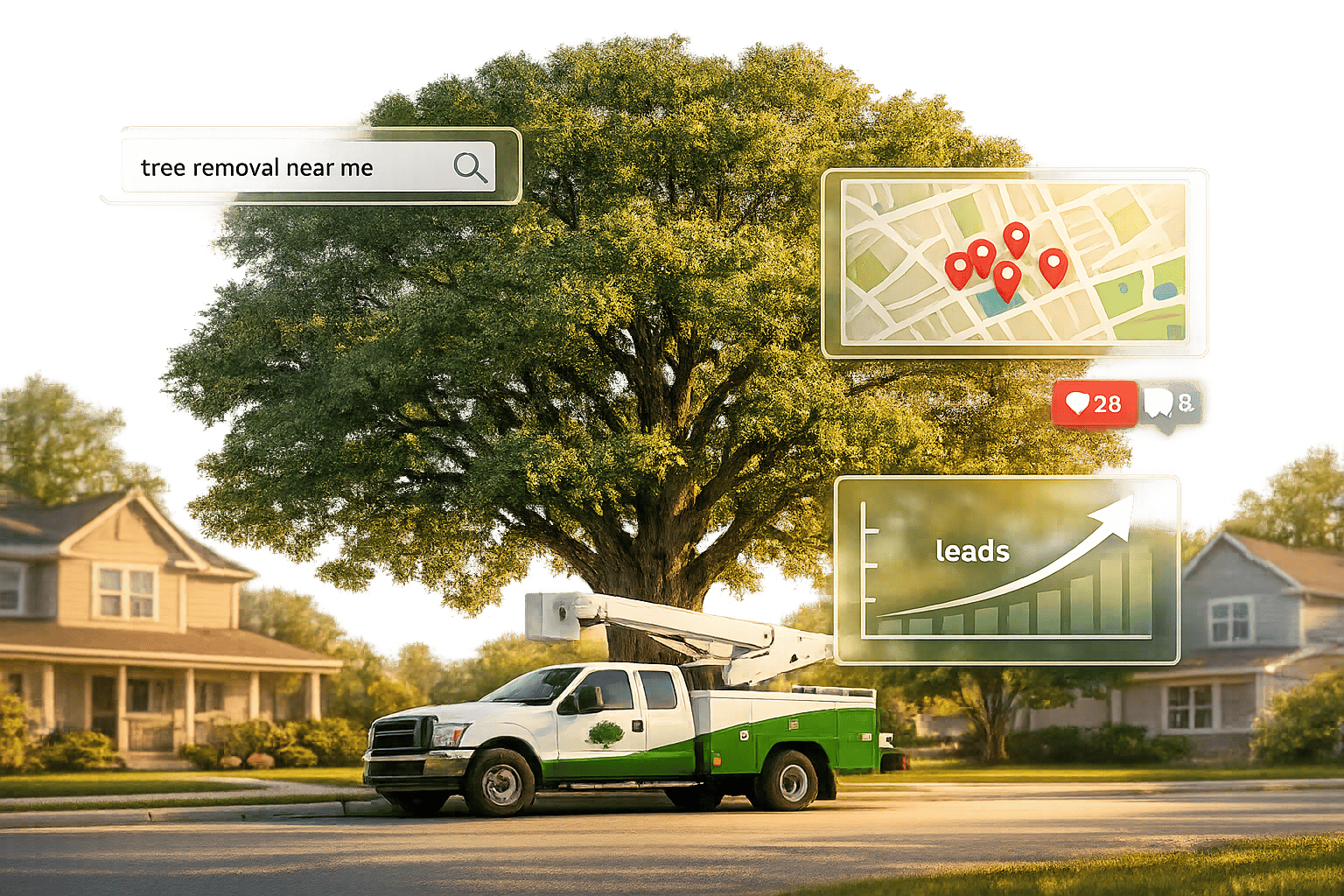
Running a tree service business is challenging, especially when it comes to generating leads in a competitive market. Specialized advertising agencies for tree services focus on solving this problem by leveraging tailored strategies like local SEO vs. paid ads, and social media marketing. Here’s a quick breakdown of how they help:
- Local SEO: Optimizes your Google Business Profile, uses location-based keywords, and manages online reviews to improve visibility in search results.
- Paid Advertising: Google Ads and Local Services Ads deliver immediate leads. These campaigns are structured by service type, targeting high-intent customers with optimized landing pages.
- Social Media Marketing: Platforms like Facebook and Instagram target affluent homeowners with engaging visuals, videos, and seasonal campaigns.
- Performance Tracking: Tools like call tracking and conversion monitoring ensure ad spend delivers measurable results.
With competition rising – 150,000+ tree service companies expected in the U.S. by 2026 – partnering with an agency ensures a steady flow of exclusive leads, helping businesses grow efficiently. These agencies handle the marketing so you can focus on operations and scaling your business.
Tree Service Leads ➡️ Tree Service Marketing (Peak Inside a LIVE Campaign)
sbb-itb-130a704
Local SEO Strategies for Tree Service Companies
For tree service companies, local SEO is a game-changer. It’s all about connecting with customers who are ready to act. Think about it: when someone searches for "tree removal near me" or "emergency tree service in [city]", they’re not just browsing – they’re looking to hire right away. That’s why focusing on how to rank higher on Google is critical. It ensures your business appears in front of these high-intent customers exactly when they need you. The stats don’t lie: 97% of people search online for local services, and 73% of tree service-related searches happen on mobile devices. So, if your Google Business Profile and local keyword strategy aren’t on point, you’re missing out.
Setting Up and Optimizing Google Business Profiles
Your Google Business Profile is the backbone of your local SEO efforts. The first step is claiming and verifying your profile through Google’s postcard or video verification process. Once that’s done, make sure your business’s NAP (name, address, phone number) is consistent across all online directories – no mismatches allowed.
Choosing the right categories is just as important. Setting "Tree Service" as the primary category and adding secondary ones like "Arborist" or "Tree Removal Service" can make a big difference in search visibility. Agencies often craft a 750-character business description that naturally includes high-intent keywords like "emergency tree removal" and mentions the cities or zip codes you serve.
Photos also play a key role. Upload at least 20 high-quality, geo-tagged images showcasing your team, equipment, and before-and-after shots of completed jobs. Why? Because Google Business Posts with photos get 42% more engagement than those without. Regular updates – posted 2–3 times a week – about seasonal tips, promotions, or recent projects keep your profile active and relevant.
Once your profile is optimized, it’s time to drive organic traffic with location-specific keywords.
Using Location-Based Keywords to Increase Organic Traffic
Location-based keywords are the driving force behind local SEO success. The most effective ones combine your services with geographic terms, like "tree removal in [City]" or "stump grinding near me". High-intent phrases such as "emergency tree removal" or "tree removal cost" are especially valuable because they target customers ready to book immediately. Nearly half of all Google searches are for local businesses, and the Local Map Pack (the top three map results) captures 44% of clicks.
To make the most of these keywords, agencies strategically place them in website title tags, meta descriptions, headings, and body text. They also create dedicated landing pages for each service area, featuring 500–800 words of content that include local landmarks, unique tree issues in the area, and testimonials from nearby customers. Optimizing images with descriptive file names (e.g., "oak-tree-removal-dallas.jpg") and alt text further boosts local rankings. Adding schema markup (LocalBusiness) gives search engines structured data about your business, like address, hours, and services, enhancing your local visibility.
Managing Online Reviews and Business Reputation
Online reviews aren’t just nice to have – they’re a key ranking factor for local SEO. Google considers the volume, recency, and overall ratings of your reviews when determining your spot in the Local Map Pack.
"Google uses reviews to figure out if you’re trustworthy. A tree company with 50 reviews and a 4.7 rating beats one with 8 reviews and a perfect 5.0 every time. Volume matters. Recency matters." – Tree Service Marketing Solutions
To stay competitive, aim to generate 3–5 new reviews each month by sending customers a review link right after the job is done. Responding to reviews within 24–48 hours – whether they’re positive or negative – shows that you’re engaged and care about customer feedback. Handling negative reviews professionally can even turn a bad situation into an opportunity to build trust. With 93% of consumers saying online reviews influence their buying decisions and 76% visiting a business within 24 hours of a local search, managing your online reputation is non-negotiable.
Using Paid Advertising for Fast Results
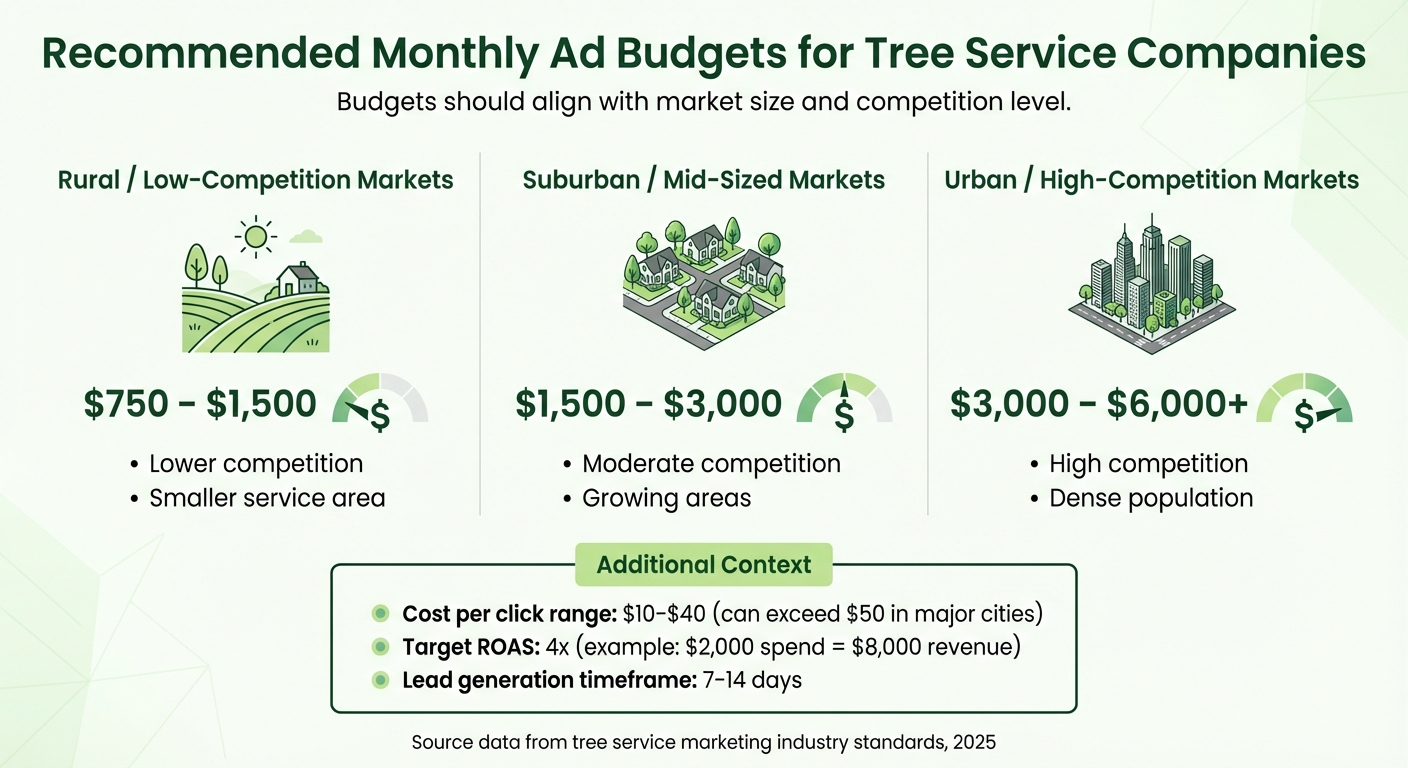
Tree Service Advertising Budget Guide by Market Type
Local SEO is great for building momentum, but if you’re looking for immediate visibility, paid advertising is the way to go. The moment your Google Ads campaign is live, your tree service business can show up at the top of search results, right when homeowners are searching for terms like "emergency tree removal" or "tree trimming near me". With 97% of consumers using search engines to research local businesses, this strategy can deliver quality leads in as little as 7 to 14 days. It’s a perfect complement to your local SEO efforts, quickly filling your pipeline with potential customers.
Optimized landing pages can increase conversion rates by as much as 40%. Agencies often use geographic targeting to focus on specific neighborhoods while excluding areas that are too far to service profitably. Additionally, negative keywords help filter out irrelevant searches, improving lead quality.
Building Effective Google Ads Campaigns
A well-structured Google Ads campaign starts with organizing ads by service type. This ensures the ad copy matches the user’s intent. For example, someone searching for "stump grinding Dallas" will see an ad highlighting stump grinding services in Dallas.
Keyword selection plays a huge role here. High-intent keywords attract customers who are ready to act. Agencies often use "phrase match" and "exact match" keywords to avoid wasting ad spend on unrelated searches like "forest service jobs" or "Christmas tree delivery". Expect the cost per click for tree service keywords to range from $10 to $40, with prices climbing above $50 in major cities.
Ad copy needs to grab attention immediately. Short, targeted headlines that mention the exact service are most effective. Chris Down of Downey Marketing highlights the importance of keeping users focused:
"Every distraction on your website is another opportunity for someone to leave without converting into a lead".
To maximize results, agencies often create dedicated landing pages with no navigation menus, a clear call-to-action, and trust signals like insurance badges and customer reviews. This approach can double conversion rates, moving from 10% to 20% or more.
From here, it’s all about aligning your budget with your performance goals.
Setting Budgets and Tracking ROI
Your ad budget should match your market size and competition. For example:
| Market Type | Recommended Monthly Ad Budget |
|---|---|
| Rural / Low-Competition | $750 – $1,500 |
| Suburban / Mid-Sized | $1,500 – $3,000 |
| Urban / High-Competition | $3,000 – $6,000+ |
Tracking key metrics like Cost Per Lead (CPL) and Return on Ad Spend (ROAS) is essential. A successful campaign might achieve a 4x ROAS, turning a $2,000 ad spend into $8,000 in revenue.
Ryan Warner, a tree service business owner, worked with a marketing agency to implement detailed tracking over two years, ending in late 2025. The results? A 114% increase in estimates and $2.9 million in revenue. Warner shared:
"What we’ve realized through working with you and your team is that you can quantify marketing returns. I can look and see I’m spending this dollar and I’m getting this in return for it".
To maintain profitability, optimization is key. Weekly reviews of search term reports help identify underperforming keywords – those with 10+ clicks but no conversions – and adjust bids based on geographic performance. Chris Down emphasizes this point:
"The reality is that optimization is where you actually make your campaign profitable. A campaign that’s been running for 6 months with consistent optimization will always outperform a brand new campaign".
Avoid using Smart Campaigns. Expert mode gives you full control over bidding and location targeting, which leads to better cost efficiency. As Chris Down warns:
"Google’s automated recommendations are designed to make the platform easier to use, but they’re also designed to get you to spend more money".
For businesses looking to save even more, Google Local Services Ads offer an alternative to traditional PPC.
How Google Local Services Ads Work for Tree Companies
Google Local Services Ads (LSAs) are a pay-per-lead model, meaning you only pay for qualified leads like phone calls or messages. These ads appear at the very top of search results and feature the "Google Guaranteed" badge, which instantly builds trust with potential customers.
To qualify for LSAs, your business must pass Google’s screening process, including background checks and verification of licenses and insurance. Once approved, your business profile will appear in the Local Services section when homeowners search for tree services in your area. This model is especially budget-friendly for companies just starting out.
However, LSAs provide less control over customer interactions since they direct users to a Google-hosted profile page instead of your website. For businesses with optimized websites, standard PPC campaigns may offer better long-term value.
In 2025, a tree service company run by Tucker launched a managed PPC campaign, generating 30 to 40 leads within three to four weeks. By focusing on high-intent leads, the business filled its schedule for eight weeks and achieved a record $90,000 in monthly revenue. This example shows why paid advertising is one of the quickest ways to grow a tree service business. Adding LSAs to the mix creates a strong multi-channel strategy for immediate and sustained growth.
Social Media Marketing for Tree Service Businesses
Social media marketing is a powerful addition to SEO and paid search strategies, offering the chance to connect with a dynamic and engaged audience. While platforms like Google Ads capture about 8% of active searchers, Facebook and Instagram reach the rest of the market. This approach isn’t about waiting for potential customers to search – it’s about sparking their interest. As Kevin Shea, Sales Manager at Home Service Direct, explains:
"Facebook advertising isn’t about capturing intent – it’s about creating it."
Tree service businesses typically allocate $800–$1,200 per month to social media marketing, which can yield 30–50 qualified tree service leads at $28–$45 per lead. These leads are exclusive, converting at rates of 60% to 75%, compared to just 20% to 35% for shared leads.
Targeting the Right Customers on Social Media
One common misstep is casting too wide a net by targeting everyone within a large radius. Effective campaigns focus on affluent homeowners aged 35 to 65 in specific zip codes, prioritizing properties with mature trees while excluding renters and apartment complexes. A layered three-tier campaign structure works well:
- Cold Traffic (40% of the budget): Introduces your brand to homeowners in the top half of the income bracket.
- Warm Traffic (30% of the budget): Retargets users who’ve interacted with your videos or page, using testimonials and social proof.
- Hot Traffic (30% of the budget): Targets website visitors and those who abandoned forms with direct offers to convert.
Since 76% of homeowners spend just 0–2 days researching before booking, and 68% call the first company they see advertised, retargeting plays a crucial role. Ads shown three or more times to homeowners before they need the service are 3.2 times more likely to convert than cold ads.
Once the audience is identified, the next step is creating visuals that grab attention and drive engagement.
Using Photos and Videos to Increase Engagement
Visual content dominates social media, being over 40 times more likely to be shared than text-only posts. Split-screen before-and-after images are particularly effective, helping homeowners visualize the potential transformation of their own trees and property. For best results, take both shots from the same angle.
Video ads are even more impactful, converting at twice the rate of static images. Popular formats include time-lapse footage of tree removals, introductory videos featuring the business owner, and educational clips like "safety assessment" tips. These formats build trust and outperform generic stock images. In fact, 89% of people say watching a video influenced their decision to purchase a service, which is why drone footage and time-lapse reels are becoming industry staples.
Authenticity is key – real photos from job sites resonate more than polished stock images. As Marketing 360 puts it:
"Social media management is no longer a luxury, it’s the virtual front yard where you build the confidence that earns the call."
Always watermark your photos and videos with your logo, and pair customer testimonials with images of completed jobs to further build trust and authenticity.
Running Seasonal Campaigns and Promotions
Seasonal adjustments to your campaigns can maximize results. In spring and summer, focus on a 10-mile radius and increase your budget by 40–50%, using time-sensitive calls to action like "Book now" or "Book by March 15 to save 15%". During fall, emphasize services like preventive trimming with messages such as "Prepare for winter storms". In winter, expand your reach to a 20-mile radius and offer early-bird discounts for spring services to keep leads coming in during slower months.
Kevin Shea underscores the importance of consistency:
"Consistency beats novelty every single time."
When storms hit, act fast by doubling or even tripling your ad spend and posting frequently – every 2 to 4 hours – with messages like "Crews standing by" or "Same-day emergency response" to capture urgent leads. Using Facebook Lead Ads can simplify the process by collecting contact information directly on the platform, reducing friction and boosting conversions. Quick responses matter – reaching out within five minutes significantly increases your chances of securing the job. Also, install the Facebook Pixel on your website to track conversions and build retargeting lists for visitors who didn’t call initially.
Measuring Performance and Improving Campaigns
Tracking is the backbone of any successful campaign. For tree service businesses, it’s essential to pinpoint which ads, keywords, and platforms are driving revenue. Key metrics to monitor include Click-Through Rate (CTR), Cost Per Lead (CPL), Conversion Rate, and Return on Ad Spend (ROAS). Ideally, campaigns should target a CTR between 3% and 5%, conversion rates of 5% to 12% (with well-optimized efforts reaching 20% to 40%), and a CPL ranging from $150 to $300.
Tracking Performance Metrics Across Marketing Channels
Accurate tracking is the first step toward improving campaigns. Tools like CallRail can assign unique phone numbers to ads, making it easier to count valid conversions (e.g., calls lasting over 60 seconds). For web-based leads, it’s important to separately track contact form submissions and online quote requests to distinguish them from general inquiries.
For example, in December 2025, a tree service client working with TreeServiceDigital invested $2,300 in Google Ads. This resulted in 37 leads, with 15 converting into booked jobs worth approximately $18,750 in revenue, delivering an 8x ROI. This kind of detailed tracking highlights exactly where returns are coming from.
Additionally, reviewing your Search Terms report weekly can help refine targeting. Adding negative keywords like "jobs", "DIY", and "free" can significantly reduce wasted ad spend. A case in point: Brent’s Tree Service collaborated with The Kaanen Group to refine their strategy, achieving a 126% increase in qualified leads while cutting their CPL by 63%. Applying these practices across channels can amplify results even further.
Integrating Multiple Marketing Channels
Relying on a single channel for leads can be risky. Instead, combining SEO, PPC, and social media ensures a steady and predictable flow of potential clients. For instance, linking Google Ads with Google Analytics lets you track how paid traffic engages with your website. Industry-specific CRMs like Arborgold or Jobber can also be integrated to track leads from their source all the way to the final invoice, providing a clear view of ROI.
A great example of this approach is Brown’s Tree Service in Fort Worth. In 2019, they partnered with Home Service Direct to launch a comprehensive digital marketing campaign. The results? A 225% increase in web traffic, along with 10+ online quotes and calls daily. Owner Lance Brown shared:
"I had the best summer of my career with leads flooding in. The higher lead volume allowed me to double my crew size and have consistent business year-round."
Strategic budget allocation also plays a big role. For tree services, consider splitting your budget like this: 40% for emergency removal, 30% for standard removal, 20% for trimming, and 10% for stump grinding. Adjust spending seasonally – boosting budgets by 50% to 100% during spring and summer, and scaling back by 30% to 50% in winter. These adjustments ensure you’re maximizing opportunities during peak seasons.
Common Marketing Mistakes to Avoid
Even with diligent tracking and integration, avoiding common errors is just as important. One major misstep is driving paid traffic to a generic homepage instead of tailored, service-specific landing pages. These dedicated pages can double conversion rates from around 10% to 20% or more.
Another frequent mistake is relying on Google’s "Auto-apply" recommendations. These automated suggestions often limit control over keyword targeting and budget allocation. Similarly, setting daily budgets too low – like $10 per day – can hinder your ability to gather enough data for informed decision-making. Lastly, when tracking phone leads, focus on call duration. Calls under 30 seconds rarely indicate a qualified prospect.
Conclusion: Working with a Tree Services Advertising Agency
Collaborating with a tree services advertising agency can save you time, cut costs, and ensure a steady flow of leads. These agencies combine strategies like local SEO, PPC, and social media to create reliable lead-generation systems. Their expertise in the tree care industry means they understand the nuances of your business – whether it’s responding to storm damage or scheduling routine maintenance. They design campaigns that align with your seasonal needs, ensuring your business stays on track. Instead of relying on unpredictable referrals, these professionals build multi-channel strategies to provide you with consistent, exclusive leads every month.
Specialized agencies have delivered impressive results, generating over $9.8 million in estimated job value for their clients through targeted marketing efforts. Their landing pages often perform better than industry norms, helping you convert more visitors into customers. With their support, you can focus on managing your crews and scaling your operations.
Key Takeaways
- Local SEO: Optimizes your Google Business Profile, drives organic traffic with location-based keywords, and builds credibility through authentic reviews.
- Paid Advertising: Google Local Services Ads and PPC campaigns can produce leads quickly, often within 48 to 72 hours.
- Visual Content: Using real job photos and videos boosts engagement and conversions – up to four times more than stock images.
- Performance Tracking: Tools like call tracking and conversion monitoring help identify which ads are driving your most profitable jobs. Professional Google Ads services for tree care can further refine these results.
To maximize your advertising dollars, avoid common mistakes like sending traffic to generic homepages instead of service-specific landing pages. Also, be sure to use negative keyword lists to prevent wasting up to $1,000 per month on irrelevant clicks. With these strategies, you can secure a competitive edge in your market.
Next Steps for Tree Service Business Owners
If you’re ready to move beyond inconsistent referrals and take control of your lead generation, it’s time to find the right agency. Look for one with experience in tree care marketing, guarantees on lead exclusivity, and transparent reporting through performance dashboards. Make sure you retain ownership of all advertising accounts to safeguard your data in case the partnership ends.
As Ryan Warner, Owner of Local Tree Service Marketing, explains:
"What we’ve realized through working with you and your team is that you can quantify marketing returns. I can look and see I’m spending this dollar and I’m getting this in return for it."
The tree services industry is expected to grow from $1.3 billion in 2024 to $2.51 billion by 2029. By aligning with a specialized agency, you can position your business to capture more of this growth – spending less time chasing leads and more time focusing on the work you’re passionate about.
FAQs
How do I choose the right service area to target?
To find the ideal service area for your tree service business, start by examining local demand and search patterns. Tools like Google Keyword Planner can help you pinpoint regions with a high search volume for tree-related services. Once you’ve identified these areas, make sure your Google My Business profile is tailored for local visibility.
It’s also smart to aim for locations where competition is lighter. By focusing on areas with strong demand and ensuring you can efficiently serve customers there, you’ll position your business to achieve the best return on investment (ROI).
Should I run Google Ads, Local Services Ads, or both?
Running Google Ads alongside Local Services Ads is a smart way to boost lead generation for your tree service business. Local Services Ads sit right at the top of search results and use a pay-per-lead model, offering high visibility while keeping costs manageable. On the other hand, Google Ads provide broader targeting options, allowing you to reach potential clients through a variety of keywords and ad formats. Together, they help you cover a wide range of search intents and connect with more potential customers.
What tracking setup do I need to prove ROI?
To show the return on investment (ROI) from your tree service advertising, start by setting up conversion tracking. This allows you to monitor actions like calls, form submissions, and leads generated from your campaigns. Use unique call tracking numbers for each campaign so you can pinpoint exactly where inquiries are coming from.
Keep an eye on important metrics such as cost per lead and conversion rates. Tools like Google Analytics can give you a comprehensive picture of your advertising performance. Make it a habit to review and fine-tune your campaigns regularly to drive measurable growth for your business.
Related Blog Posts

If you’re in the tree care business, getting customers often depends on your online visibility. With 76% of homeowners searching online for services and emergencies like storm damage driving quick decisions, being easy to find on Google is essential. Here’s the key:
- Local SEO: Optimize your Google Business Profile (GBP) to rank in the Local 3-Pack, where 44% of search clicks go. Use accurate business info, strong reviews, and high-quality photos to build trust.
- Google Ads & LSAs: Pay-per-click (PPC) ads and Local Services Ads (LSAs) can generate immediate leads. LSAs, with the Google Guaranteed badge, build credibility and attract high-intent customers.
- Website Optimization: A fast, mobile-friendly site with clear calls-to-action (like "Call Now" or "Get a Free Quote") can turn visitors into paying customers. Add live chat and simple contact forms for better lead capture.
- Meta Ads (Facebook/Instagram): Reach homeowners who aren’t actively searching but may need services soon. Target high-income households with engaging visuals and retarget users who’ve shown interest.
Tree service marketing strategies that combine these elements can see ROI as high as 11x, with exclusive leads driving better results than shared ones. Fast response times (within 5 minutes) are critical to closing deals. By using these tools, you can consistently attract customers and grow your business.
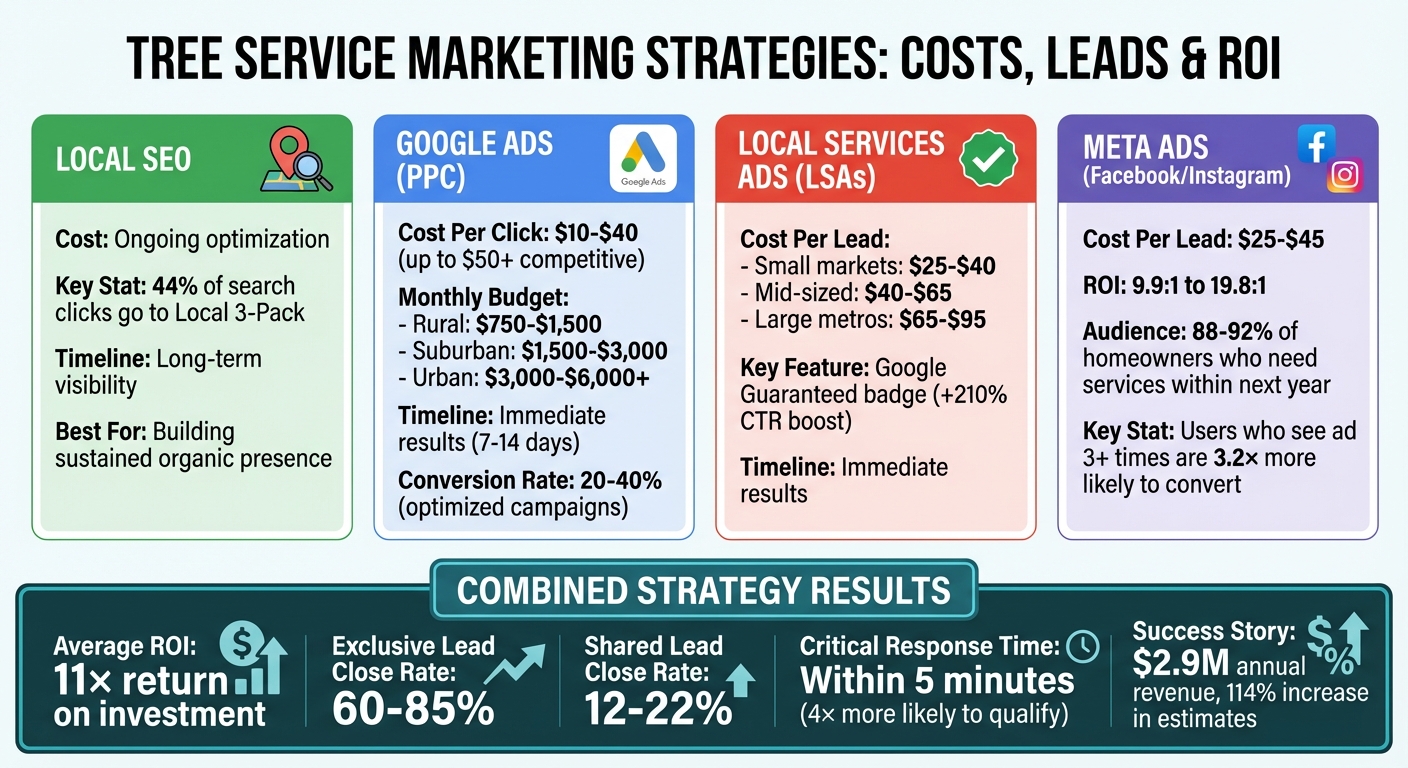
Tree Service Marketing Strategies ROI and Lead Costs Comparison
13 Ways To Market Your Tree Service Business in 2026
sbb-itb-130a704
Local SEO for Tree Service Businesses
Local SEO is a game-changer for tree service companies, helping them land in Google’s coveted Local 3-Pack. This visibility turns searches into calls and booked jobs. With 72% of consumers relying on Google to find local businesses and 76% visiting a business within 24 hours, ranking high in local searches directly impacts your bottom line.
"Tree service owners don’t lose to competitors online – they lose in Google Maps." – Tree Services Marketing
Google determines Map Pack rankings using three factors: relevance (how well your profile matches a search), distance (your proximity to the searcher), and prominence (your business’s reputation and visibility). Even if a competitor has better equipment, your optimized Google Business Profile (GBP) and consistent online presence can give you the edge.
When emergencies strike – like a tree falling on a driveway – homeowners often call the first credible business they find. Nearly 50% of local business interactions happen through Google Maps and the 3-Pack. To capitalize on this, optimizing your GBP is critical to boosting your local visibility.
Google Business Profile Setup
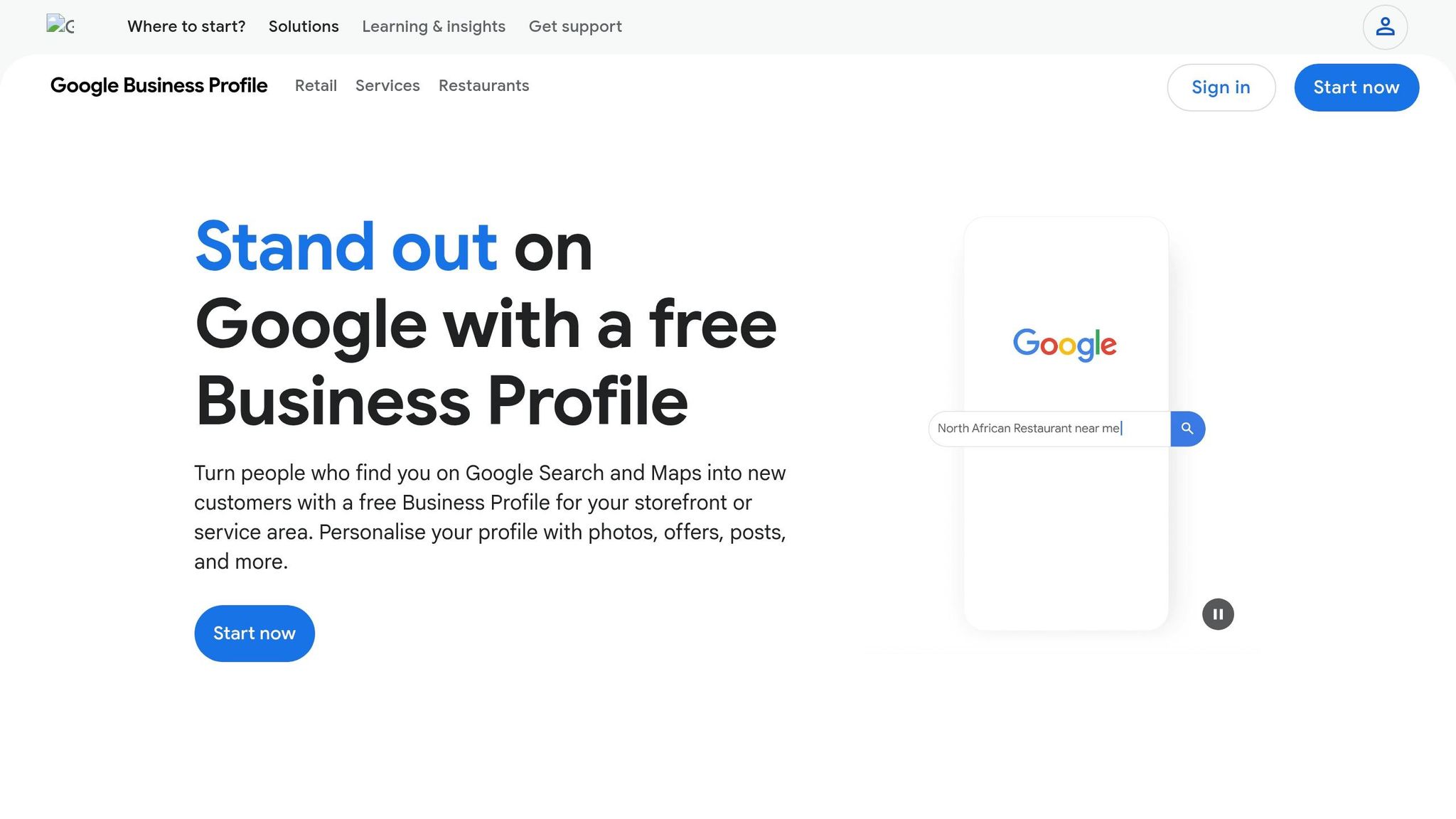
Think of your Google Business Profile as your digital storefront. Around 80% of U.S. consumers search online for local businesses weekly, and many call directly from the map listing without even visiting your website. Setting up your profile correctly from the start avoids ranking headaches later.
Start by ensuring NAP consistency (Name, Address, Phone number) across your GBP, website, and directories. Even small inconsistencies, like using "St." instead of "Street", can confuse Google.
Select "Tree Service" as your primary category rather than a broad term like "Landscaper". This choice directly affects which searches trigger your profile. You can also add up to nine secondary categories for related services like stump grinding or storm cleanup.
Use the "From the Business" description to include high-intent keywords, such as "emergency tree removal" or "ISA certified arborist", within the first 250 characters. Detail each service – tree pruning, storm cleanup, land clearing – with descriptions that align with search queries.
"A profile with 20+ photos of actual work – crews cutting trees, equipment, finished jobs – gets way more clicks than one with three blurry pictures." – Tree Service Marketing Solutions
Photos play a big role in engagement. Upload at least 20 high-quality images showcasing your team, equipment, and completed projects. Geo-tag these photos to enhance local relevance. Adding 1–2 new photos weekly signals activity to Google. Use the "Questions & Answers" section to address common concerns like "Are you insured?" or "Do you provide free estimates?" This builds trust before customers even call.
Reviews are another critical factor. Profiles often see a ranking boost after their first 10 reviews. For example, a business with a 4.7-star rating and 50 reviews can outperform one with a perfect 5.0-star rating but only 8 reviews because Google values review volume and recency. Encourage customers to leave detailed reviews mentioning the specific service and city. Always respond to reviews – positive or negative – to show you’re engaged.
| Optimization Element | Frequency | Impact on Ranking |
|---|---|---|
| NAP Consistency | Once (Audit regularly) | High (Foundational) |
| Primary Category | Once | Very High |
| Customer Reviews | Continuous | High (Prominence) |
| Photo Uploads | 1–2 per week | Medium (Engagement) |
| Google Posts/Updates | Weekly | Medium (Relevance) |
| Service Descriptions | Once (Update as needed) | Medium (Relevance) |
Use the "Add Update" feature weekly to post promotions, seasonal tips, or job highlights. This signals activity to Google. Track your GBP performance with UTM parameters in your website link (e.g., ?utm_source=google&utm_medium=organic&utm_campaign=gbp) to measure how many leads come directly from your map listing.
Once your GBP is optimized, focus on targeting local keywords that align with customer intent.
Local Keyword Targeting
Local keywords link your business to high-intent searches. For example, someone searching "tree removal Houston" is likely ready to hire. Since nearly 50% of Google searches are for local businesses, targeting these keywords ensures you’re visible when potential customers are ready to book.
While generic terms like "tree service" may attract traffic, they often convert poorly. Long-tail keywords, such as "affordable oak tree removal in west Denver", attract customers who know exactly what they need.
"The generic short keywords get searched more but convert worse. The longer specific ones bring in customers who are actually ready to book work." – Tree Service Marketing Solutions
Create dedicated landing pages (e.g., /tree-removal-kalamazoo-mi) with 500–800 words of content tailored to specific services and locations. Naturally integrate the service and city into H1 headlines, subheadings, meta descriptions, and image alt tags.
| Keyword Type | Example | Intent Level | Conversion Potential |
|---|---|---|---|
| Generic | Tree service | Low (Research) | Low |
| Localized | Tree removal Houston | High (Ready to book) | High |
| Service-Specific | Emergency storm cleanup | Very High (Immediate) | Very High |
| Long-tail Local | Affordable oak tree removal in west Denver | Very High (Specific) | Highest |
Incorporate these keywords into your GBP and on-site content to strengthen your local search signals. Ask customers to include the service and city in their reviews (e.g., "Excellent stump grinding in Charlotte") to further boost your relevance. Geo-tag photos of completed jobs to reinforce your service area.
Ranking in the Google Map Pack
The Google Map Pack captures 44% of all clicks from search results, with 33% of those clicks going to the top three listings. For tree service businesses, this spot is vital. Customers with urgent needs – like storm damage or fallen trees – often call the first reputable business they find.
To improve your Map Pack ranking, focus on consistent updates and strong local signals. While you can’t control your physical proximity to searchers, you can optimize relevance by refining your GBP categories, service descriptions, and keyword usage. Build prominence through reviews, citations, and a solid online presence.
Ensure NAP consistency across directories like Yelp and Facebook, as Google cross-references this information to verify your business. Adding LocalBusiness schema markup to your website can also help Google better understand your business.
Regularly post updates and job highlights to signal activity. Use the Q&A section to address common concerns, such as insurance, emergency availability, and pricing. This proactive approach can build trust and encourage engagement.
Businesses in Google Maps are 2.7 times more likely to be viewed as reputable. With nearly 70% of local searches happening on smartphones, your GBP often serves as the entire customer journey – from discovery to making the call.
Google Ads and Local Services Ads for Tree Companies

When it comes to generating immediate traffic, Google Ads and Local Services Ads (LSAs) are game-changers for tree service companies. While local SEO vs. paid ads is a common debate, these paid platforms deliver results right away – perfect for meeting urgent or seasonal demands. They’re especially effective for high-intent searches like "tree removal near me" or "emergency tree service".
Costs and Models
Google Ads operates on a pay-per-click model, with costs ranging from $10 to $40 per click for most tree service keywords. In competitive urban areas, prices can climb above $50. On the other hand, LSAs use a pay-per-lead system, meaning you only pay when someone calls or messages you directly. Lead costs vary based on location:
- Small markets: $25–$40 per lead
- Mid-sized areas: $40–$65 per lead
- Large metros: $65–$95 per lead
The Google Guaranteed Badge
One standout feature of LSAs is the Google Guaranteed badge. This green checkmark, earned after passing Google’s screening process (background checks, license verification, and proof of liability insurance), can boost click-through rates by a whopping 210%. Plus, Google offers up to $2,000 in coverage for the work, giving homeowners extra peace of mind during emergencies.
"What we’ve realized through working with you and your team is that you can quantify marketing returns. I can look and see I’m spending this dollar and I’m getting this in return for it." – Ryan Warner, Owner
To make the most of your budget, focus on high-intent searches like "emergency tree removal" and avoid wasting money on irrelevant clicks, such as "tree service jobs" or "DIY tree trimming". With a well-structured campaign, most tree service companies start seeing quality leads within 7 to 14 days.
Campaign Setup and Management
Launching a successful Google Ads campaign requires careful planning. Start by switching to Expert Mode instead of Smart Campaigns, which gives you full control over keywords and location targeting.
Geo-Targeting and Budgeting
Define your service area using geo-targeting. You can narrow your ads to a radius of 10 to 30 miles or target specific ZIP codes. Monthly budgets depend on your market:
- Rural areas: $750–$1,500
- Suburban markets: $1,500–$3,000
- Urban areas: $3,000–$6,000+
Keyword Strategy
Choosing the right keywords is critical. Use phrase match and exact match keywords to ensure your ads appear only for relevant searches. Examples of high-intent keywords include:
- "Tree removal near me"
- "Emergency arborist"
- "Stump grinding cost"
At the same time, build a negative keyword list to filter out low-value traffic. Exclude terms like "free", "cheap", "supplies", "equipment", "Christmas", and "jobs".
| Keyword Type | Examples | Intent Level |
|---|---|---|
| High Intent | "tree removal near me", "emergency arborist" | High (Ready to hire) |
| Low Intent | "how to trim a tree", "tree removal equipment" | Low (Researching/DIY) |
Split your campaigns into separate ad groups for each service, such as tree removal, trimming, or stump grinding. This way, your ad copy can directly address the searcher’s specific needs.
For LSAs, submit your local licenses and proof of $1M in liability insurance to get started. Once approved, you can select job types like "emergency tree removal" or "stump grinding" to ensure you only get leads relevant to your business.
Mobile Optimization
With over 70% of searches happening on mobile devices, optimizing for mobile is non-negotiable. Include prominent click-to-call buttons and ensure your landing pages load quickly. Directing traffic to service-specific landing pages – rather than a generic homepage – can double your conversion rates from 10% to 20% or higher.
Disable features like Auto-apply recommendations and the Display Network to keep tighter control over your budget. Once your campaign is live, shift your focus to tracking performance and refining your strategy.
Lead Tracking and Performance Measurement
Tracking your leads is essential for understanding which ads and keywords are driving revenue. Without it, you’re flying blind.
Call Tracking
Tools like CallRail assign unique phone numbers to each campaign, allowing you to monitor call duration. Calls lasting 60 seconds or more typically indicate genuine interest, while shorter calls may be accidental or irrelevant. Tracking these metrics lets you calculate your true cost per qualified lead.
Key Metrics to Monitor
Keep an eye on three primary metrics:
- Cost Per Lead (CPL)
- Conversion Rate
- Return on Ad Spend (ROAS)
For example, if your average tree removal job brings in $1,200 and your CPL is $50, converting just one in 24 leads can break even. Highly optimized campaigns often see conversion rates between 20% and 40%, meaning one in five leads becomes a paying customer.
"The lead that came in 3 minutes ago is 4x more likely to book than the one you call back after 2 hours." – Kevin Shea, Sales Manager, Home Service Direct
Speed Matters
Responding quickly to LSA leads can improve your ranking. Google tracks your response time, and delays can push your ad placement lower. Follow the 5-Minute Rule: respond to every lead within five minutes, even if it’s just to acknowledge their inquiry. Companies offering 24/7 availability – via an answering service or similar – often rank higher for evening and weekend searches.
Ongoing Optimization
Review your search terms report weekly to identify wasted spend. Add irrelevant terms to your negative keyword list and adjust location bids monthly based on performance. For example, if leads from one ZIP code convert better than another, increase your bid for that area.
For LSAs, check your dashboard daily to dispute invalid leads. If a lead comes from outside your service area or for a service you don’t offer, you can request a refund.
Finally, track form submissions using conversion pixels and set up UTM parameters in your ad URLs (e.g., ?utm_source=google&utm_medium=cpc&utm_campaign=tree-removal) to identify which campaigns are driving bookings. This level of detail helps you shift your budget toward higher-performing campaigns, ensuring every dollar works harder.
Meta Ads and PPC for Tree Service Companies
Google Ads are great for reaching homeowners who are actively searching for tree services, but Meta Ads on Facebook and Instagram let you connect with the 88–92% of homeowners who may need your services within the next year but aren’t searching yet. These platforms are perfect for building awareness and creating demand for the future. On average, well-managed Facebook ads for tree services deliver an ROI between 9.9:1 and 19.8:1, with leads costing around $25–$45.
"Facebook advertising isn’t about capturing intent – it’s about creating it." – Kevin Shea, Sales Manager, Home Service Direct
Considering that 76% of homeowners spend just 0–2 days researching before booking a service – and 68% of these quick decision-makers call the company they remember seeing advertised – consistent visibility is key. Plus, homeowners who see your ad three or more times before needing a service are 3.2× more likely to convert than those seeing it for the first time.
Blending Meta ads with PPC campaigns creates a complete marketing funnel that caters to both immediate and future customer needs.
Facebook and Instagram Advertising
To make the most of Meta Ads, target homeowners aged 35–65 within a 15-mile radius of your service area. Focus on households in the top 25–50% income bracket with homes valued at $400,000 or more. Higher home values often mean larger properties and mature trees – ideal for tree care services. Exclude renters to avoid wasting your budget on people who can’t authorize tree work.
Use a three-tier campaign structure that aligns with the customer journey:
- Cold traffic (40% of your budget): Introduce your company to a broad audience with educational content or eye-catching visuals, like dramatic crane removals.
- Warm traffic (30%): Target users who engaged with your previous ads or videos. Highlight social proof, like reviews or certifications (e.g., ISA Certified Arborist credentials).
- Hot traffic (30%): Focus on high-intent prospects who visited specific service pages. Use direct-response copy and urgency-based offers, such as “Book This Week and Save 10%”.
Upload your customer database to create lookalike audiences of 10,000–50,000 similar users. These audiences typically convert 2–3× better than cold traffic. Visuals matter – before-and-after images and 30-second videos outperform static visuals.
Leverage Facebook’s lead generation forms to collect contact details without requiring users to leave the platform. Since 80% of Facebook users access the site via mobile, make sure your “Call Now” or “Get Quote” buttons are easy to tap, and ensure landing pages load instantly. Plan a 30-day retargeting sequence:
- Days 1–7: Show reviews and social proof.
- Days 8–21: Feature special offers.
- Days 22–30: Use scarcity messaging to create urgency.
Adjust your campaigns seasonally. In spring, tighten your targeting to high-income households and increase your budget by 40–50%. During slower winter months, expand your radius and offer early bird discounts. To avoid wasting ad spend, exclude customers who hired you in the last 90 days.
With a monthly budget of $800–$1,200, you can expect 25–45 leads. Aim for a CPM under $15, a CPC between $1.50–$3.00, and a cost per lead of $25–$45.
PPC Campaign Optimization
To maximize your PPC campaigns, start by analyzing your search terms report weekly. Identify and exclude irrelevant keywords like “jobs,” “careers,” “DIY,” “how to,” “free,” “cheap,” and “Dollar Tree” by adding them to your negative keyword list.
Segment your campaigns by service type – tree removal, pruning, stump grinding, etc. – so your ad copy and landing pages match the searcher’s intent.
Run A/B tests on ad headlines, visuals, and landing pages. Test two variations at the same time and gather at least 50–100 clicks before deciding which performs better. For ad copy, use Headline 1 to highlight the service and location (e.g., “Tree Removal in Austin” or tree services in Georgia) and Headline 2 to emphasize trust factors (e.g., “Licensed & Fully Insured”). Add extensions like Call, Location, Sitelink, and Callout to increase visibility and provide direct contact options.
Keep an eye on your Quality Score in Google Ads. This score (ranging from 1 to 10) measures the relevance of your keywords, ads, and landing pages. A higher score lowers your cost per click, helping you get more value from your budget. Track metrics like conversion rate (aim for 5–12%, though optimized campaigns can hit 20–40%), cost per lead, and return on ad spend (target 300–500% for mature campaigns).
"The biggest budget killer? Paying for clicks that never become customers." – Alex Gambashidze, Marketing Associate, ResultCalls
Lastly, adjust location bids monthly. If leads from one ZIP code convert better than another, increase your bids for that area to capture more of the high-performing traffic.
Web Design and Lead Generation
Your website isn’t just a digital placeholder – it’s your most powerful sales tool. With over 60% of local service searches happening on smartphones, often during urgent situations like storm damage or a leaning tree, your site must perform flawlessly on mobile devices. A fast-loading, professional-looking website that’s easy to navigate can turn curious visitors into paying customers. By combining mobile-friendly design with effective lead capture tools, you can make a lasting impression that drives results.
Tree service comes with high stakes – heavy machinery, potential property damage, and substantial costs. Homeowners need to feel confident in your expertise before they even consider calling. A well-designed website builds that trust by showcasing proof of insurance, certifications, and real before-and-after photos of your work. Including authentic images of your team and projects adds credibility and helps establish a connection with potential clients. This blend of trust-building elements and smart design can transform visitors into high-quality leads.
Mobile-Friendly Website Design
Mobile optimization isn’t just a nice-to-have – it’s a must. Since Google prioritizes mobile-friendly sites in its rankings, your website should adjust seamlessly to any screen size and load in under 3 seconds to minimize bounce rates. Use modern image formats like WebP and compress files to maintain visual quality while ensuring fast load times.
Make it easy for users to take action. Prominently display "Call Now" or "Get a Free Quote" buttons above the fold on every page. For mobile users, a fixed contact bar with options like "Call", "Quote", or "Text Us" should remain visible as they scroll. Instead of funneling all traffic to your homepage, create service-specific landing pages. For instance, if someone searches for "stump grinding", direct them to a page with tailored content and a clear call to action. And don’t forget to feature your 24/7 emergency contact details prominently – tree service demand often spikes after storms.
"Your website shouldn’t just look nice, it should work hard to bring in customers. That means converting visitors into calls, quote requests, and scheduled jobs."
– Local Tree Service Marketing
Take this example: From June to October 2025, Serhii Halchuk, founder of Leads4Build, led a digital marketing campaign for a startup tree service provider in Greater Boston. By implementing service-specific landing pages, simplified quote forms, and live chat, the website’s conversion rate jumped from 5% to 13%. By the fifth month, the campaign generated over 280 monthly leads and resulted in 65+ completed jobs.
Once your site is optimized for mobile, the next step is to focus on converting traffic into leads with the right tools.
Lead Capture Tools and Systems
A mobile-friendly design sets the stage, but effective lead capture tools are what turn website traffic into real business opportunities. Keep contact forms simple – limit them to essential fields like name, phone number, and service type. Overly long forms can discourage users and lower conversion rates. Place trust signals, such as reviews, certifications, and insurance badges, near your lead capture tools to reassure homeowners that their information is in safe hands.
Instant communication is key. Integrate live chat and online scheduling tools to make booking as seamless as possible. Offer multiple contact options, including click-to-call buttons and traditional forms, to cater to different preferences. Use action-oriented phrases like "Get a Free Quote" or "Call Now for Fast Service" to encourage engagement.
Track performance with tools like Google Tag Manager and call tracking to identify which buttons and forms drive the most leads. Respond quickly using lead automation and centralized dashboards – speed is critical when securing new business.
Here’s a success story: Within just three to four weeks of launching a revamped lead generation strategy in 2025, one client saw 30–40 new leads, filled their calendar eight weeks in advance, and hit a record monthly revenue of $90,000.
Tree Company Leads Service Plans
Tree Company Leads provides customized service plans designed specifically for tree care businesses. Once your website and lead capture tools are set up, you can select a plan that aligns with your business goals. These plans focus on delivering 100% exclusive leads, meaning you won’t have to compete with others for the same opportunities. Unlike shared lead models, this approach ensures that every lead is exclusively yours to pursue.
Each plan combines multiple digital marketing channels like Google Ads, Facebook Ads, SEO, custom landing pages, and conversion tracking to bring in tree service leads. On average, businesses experience an ROI of 11x, with every $1 spent generating between $10.34 and $12.50 in revenue. Exclusive leads also have a much higher close rate – ranging from 60% to 85% – compared to the 12% to 22% typical of shared leads.
Here’s a breakdown of the available plans to help you choose the best match for your business:
Plan Comparison
| Plan | Monthly Price | Exclusive Leads | Best For | Key Benefits |
|---|---|---|---|---|
| Starter | $1,850 | 15 leads | Small businesses testing digital marketing or filling slower seasons | Quick launch, no competition, conversion-optimized landing pages |
| Growth | $2,900 | 25 leads | Established companies ready to scale operations | Higher volume, multi-channel approach, exclusive geographic targeting |
| Dominate | $5,400 | 50 leads | Market leaders aiming to dominate their service area | Maximum lead flow, priority support, comprehensive tracking |
Whether you’re looking for a low-risk way to build your customer base or aiming to dominate your market, there’s a plan for you. The Starter plan is ideal for businesses wanting to test digital marketing or fill slower seasons. The Growth plan offers scalability, providing a higher volume of leads to keep your teams busy. For companies ready to take over their local market, the Dominate plan delivers maximum lead flow and priority support.
It’s worth noting that your lead costs can vary based on your business’s qualifications. Meeting criteria like state licensing, liability insurance, and maintaining a Google Business Profile rating of 4.5+ stars can reduce costs and open up additional advertising opportunities.
"By the second month, Tree Leads had sent us over thirty new customers."
– Aaron F., Regional Marketing Lead
Timing is critical when handling exclusive leads. A delay of just five minutes in responding to a new inquiry can reduce your chances of qualifying the lead by 400%. To get the most out of your leads, have systems in place to respond – via call or text – within 15 minutes.
Conclusion
By combining strategies like Local SEO, PPC, and Meta Ads, your tree service business can effectively attract both immediate and consideration-phase leads. This guide covered how Local SEO, Google Ads, Local Services Ads, Meta Ads, and conversion-focused web design work together to support the customer journey.
Digital marketing systems have shown the ability to deliver impressive returns, often achieving 5–10x ROI on ad spend. For example, Ryan Warner’s company saw annual revenue grow to $2.9 million, with a 114% increase in estimates over two years, thanks to a measurable marketing system. Another business secured 30–40 qualified leads within weeks, filling their schedule eight weeks in advance.
The key to success lies in dependable systems. Partnering with Tree Company Leads means receiving exclusive leads generated directly from your website and campaigns. This approach ensures you’re targeting high-quality prospects without competing for the same leads.
An integrated digital strategy combines quick response times with efficient lead capture, so no opportunity slips through the cracks. Responding to leads within five minutes can significantly increase your chances of landing a job. With the best lead generation tools for lead capture, tracking, and ongoing support, you can focus on delivering outstanding tree care while your marketing efforts consistently bring in customers ready to book.
Tree Company Leads provides customized packages designed to turn your marketing budget into steady revenue growth, backed by industry expertise and proven strategies.
FAQs
Which channel should I start with first?
Building a strong presence in local search starts with local SEO and optimizing your Google My Business profile. These steps lay the groundwork for better visibility in local search results. Once you’ve established a solid organic presence, adding paid advertising like Google Ads (PPC) can help you attract leads and bookings quickly. Combining SEO for sustainable growth with PPC for instant results creates a balanced strategy that delivers both short-term and long-term benefits.
How quickly should I follow up on new leads?
You should respond to new leads as quickly as you can – ideally within 24 hours. Acting promptly demonstrates professionalism, helps establish trust, and significantly boosts your chances of turning those leads into paying customers.
What makes leads ‘exclusive’?
Leads are labeled as exclusive when they are provided to just one business within a designated area. This eliminates the risk of competitors accessing the same leads, giving you a better opportunity to turn them into paying customers.
Related Blog Posts
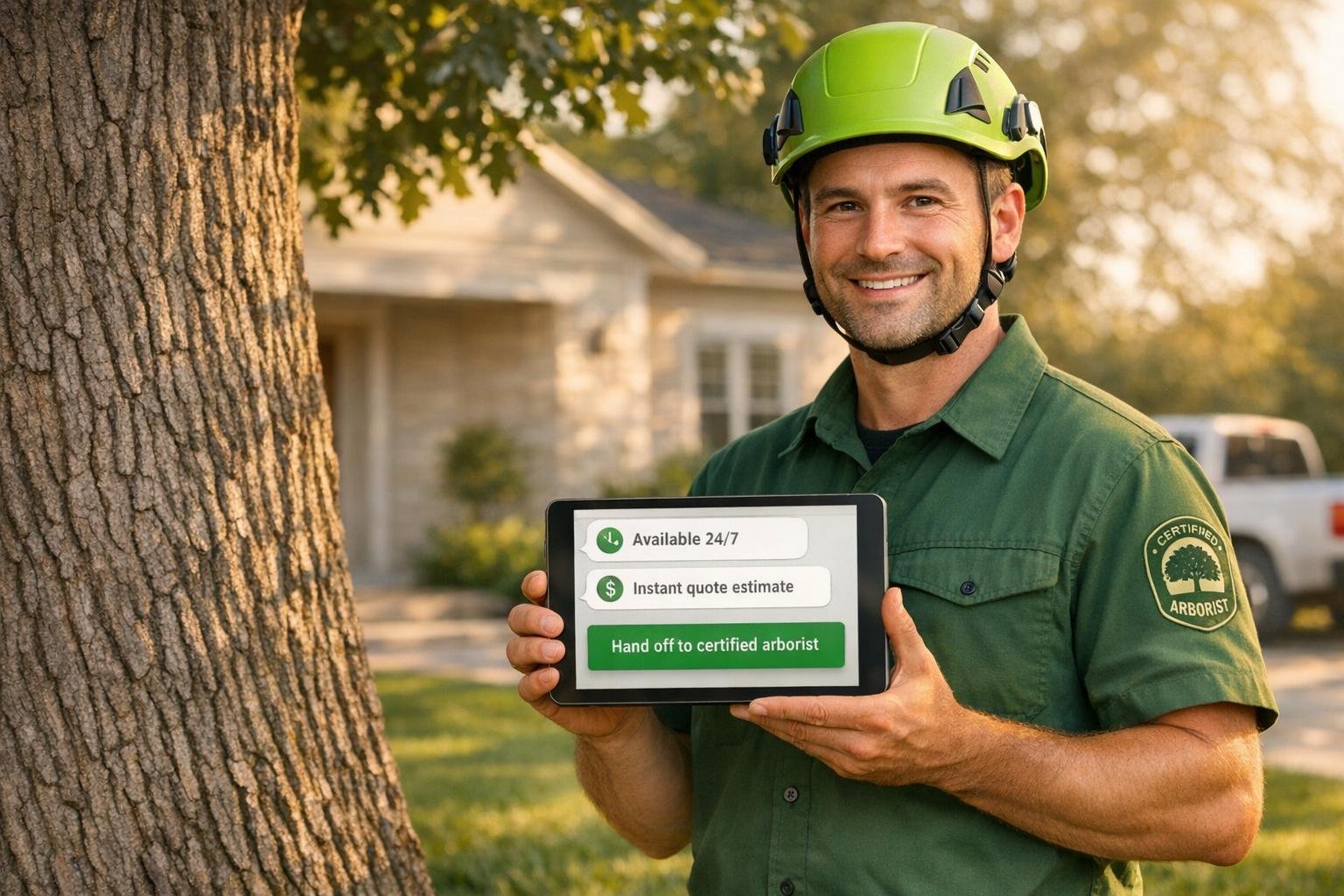
AI chatbots are transforming the tree service industry by providing instant, 24/7 customer support. They handle basic inquiries, schedule appointments, and qualify leads faster than traditional methods. Businesses using chatbots see increased lead conversions and reduced administrative workloads. However, chatbots lack the personal touch and problem-solving ability of human support, which remains essential for complex issues. The best approach? Combine chatbots for routine tasks with human expertise for nuanced customer needs.
Key Takeaways:
- Chatbots respond instantly, improving lead response rates and customer satisfaction.
- They reduce costs, with interactions costing around $0.50 compared to $6.00 for human support.
- Humans are better for complex issues and building trust but are limited by availability and higher costs.
- A hybrid approach balances efficiency and personalized service.
Quick Comparison:
| Feature | AI Chatbot | Human Support |
|---|---|---|
| Availability | 24/7 | Limited to business hours |
| Cost per Interaction | $0.50 | $6.00 |
| Response Time | Immediate | Minutes to days |
| Handling Complexity | Limited | Excellent |
| Customer Preference | 77% frustrated | 88% prefer human |
Chatbots are a cost-effective solution for routine tasks, while human support ensures quality for complex interactions. Together, they create a balanced customer service strategy.
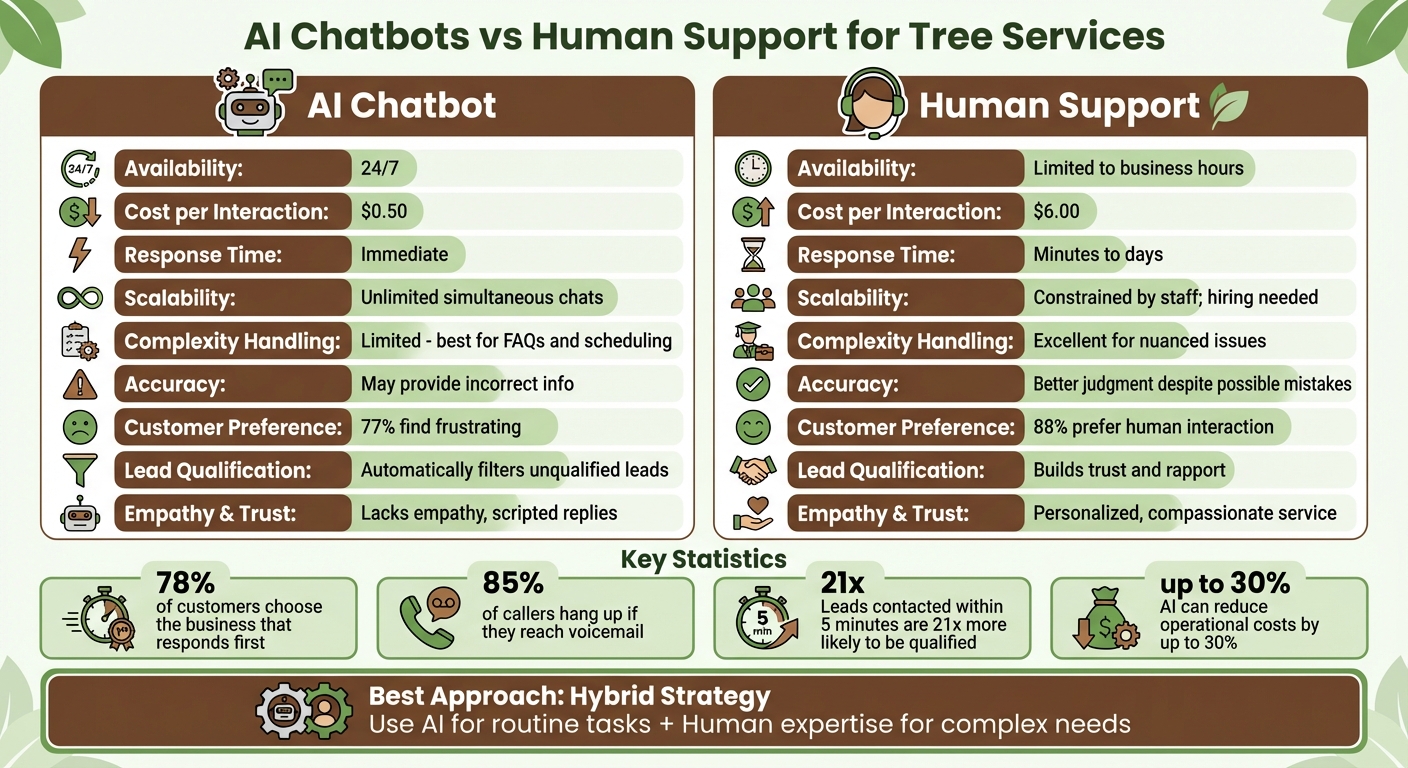
AI Chatbots vs Human Support for Tree Services Comparison
Supercharge Your Tree Care Leads & Sales With These AI Tools | Tree Care Marketing Solutions
sbb-itb-130a704
1. AI Chatbots for Tree Services
AI chatbots bring round-the-clock accessibility to tree service businesses, helping to capture leads and streamline customer support.
Lead Generation
AI chatbots work tirelessly, even during off-hours, to ensure no potential lead is missed. Imagine a homeowner needing emergency tree removal at 11:00 PM after a storm. Instead of facing a voicemail, they get an instant response from a chatbot. This matters because 85% of callers with storm damage will hang up and contact a competitor if their call goes unanswered.
The chatbot doesn’t just collect contact information – it qualifies leads by asking key questions about the service area, tree type, urgency, and property size. It can even request photos via SMS to assess the situation. For example, a tree care company in Washington state adopted this system in May 2025 and saw a 42% jump in lead conversions within just 60 days.
With multi-channel integration, the bot centralizes leads from platforms like Facebook Messenger, Instagram, Google Business Profile, WhatsApp, and your website. Speed is critical: leads contacted within 5 minutes are 21 times more likely to be qualified than those contacted after 30 minutes. Once the chatbot gathers leads, it seamlessly transitions to handling inquiries or escalating emergencies.
Customer Support
AI chatbots excel at managing routine questions while flagging urgent issues for immediate human intervention. If someone types, "A tree fell on my house", the system alerts your on-call team instantly. For simpler questions – like pruning schedules or service areas – the bot provides quick, accurate answers tailored to the industry.
Post-job follow-ups are automated, too. After a tree removal, the chatbot might send an SMS about stump grinding seven days later. A month after pruning, it could email details on plant health care plans. For more technical or diagnostic questions, the chatbot routes the customer to a human arborist without delay.
Operational Efficiency
By automating 40% of office tasks, AI significantly reduces administrative burdens. This includes scheduling estimates, sending follow-ups, and syncing client records. Integrating with tools like ArboStar and Jobber ensures schedules stay up-to-date, freeing your team to focus on crews and closing deals.
Photo submissions allow for remote estimates, cutting down on unnecessary site visits. The bot can even trigger workflows based on weather alerts, like high winds exceeding 40 mph, to encourage proactive inspections and removal jobs. Equipment maintenance checklists are generated in seconds, saving hours of manual work. These efficiencies translate into better cost management and a stronger return on investment.
Cost
AI chatbot solutions typically range from $297 to $499 per month, with setup fees between $497 and $3,000. Entry-level options start as low as $2.99 per month, but specialized bots for tree services offer more tailored features. Compared to hiring a full-time receptionist or paying for comparing local SEO vs. paid ads (which often cost around $3,000 monthly), AI proves to be a cost-effective alternative.
The financial benefits become clear quickly. Leads from third-party aggregators can cost up to $90 per call, and inconsistent follow-ups result in the loss of 60% of high-value plant health care jobs. AI prevents these losses by ensuring every lead gets prompt attention.
"Buying leads is like renting a house; building your own AI SEO platform is like owning the deed." – Allen Seavert, Founder, SetupBots
2. Human Customer Support for Tree Services
While AI chatbots offer consistent availability and speed, human support brings a level of expertise and personal touch that machines just can’t replicate.
Lead Generation
Humans excel at turning potential leads into loyal customers by offering tailored advice and building trust. For instance, when a homeowner needs guidance on a tricky tree health issue or wants to discuss a bundled service package, a skilled arborist can position themselves as a trusted local expert. This matters because 78% of customers choose the business that responds to them first, highlighting the need for effective ways to get more tree service leads.
Yet, here’s the catch: only 27% of local leads are contacted by small-to-mid-sized businesses, and fewer than 40% of calls to tree service companies are answered by a live person. During busy seasons, these missed connections add up quickly. While human interaction is critical for building relationships and handling high-value consultations, it often struggles to keep up with the demand for quick responses.
The real strength of human support lies in addressing complex and nuanced questions with a personalized approach.
Customer Support
When it comes to resolving complex issues, human expertise is irreplaceable. For example, a homeowner worried about oak wilt or debating whether a leaning tree poses a structural risk needs more than a chatbot – they need the insight and empathy of a certified arborist. Humans are also better equipped to handle negotiations, special requests, and unique situations that fall outside a bot’s programming.
However, availability remains a major hurdle. During emergencies, 85% of callers will hang up if they hit voicemail. Offering 24/7 human support isn’t feasible for most tree service companies, as it can increase labor costs by 30% to 50%.
"Human interaction remains crucial… chatbots support sales but human interaction remains crucial." – Dr. Vivian Atud, Business and Marketing Consultant
While human support offers unmatched depth and flexibility, it also comes with operational challenges that can impact efficiency.
Operational Efficiency
Relying on human support can slow things down. Arborists and managers often spend 40% of their time on administrative tasks like scheduling and follow-ups, which takes time away from their core responsibilities. This juggling act can lead to disorganization, especially when business owners are managing crews while answering phones. In fact, 60% of high-value Plant Health Care jobs are lost due to inconsistent follow-ups.
Scaling human teams also presents a challenge. Managing a higher volume of inquiries means hiring more staff, while automated systems can handle unlimited requests without additional costs. Traditional manual approaches to SEO and lead management are another bottleneck – they’re prone to errors and can take weeks to complete tasks that automation handles in seconds.
Cost
The financial trade-offs between human support and AI solutions highlight the need to balance expertise with efficiency.
A full-time customer service representative earns a median salary of $42,827 per year, not including benefits or turnover expenses. On average, human interactions cost around $6.00 each, compared to $0.50 per interaction for AI. Meanwhile, traditional agencies handling manual SEO and lead management charge between $1,500 and $3,500 per month.
AI-driven solutions can cut operational costs by up to 30%, but here’s the thing: 88% of customers still prefer speaking to a human. For complex issues like billing disputes, resolution rates are much higher with human support. The challenge lies in striking the right balance – using human expertise for high-value tasks while automating repetitive processes to save time and money.
Pros and Cons
Let’s break down the strengths and weaknesses of AI chatbots versus human customer support for your tree service business.
| Feature | AI Chatbot | Human Customer Support |
|---|---|---|
| Availability | Always on, 24/7 instant responses | Limited to standard business hours |
| Cost per Interaction | Around $0.50 | Around $6.00 |
| Response Time | Immediate, zero wait time | Can range from minutes to days |
| Scalability | Handles unlimited chats at once | Constrained by staff availability; hiring needed |
| Complexity Handling | Great for FAQs and scheduling tasks | Best for nuanced or emotionally charged issues |
| Accuracy | May provide incorrect or "hallucinated" info | Can make mistakes but offers better judgment |
| Customer Preference | 77% find chatbots frustrating | 88% prefer speaking with a human |
| Lead Qualification | Automatically filters unqualified leads | Builds trust and rapport with potential clients |
| Empathy & Trust | Lacks empathy, uses scripted replies | Offers personalized and compassionate service |
AI chatbots bring speed, affordability, and the ability to handle large volumes of inquiries. However, they struggle with complexity and lack the emotional touch that only humans can provide. On the other hand, human support excels in building trust and solving intricate problems but comes with higher costs and limited availability.
For tree service businesses, a hybrid approach often works best. Use AI chatbots to manage basic queries, schedule appointments, and filter leads. Then, transfer more complicated or sensitive cases to experienced human staff. This ensures efficiency without sacrificing customer satisfaction.
"You should not use AI as a one-size-fits-all solution in your business, even when you are thinking about a very specific context such as customer service." – Shunyuan Zhang, Harvard Business School
Cost is a key factor: AI chatbots cost roughly $0.50 per interaction compared to $6.00 for human support. However, chatbots often fall short when handling complex inquiries – 75% of customers report dissatisfaction in those cases. Additionally, over half of chatbot implementations (53%) fail within 15 months due to maintenance or escalation challenges. Balancing these trade-offs is essential for long-term success in your tree service marketing strategy.
Conclusion
AI chatbots shine when it comes to tasks like 24/7 lead capture and handling basic inquiries. Here’s why they matter: 78% of customers choose the business that responds first, and reaching out within five minutes makes prospects 21 times more likely to be qualified. This makes AI chatbots a game-changer for capturing leads outside business hours or during emergencies when your team is busy in the field.
That said, AI works best as a complement to human expertise – not a replacement. Quick responses are critical for conversions, which is why combining AI’s speed with human insight creates the perfect balance. AI can handle routine questions, while your staff focuses on more complex customer needs. This hybrid approach ensures a smooth, efficient customer experience.
By automating repetitive tasks and transferring qualified leads to your team for more detailed discussions, you can significantly cut costs – from about $6.00 per interaction to just $0.50. And while AI takes care of efficiency, your team maintains the personal touch that 88% of customers prefer. This cost-effective strategy highlights the value of blending AI with human support.
To get started, consider automating after-hours lead capture or appointment scheduling. Keep your chatbot’s knowledge base updated with accurate pricing and policies to avoid miscommunication. As Shunyuan Zhang from Harvard Business School wisely notes:
"You should not use AI as a one-size-fits-all solution in your business, even when you are thinking about a very specific context such as customer service".
Looking to take your strategy further? Tree Company Leads offers services like web design, Google Ads strategies, and lead generation, all tailored to fit seamlessly into your operations. Their expertise in local SEO ensures that your AI tools work in harmony with your overall marketing efforts.
With the tree care industry projected to grow from $1.3 billion in 2024 to $2.5 billion by 2031, combining AI efficiency with human expertise puts your business in the best position to thrive. Let AI handle the repetitive tasks, focus on delivering exceptional service, and be ready to capture the opportunities ahead.
FAQs
What should a tree service chatbot handle vs a human?
A tree service chatbot is perfect for handling everyday tasks like answering FAQs, sharing basic service information, scheduling appointments, and gathering contact details. These automated interactions provide instant, round-the-clock responses, making the process faster and more efficient for both businesses and customers.
However, when it comes to more complex or sensitive matters – like diagnosing tree health, addressing specific concerns, or giving tailored advice – human expertise is essential. These situations demand professional judgment, experience, and the kind of nuanced understanding that AI simply can’t match.
How do I prevent my chatbot from giving wrong answers?
To minimize errors, focus on training your chatbot with precise, industry-specific data and linking it to a reliable, up-to-date knowledge base. Keep an eye on its interactions, refine responses regularly, and establish clear fallback options for handling uncertain questions. Conduct thorough testing before launch to spot and address potential issues. These practices help boost accuracy and ensure your chatbot provides dependable answers.
What’s the best way to add a chatbot to my website and phone leads?
Adding a chatbot to your website is easiest when you use an AI-powered tool that integrates seamlessly with your site and communication channels. Prioritize tools that offer features like customizable branding, lead qualification, and appointment scheduling.
Most platforms simplify the process with options like embedding a widget, which requires minimal technical know-how. This allows you to ensure 24/7 engagement with your website visitors and phone leads, providing consistent follow-up without extra effort.
Related Blog Posts
Agency 2
Agency 2 has established itself as a leading Tree Service Google Ads Agency in Idaho, United States. With a focus on local tree services, they tailor their strategies to effectively reach potential customers in the region. Their team emphasizes understanding the unique needs of tree service providers, ensuring that campaigns are designed to attract qualified leads and drive conversions.
The agency employs a variety of techniques to enhance visibility. They utilize targeted keywords, compelling ad copy, and localized strategies to engage users actively seeking tree care solutions. By continuously analyzing performance data, Agency 2 refines its approach, ensuring that clients receive maximum return on investment through optimized ad spending.
Feedback from Satisfied Customers
Clients appreciate the dedication and expertise that the Tree Service Google Ads Agency in Idaho, United States, brings to their marketing campaigns. Many have highlighted the agency’s thorough understanding of the tree care industry, which translates into targeted advertising strategies that resonate with local customers. Several testimonials indicate a significant increase in leads and inquiries after implementing the agency\’s recommendations.
Satisfied customers frequently mention the exceptional communication and support they receive throughout the process. The Tree Service Google Ads Agency in Idaho, United States, ensures that clients are kept informed about campaign performance and adjustments. This level of transparency builds trust and fosters long-term relationships, encouraging returning customers to rely on their services for ongoing marketing needs.
Agency 3
Agency 3 has built a strong reputation as a leading Tree Service Google Ads Agency in Idaho, United States. They focus on crafting targeted campaigns that resonate with local customers. Utilizing data-driven strategies, this agency aims to maximize click-through rates and conversion rates. Their approach includes keyword optimization and competitive analysis, helping tree service businesses stand out in a crowded market.
The range of services offered by Agency 3 is designed specifically for tree service providers. This includes not only pay-per-click advertising but also landing page optimization and ongoing performance tracking. By providing comprehensive solutions, they ensure clients receive tailored support that meets their unique needs. Their attention to detail sets them apart, enabling local businesses to thrive in the competitive landscape of Idaho\’s tree care industry.
Comprehensive Solutions for Tree Service Providers
A Tree Service Google Ads Agency in Idaho, United States offers a range of tailored solutions designed to meet the unique needs of tree care businesses. These agencies understand the industry\’s challenges, providing services like targeted ad campaigns, keyword research, and optimized landing pages. By focusing on local demographics and search behaviors, they create personalized strategies that drive more potential clients to tree service providers.
In addition to traditional advertising, many agencies incorporate advanced digital marketing techniques. Search retargeting ensures that previous website visitors receive reminders of services through strategic ads. Agencies also emphasize the importance of mobile optimization, given that many users search for tree services on their smartphones. This comprehensive approach helps tree service providers establish a strong online presence, ensuring they stand out in a competitive market.
Agency 3
Agency 3 stands out as a reputable Tree Service Google Ads Agency in Idaho, United States, known for its tailored approach to advertising in the tree care industry. Their team specializes in creating effective campaigns that resonate with local customers. By understanding the unique needs of tree service providers, they develop strategies that attract more leads and convert inquiries into clients.
The agency offers a broad range of services designed to improve online presence and drive traffic. They focus on optimizing ad spend and ensuring that clients see a positive return on investment. Their comprehensive solutions encompass keyword research, ad creation, and performance tracking to guarantee that each campaign meets the specific goals of the tree service businesses they work with.
How Results are Measured and Reported
Performance metrics are crucial for evaluating the effectiveness of any digital marketing campaign, particularly for tree service businesses. A reputable Tree Service Google Ads Agency in Idaho, United States will focus on key indicators such as click-through rates (CTR), conversion rates, and return on ad spend (ROAS). These metrics provide insight into how well ads are resonating with potential customers and can indicate areas where adjustments might be necessary for optimal performance.
Reporting on these metrics typically involves regular updates and analytics dashboards that display real-time data. A transparent Tree Service Google Ads Agency in Idaho, United States will offer detailed reports that break down the performance of individual campaigns, keywords, and ad creatives. This enables tree service providers to see the direct impact of their advertising efforts and make informed decisions about future investments in Google Ads.
FAQS
What should I look for when choosing a Google Ads agency for tree services in Idaho?
When selecting a Google Ads agency, consider their experience with tree service businesses, client testimonials, the range of services offered, performance metrics, and their transparency in reporting results.
How do I know if a Google Ads agency is effective for my tree service business?
Look for performance metrics such as return on investment (ROI), conversion rates, and client testimonials that highlight successful campaigns and satisfied customers.
Are there specific Google Ads strategies that work best for tree services?
Yes, effective strategies may include targeting local keywords, using geo-targeting to reach potential customers in specific areas, and creating compelling ad copy that emphasizes the unique services offered by your tree service business.
How long does it typically take to see results from a Google Ads campaign?
Results can vary, but most businesses begin to see some level of engagement within a few weeks. However, significant results, such as increased conversions and ROI, may take a few months to fully materialize.
Can I manage my Google Ads account myself, or should I hire an agency?
While you can manage your Google Ads account yourself, hiring an agency is often beneficial due to their expertise, access to advanced tools, and ability to optimize campaigns effectively, allowing you to focus on running your business.
Related Links

Common Challenges in Google Ads for Tree Services
Running effective Google Ads campaigns for tree services presents unique challenges. Many tree service companies struggle with understanding the complexities of keyword selection and bidding strategies. This often leads to inefficient use of budgets and missed opportunities. Additionally, tree services may face stiff competition from other local providers, making it essential to craft compelling ad copies that resonate with potential customers. Without the expertise of a Tree Service Google Ads Agency in Nevada, United States, many businesses find it challenging to navigate these obstacles effectively.
Another significant challenge involves seasonal demand fluctuations that can greatly affect a tree service\’s advertising strategy. During peak seasons, such as spring and summer, the demand for tree cutting and maintenance increases, prompting companies to ramp up their advertising efforts. Conversely, during the off-peak months, maintaining visibility while managing costs becomes crucial. This balance requires expertise in adjusting bids and targeting parameters in real-time, something a Tree Service Google Ads Agency in Nevada, United States can help manage effectively.
Addressing Seasonal Demand Fluctuations
Seasonal fluctuations in demand can significantly impact tree service businesses, making it crucial for them to adapt their marketing strategies accordingly. A Tree Service Google Ads Agency in Nevada, United States, can assist in identifying peak seasons and tailoring ad campaigns to match trends in local weather and tree care needs. For example, increasing ads targeting pruning or removal services during spring months can yield higher returns when homeowners are more focused on landscaping and tree maintenance.
To effectively address these seasonal patterns, agencies often recommend creating dynamic ad content that reflects current services relevant to the season. Incorporating local weather data into targeted advertising can enhance engagement and optimize visibility when potential customers are most active. By focusing on timely promotions or showcasing seasonal services, a Tree Service Google Ads Agency in Nevada, United States, can help businesses stay ahead of competition and maximize their advertising efforts throughout the year.
Benefits of Local Targeting in Google Ads
Local targeting in Google Ads allows tree service businesses to reach potential customers within a specific geographic area. This approach ensures that ads are displayed to users searching for tree care solutions nearby, increasing the chances of conversions. By focusing on a local audience, tree services can optimize their marketing efforts and provide tailored messages relevant to the community\’s needs.
Working with a Tree Service Google Ads Agency in Nevada, United States can further enhance local targeting efforts. These agencies understand the unique dynamics of the local market and can develop campaigns that resonate with residents. Utilizing geo-targeting strategies effectively connects businesses with customers seeking immediate services, ultimately driving traffic and boosting revenue.
Strategies for Reaching Local Customers Effectively
Leveraging local targeting in Google Ads allows tree services to connect with customers who are right in their vicinity. Focusing on geographic keywords and local phrases helps ensure that ads appear to potential clients searching for tree services nearby. Utilizing features such as location extensions and tailored landing pages enhances visibility, inviting users to engage with the business more effectively.
A Tree Service Google Ads Agency in Nevada, United States, can optimize campaigns by analyzing local search trends and competitor activity. Customized ad copy that resonates with the local community promotes higher click-through rates and conversions. Implementing strategies like geo-targeted promotions during peak seasons ensures that tree services are well-positioned to capture the interest of nearby homeowners needing assistance.
Cost of Google Ads Services
Investing in Google Ads services can vary greatly depending on your specific goals and the competitiveness of the tree service market in Nevada. Agencies often provide tiered pricing models, allowing businesses to choose packages that align with their budget. It\’s essential to assess your needs, whether it’s lead generation or brand awareness. A well-structured campaign requires a thoughtful allocation of funds, especially in a niche sector like tree services.
For businesses in this field, working with a specialized Tree Service Google Ads Agency in Nevada, United States, offers a significant advantage. These agencies understand local market dynamics and can optimize campaigns accordingly to maximize return on investment. A clear budget framework should account for ad spend, agency fees, and any additional tools necessary for tracking performance, ensuring your campaign remains competitive while driving valuable leads.
Budgeting for a Successful Campaign
When planning a budget for a Google Ads campaign, it is essential to consider the specific costs associated with the tree service industry. The competition level in the area can influence the cost-per-click (CPC) rates. A Tree Service Google Ads Agency in Nevada, United States, can provide insights on historical data, enabling businesses to set a realistic budget based on local market conditions. Businesses should account for additional expenses like ad creation and ongoing management, which can contribute significantly to overall campaign costs.
Understanding the expected return on investment (ROI) is crucial when budgeting for advertising. With a well-planned budget, tree service companies can allocate funds effectively to various campaigns. A Tree Service Google Ads Agency in Nevada, United States, can help track the performance of ads to ensure that spending aligns with business goals. Regular monitoring and adjustments may be necessary to optimize performance throughout the campaign lifecycle.
FAQS
What are the common challenges faced by tree service businesses when using Google Ads?
Tree service businesses often struggle with seasonal demand fluctuations, competition from other local services, and the need to effectively target specific customer demographics.
How can tree service agencies address seasonal demand fluctuations through Google Ads?
Agencies can use strategies like adjusting ad budgets during peak seasons, creating seasonal promotions, and utilizing geo-targeting to reach customers when they need tree services the most.
Why is local targeting important for tree service businesses using Google Ads?
Local targeting helps tree service businesses reach potential customers in their immediate vicinity, increasing the likelihood of conversions and enhancing the relevance of their ads to local homeowners.
What strategies can be employed to effectively reach local customers through Google Ads?
Effective strategies include using location-based keywords, setting up geo-targeting, and creating ads that highlight local landmarks or community ties to resonate with the target audience.
How much should tree service businesses budget for Google Ads services?
Budgeting for Google Ads varies based on goals, competition, and market demand, but businesses should consider starting with a flexible budget that allows for adjustments based on campaign performance and seasonal trends.
Related Links
Agency Profile
Rooted Digital Marketing stands out as a premier Tree Service SEO Agency in Wisconsin, United States. With a firm commitment to enhancing the online visibility of tree care businesses, this agency specializes in local search engine optimization that caters specifically to the unique needs of the arboriculture industry. Their tailored strategies focus on driving local traffic and improving search rankings, ensuring that their clients connect with potential customers in their area.
BranchOut SEO is another notable Tree Service SEO Agency in Wisconsin, United States. This agency prides itself on its innovative approaches to boosting online presence for tree service companies. Utilizing the latest in digital marketing techniques, BranchOut SEO develops customized campaigns that enhance user engagement and conversion rates. Their focus on creativity helps clients stand out in a competitive market, ultimately leading to increased business opportunities for tree care professionals.
Specialization in Local SEO for Tree Services
Local SEO plays a crucial role for businesses specializing in tree services, especially in a region like Wisconsin. Tree Service SEO Agency in Wisconsin, United States, focuses on optimizing online visibility for these niche companies. This involves targeted strategies that enhance local search rankings. By employing techniques such as Google My Business optimization, local keyword research, and gaining quality backlinks from local sources, agencies can significantly increase their clients\’ chances of being found by nearby customers in need of tree care.
Moreover, a well-executed local SEO strategy ensures that tree service providers appear prominently in local search results and maps. Many agencies in Wisconsin understand the unique challenges faced by these businesses, from understanding seasonal demands to competition within the local market. By tailoring their services to address these factors, tree service SEO agencies can help clients connect with their communities effectively, driving more traffic to their websites and ultimately generating leads.
Agency Profile
Rooted Digital Marketing emerges as a prominent Tree Service SEO Agency in Wisconsin, United States. This agency focuses on enhancing the online presence of tree service companies through tailored strategies. With an emphasis on local search optimization, their efforts help businesses appear more prominently in search results relevant to their service areas. Their understanding of the unique challenges faced by tree services allows them to craft customized solutions that resonate with potential customers.
BranchOut SEO stands out for its innovative approaches in the highly competitive landscape of tree service marketing. As a Tree Service SEO Agency in Wisconsin, United States, BranchOut SEO combines creative content strategies with technical optimization to boost visibility online. This agency prioritizes staying ahead of market trends, ensuring that clients benefit from the latest developments in SEO practices. Their commitment to fostering growth for tree service providers reflects in their comprehensive service offerings.
Innovative Approaches to Online Visibility
BranchOut SEO employs a range of innovative strategies to enhance online visibility for businesses in the tree service industry. Their techniques go beyond traditional methods, utilizing data analytics and user experience design to create tailored SEO solutions. By focusing on local search optimization, they ensure that tree services can effectively reach potential customers in their target areas. This localized strategy often involves optimizing Google My Business listings and leveraging customer reviews to improve search rankings.
The agency also embraces cutting-edge technology, such as AI-driven content generation and voice search optimization. These advancements help businesses stay ahead of the curve in an ever-evolving digital landscape. As a premier Tree Service SEO Agency in Wisconsin, United States, BranchOut SEO understands the unique challenges faced by tree service providers. By implementing these forward-thinking approaches, they position their clients for success in a competitive marketplace.
Cost of Hiring SEO Agencies in Wisconsin
Hiring a Tree Service SEO Agency in Wisconsin, United States can vary significantly in cost depending on the services offered and the agency\’s expertise. Basic packages often start at a few hundred dollars per month, focusing on essential SEO strategies like keyword research and on-page optimization. More comprehensive plans, which might include content creation, backlinking, and advanced analytics, can range into the thousands. Businesses should assess their specific needs and goals to determine the most appropriate budget.
Investing in SEO is crucial for tree service companies looking to improve their online visibility. A well-structured budget will help these businesses allocate resources effectively, ensuring they receive valuable services that align with their marketing objectives. Many agencies offer customizable plans, giving companies the flexibility to choose the level of service that best meets their requirements. These tailored solutions allow for a strategic approach to digital marketing that can yield significant returns over time.
Budgeting for Effective SEO Strategies
When budgeting for effective SEO strategies, businesses should first assess their specific needs and goals. Companies in niche markets, such as tree services, often require tailored approaches that address local intricacies. A Tree Service SEO Agency in Wisconsin, United States, can provide insights into local search trends and competition. Understanding these factors allows businesses to allocate resources more effectively and focus on strategies that yield the highest returns.
Furthermore, it’s essential to consider the range of services offered by various agencies. Some may provide comprehensive packages, while others focus on specific aspects like keyword research or content creation. Evaluating these options helps businesses determine what level of service aligns with their budget. Investing in a reputable Tree Service SEO Agency in Wisconsin, United States, can ultimately lead to improved visibility and increased customer engagement.
FAQS
What should I look for when choosing an SEO agency for my tree service business?
When selecting an SEO agency, consider their experience in your industry, their understanding of local SEO strategies, case studies or testimonials from previous clients, and their approach to communication and reporting.
How can SEO benefit my tree service company?
SEO can increase your online visibility, attract more local customers, improve website traffic, and ultimately lead to higher conversion rates by helping potential clients find your services more easily.
Are the SEO strategies for tree services different from other industries?
Yes, tree services often require a focus on local SEO, as the customers are usually searching for services in their immediate area. Specific keywords, local listings, and community engagement are crucial components.
What is the average cost of hiring an SEO agency in Wisconsin?
The cost can vary widely depending on the agency’s experience and the scope of services provided. Typically, you might expect to spend anywhere from $500 to $3,000 per month, depending on your specific needs and goals.
How long does it take to see results from SEO efforts?
SEO is a long-term strategy, and it can take anywhere from three to six months to start seeing significant results. However, the timeline can vary based on competition, current website performance, and the strategies implemented.
Related Links
Pricing Structures of SEO Agencies
Pricing structures for SEO agencies can vary widely based on numerous factors, including the specific services provided, the agency’s reputation, and the geographic location. A Tree Service SEO Agency in Vermont, United States might offer packages that cater specifically to the needs of local businesses, which could include keyword research, on-page optimization, and link-building efforts. Agencies may charge clients on a monthly retainer basis, per project, or even hourly rates, each providing different levels of flexibility and commitment.
Understanding the pricing framework helps businesses gauge the potential return on investment from their SEO efforts. Many agencies in the region aim to balance the value they deliver with their pricing, making it essential for tree service companies to assess their budget alongside the expected outcomes. Companies looking to partner with a Tree Service SEO Agency in Vermont, United States should inquire about the details of each pricing model to make informed decisions that align with their unique marketing goals.
Understanding Value vs. Cost
When selecting a Tree Service SEO Agency in Vermont, United States, it’s crucial to focus on the value they provide rather than just the cost of their services. A more expensive agency may offer advanced strategies, personalized service, and a proven track record of success. These factors can translate to higher visibility, better customer engagement, and ultimately increased revenue for your tree service business. Understanding this relationship can help you make more informed decisions when weighing your options.
On the other hand, budget-friendly agencies might seem appealing at first glance but may lack the resources or expertise necessary to implement effective SEO strategies. Cheaper services might lead to short-term gains, but they often do not sustain long-term growth. It is essential to evaluate what each agency offers, ensuring that the chosen agency aligns with your needs and goals. An effective Tree Service SEO Agency in Vermont, United States, must balance affordability with the strategic benefits that will enhance your online presence.
The Role of Content Marketing in SEO
Content marketing plays a crucial role in the overall SEO strategy for tree service companies. High-quality content helps to attract and engage potential customers while improving search engine rankings. By focusing on topics relevant to their audience, such as tree care tips or seasonal maintenance checklists, tree services can establish themselves as trusted experts in their field. Incorporating targeted keywords naturally throughout the content further enhances visibility online. A Tree Service SEO Agency in Vermont, United States, can assist in developing a comprehensive content strategy tailored to the specific needs of local businesses.
Effective content strategies for tree services should include various formats such as blog posts, infographics, and videos. Each format serves a different purpose in engaging audiences and driving traffic to websites. For instance, video tutorials on tree pruning can provide practical advice while also showcasing the company’s expertise. Additionally, sharing success stories or case studies about past projects can build credibility and trust. Partnering with a Tree Service SEO Agency in Vermont, United States, can help tree services leverage these content strategies to improve their online presence and attract more customers.
Effective Content Strategies for Tree Services
Creating effective content strategies for tree services involves understanding the specific needs of the local market. A Tree Service SEO Agency in Vermont, United States, can help businesses craft content that resonates with their target audience. Using region-specific keywords related to tree care, maintenance, and emergency services can improve visibility in search engine results. Educational articles, infographics, and videos demonstrating tree care techniques can engage customers and position the business as a local authority.
Additionally, maintaining a blog with seasonal tips and advice can attract potential clients while establishing trust. A Tree Service SEO Agency in Vermont, United States, can leverage community events or issues, such as storm preparation and tree health in winter, to create timely content. Encouraging customer testimonials and reviews not only builds credibility but also aids in creating valuable content that can be shared across various platforms. This strategic approach ensures that the content serves both a promotional purpose and an educational role for potential customers.
Measuring SEO Success for Tree Services
Measuring the success of SEO efforts for tree services requires a combination of metrics and tools. Key performance indicators (KPIs) such as organic traffic growth, keyword rankings, and conversion rates provide insight into how well the strategies are performing. Regularly analyzing these metrics enables businesses to adjust their tactics accordingly. In particular, tracking local search rankings can be crucial for tree service companies, as they often cater to specific geographic areas.
Utilizing tools like Google Analytics and SEMrush allows for a deeper understanding of website performance and user engagement. These platforms help in identifying which keywords are driving traffic and where improvements can be made. A Tree Service SEO Agency in Vermont, United States, can assist in harnessing these tools effectively. They can provide customized reporting on progress and suggest areas for optimization to enhance visibility in a competitive market.
Tools and Techniques for Tracking Progress
Tracking progress in SEO is critical for understanding the effectiveness of strategies implemented by a Tree Service SEO Agency in Vermont, United States. Key performance indicators (KPIs) such as organic traffic, keyword rankings, and conversion rates provide a clear picture of how well the website is performing. Regularly monitoring these metrics helps in identifying trends and areas that may need adjustment, ensuring that the agency\’s efforts align with business goals.
In addition to KPIs, utilizing tools like Google Analytics and SEMrush can enhance the tracking process. These platforms offer in-depth insights into user behavior and competitor analysis. By leveraging these resources, a Tree Service SEO Agency in Vermont, United States can make data-driven decisions that foster continuous improvement in their SEO efforts. Keeping an eye on analytics allows agencies to stay adaptive in the ever-changing digital landscape.
FAQS
What factors should I consider when choosing a tree service SEO agency in Vermont?
When choosing a tree service SEO agency, consider factors such as their experience with the tree service industry, pricing structures, proven results, client testimonials, and the specific SEO strategies they employ.
How do SEO agencies in Vermont typically charge for their services?
SEO agencies may have various pricing structures, including monthly retainers, project-based fees, or hourly rates. It\’s essential to understand how these fees correlate to the services provided and the expected results.
What is the importance of content marketing for tree services?
Content marketing is crucial for tree services as it helps attract potential customers, build authority in the field, and improve search engine rankings through valuable, informative, and relevant content.
What are some effective content strategies for tree service companies?
Effective content strategies for tree service companies include creating blog posts about tree care, sharing customer success stories, developing how-to guides, and utilizing local SEO tactics to target specific geographic areas.
How can I measure the success of my tree service SEO efforts?
You can measure the success of your SEO efforts by tracking key performance indicators (KPIs) such as organic traffic, keyword rankings, conversion rates, and the overall visibility of your website using various SEO tools and analytics software.
Related Links
Agency 4
Dallas Tree Service Optimization stands out among the local options due to its targeted strategies and commitment to enhancing online presence for tree care companies. Their approach leverages in-depth keyword research and local SEO techniques to ensure businesses rank high on search engine results pages. This focused strategy reflects the specific needs of the tree service industry, which can greatly benefit from optimal visibility.
As a prominent Tree Service SEO Agency in Texas, United States, Dallas Tree Service Optimization offers a variety of packages designed to suit different business sizes and budgets. Their offerings include everything from basic local optimization to comprehensive services encompassing content creation and link building. With a dedicated team that understands the intricacies of the industry\’s demands, they provide businesses with tools to thrive in a competitive market.
Pricing and Package Options
When considering pricing and package options, the Dallas Tree Service Optimization offers a range of solutions tailored to meet various business needs. Their packages typically include services such as keyword research, on-page optimization, and content creation. This flexibility allows businesses of different sizes to benefit without straining their budgets. Investments in effective SEO strategies can lead to increased visibility and more clientele for tree service companies.
As a prominent Tree Service SEO Agency in Texas, United States, their transparent pricing structure is a major advantage. Clients can easily compare options to find a plan that suits their specific requirements. Additionally, some packages come with ongoing support and analytics reporting, ensuring that customers stay informed about their campaign\’s performance. This approach fosters a collaborative relationship between the agency and its clients, which is critical for long-term success in the competitive landscape of tree services.
Agency 5
Houston Tree SEO Pros stands out as a leading Tree Service SEO Agency in Texas, United States, recognized for its comprehensive approach to enhancing online visibility for tree service businesses. With a dedicated team of professionals, the agency emphasizes tailored strategies that align with the unique needs of clients within the green industry. They prioritize understanding client goals and local market dynamics, ensuring their SEO tactics effectively attract the right audience.
Their experience in the industry is complemented by a wealth of knowledge in search engine algorithms and user behavior trends. This expertise allows Houston Tree SEO Pros to implement targeted campaigns that yield measurable results. They focus on creating optimized content, building high-quality backlinks, and maintaining engagement through effective social media strategies. By leveraging their extensive understanding of the tree service sector, the agency helps clients grow their customer base and establish a strong digital presence.
Industry Experience and Expertise
When evaluating the expertise of Houston Tree SEO Pros, one notable aspect is their extensive experience in the tree service industry. Their team members possess a deep understanding of the unique challenges and opportunities faced by tree care businesses. They develop tailored strategies that address the specific needs of clients, ensuring that their services effectively reach the right audience. This specialized knowledge allows them to optimize websites and content for search engines, resulting in improved visibility and higher conversion rates.
Moreover, the agency\’s track record speaks volumes about their proficiency. Over the years, they have successfully partnered with numerous tree service providers across Texas, tailoring their approach to local markets. This focus on regional dynamics enhances their effectiveness as a Tree Service SEO Agency in Texas, United States. Their commitment to staying updated with the latest SEO trends and algorithm changes further solidifies their reputation as industry leaders, making them a reliable choice for businesses seeking to enhance their online presence.
Agency 6
San Antonio Tree Visibility Solutions stands out as a leading Tree Service SEO Agency in Texas, United States. Their focus on enhancing online visibility for tree care businesses has made them a popular choice among local companies. With a strategic approach, they tailor their services to meet the unique needs of each client, ensuring that tree service providers can effectively compete in the digital landscape.
This agency offers a variety of SEO strategies that are designed to improve search engine rankings and drive traffic to client websites. Their dedicated team brings years of industry expertise, providing insights that help businesses stay ahead in a competitive market. Clients appreciate the commitment to personalized service and ongoing support, which fosters long-lasting partnerships.
Customization and Client Support
A key aspect of the San Antonio Tree Visibility Solutions is their commitment to customization. Each client’s needs are unique, especially within the tree service industry. The agency takes the time to thoroughly understand the specific goals and challenges faced by clients. This personalized approach ensures that the strategies developed are tailored to enhance visibility effectively and drive local traffic. Whether it\’s optimizing content or refining SEO tactics, the agency adapts its offerings to align with the individual requirements of their customers.
Client support is another cornerstone of the services provided by this Tree Service SEO Agency in Texas, United States. The team offers ongoing assistance, ensuring clients feel supported throughout their engagement. Regular check-ins and progress reports keep customers informed about the effectiveness of strategies. Open communication channels allow for feedback and adjustments, fostering a collaborative environment. This dedication to client support enhances the overall experience and builds long-lasting partnerships.
FAQS
What factors should I consider when choosing a tree service SEO agency in Texas?
When selecting a tree service SEO agency, consider factors such as their industry experience, customization options, pricing and package options, client support, and case studies or testimonials from previous clients.
How can SEO benefit my tree service business?
SEO can improve your tree service business\’s online visibility, helping potential customers find your services more easily. It can lead to increased website traffic, higher conversion rates, and ultimately more leads and sales.
What types of services do tree service SEO agencies typically offer?
Tree service SEO agencies typically offer services such as keyword research, on-page and off-page optimization, local SEO strategies, content creation, social media management, and performance tracking and reporting.
How long does it take to see results from tree service SEO efforts?
SEO is a long-term strategy, and while some improvements may be noticed within a few months, significant results often take six months to a year depending on competition and the specific strategies implemented.
Is it necessary for my tree service to invest in SEO if I already have a website?
Yes, even if you have a website, investing in SEO is crucial for optimizing your site for search engines, improving user experience, and enhancing your online presence to attract more customers.